
Assessing e-Participation: Moving Beyond Technical Usability to Political Impact
Assessing e-Participation via user’s satisfaction measurement: the case of OurSpace platform
The paper presents a methodological framework for assessing e-Participation platforms by integrating the Whyte and Macintosh tripartite perspective (Social, Technical, Political) with the Multicriteria Satisfaction Analysis (MUSA) method. This approach was empirically validated using the "OurSpace" platform, achieving a global user satisfaction index of 89.17%.
TL;DR
This research addresses the "black box" of user satisfaction in electronic participation. By combining the MUSA (Multicriteria Satisfaction Analysis) method with a structured socio-technical-political framework, the authors evaluate the OurSpace platform. The findings reveal that while technical usability is the strongest driver of global satisfaction, the "Political Aspect"—actually influencing policy—remains the hardest nut to crack.
The "Preference-Agnostic" Problem in E-Democracy
The digital era has birthed countless platforms like forums and e-petitions, yet many fail to influence actual decision-making. The authors argue that previous evaluation efforts were flawed because they were preference-agnostic: they treated all evaluation criteria as equally important, ignoring the subjective weight users place on different features. To build better democratic tools, we must understand not just if users are satisfied, but what specific dimensions (Technical, Social, or Political) drive that satisfaction.
Methodology: The MUSA Approach
The core innovation here is the application of the MUSA method, an aggregation-disaggregation multicriteria model.
1. The Three Pillars
Borrowing from Whyte and Macintosh, the study breaks down the e-Participation experience into:
- Technical: Usability, navigation, and design.
- Social: Content relevance and interaction with other users.
- Political: Understanding EU issues and inspiring political activity.
2. Preference Disaggregation
Unlike simple averaging, MUSA looks at the marginal satisfaction of sub-criteria. It calculates Criteria Weights, revealing what users actually value most. These insights are then plotted onto Action Diagrams.
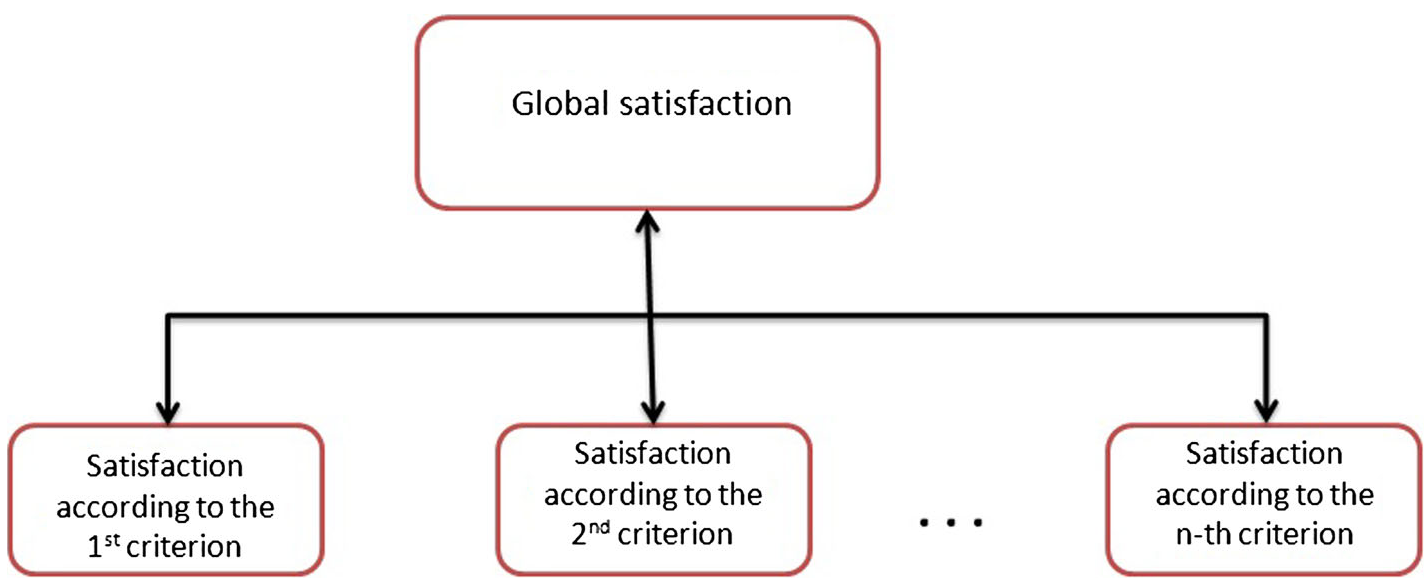 The MUSA methodology transforms individual ordinal qualitative judgments into a collective value function.
Experimental Results: The Case of OurSpace
The "OurSpace" platform, designed to engage European youth, served as the testbed. After surveying 88 users and interviewing decision-makers, the results provided a clear roadmap:
| Criterion | Weight (%) | Avg. Satisfaction (%) | Result |
|---|---|---|---|
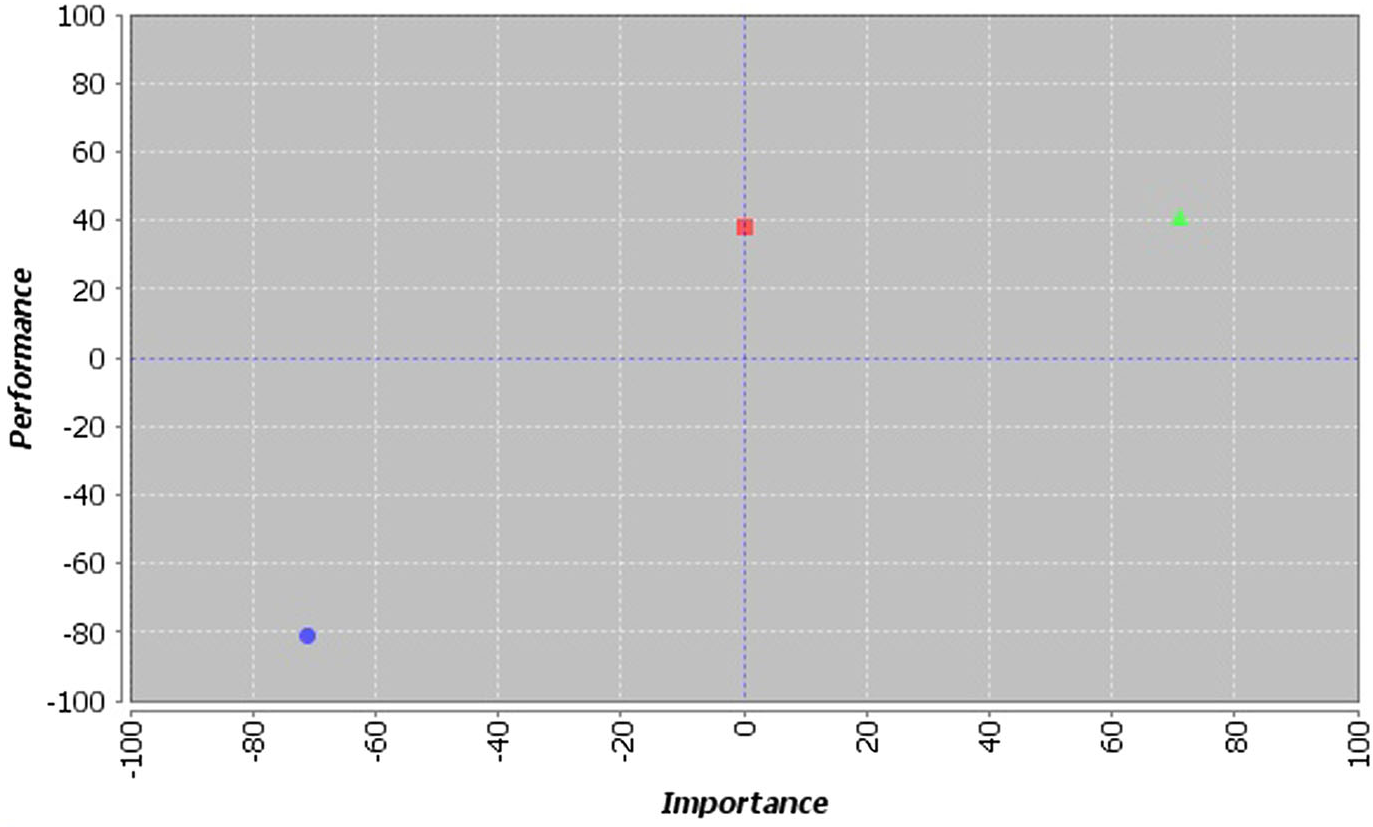
| Technical | 72% | 93.52% | Leverage Opportunity |
| Social | 14% | 70.56% | Status Quo |
| Political | 14% | 70.56% | Status Quo |
Key Insights:
- Technical Dominance: The Technical aspect (Weight: 72%) is the overwhelming driver of satisfaction. Users stay because the platform works well.
- The Political Gap: Despite the platform's efficiency, its ability to make users feel "politically inspired" (Satisfaction: 69.57%) or "interested in a politician" (Satisfaction: 41.39%) was significantly lower.
- Action Opportunity: The Action Diagram below shows that the Technical utilities are a "Leverage Opportunity"—a competitive advantage to be maintained.
Deep Insight & Conclusion
The study highlights a critical reality for developers of civic tech: Usability is the gatekeeper, but Political Efficacy is the goal.
While the OurSpace platform succeeded technically, the low satisfaction in political interest suggests that e-Participation systems still struggle to bridge the gap between "clicking" and "governing." The interviews with decision-makers confirmed this—they were "reluctant" to engage deeply, implying that the hurdle isn't just software; it's institutional resistance.
Future Outlook: To evolve, e-Participation research must move toward integrating human-centric models like TAM (Technology Acceptance Model) with these multicriteria frameworks to better predict how digital tools can actually shift political behavior.
Takeaway: If you are building or evaluating a platform for the public, use MUSA to see if your "high satisfaction" is coming from a slick UI or from actually solving the user's primary need. In the case of OurSpace, the UI was the hero, while the political mission remains a work in progress.