
Beyond Simple Clusters: Redefining Node Importance in Social Networks
Assessing the Importance of Nodes in the Social Network Based on Clustering Coefficient
The paper introduces a refined method for evaluating node importance in social networks by combining Local Clustering Coefficients with a logarithmic smoothing weight factor. Applied to the character network of "A Dream of Red Mansions," the method effectively identifies core characters, aligning results with the Power-law distribution and qualitative literary analysis.
TL;DR
In complex social networks, being "well-connected" locally isn't the same as being "important" globally. This paper addresses the flaws of using the standard Clustering Coefficient to rank node influence. By introducing a logarithmic weight factor that accounts for a node's reach, the authors successfully mapped the social hierarchy of the classic novel A Dream of Red Mansions, proving that their method aligns far better with both literary reality and the Power-law distribution.
Background: The "Small World" and the Clustering Trap
Modern network science was popularized by the "Small World" (Watts & Strogatz) and "Scale-Free" (Barabasi & Albert) models. Central to these is the Clustering Coefficient (), a measure of how much your friends are also friends with each other.
However, there is a catch: in many social networks, a peripheral character (like a maid in a historical drama) might only know two people who happen to know each other. This creates a "perfect" clustering score of 1.0, making the character appear more "central" than the actual protagonist who manages a large, complex, and slightly less interconnected web of relationships.
The Problem: The "Xue Yan" Paradox
The authors analyzed the character network of the 1987 TV series A Dream of Red Mansions. When using the raw clustering coefficient, characters like Xue Yan (a maid) ranked higher than the protagonist Jia Baoyu.
- Why? Because Xue Yan exists in a single, tight triangle.
- The Flaw: reflects the density of relationships but ignores the scale of influence.
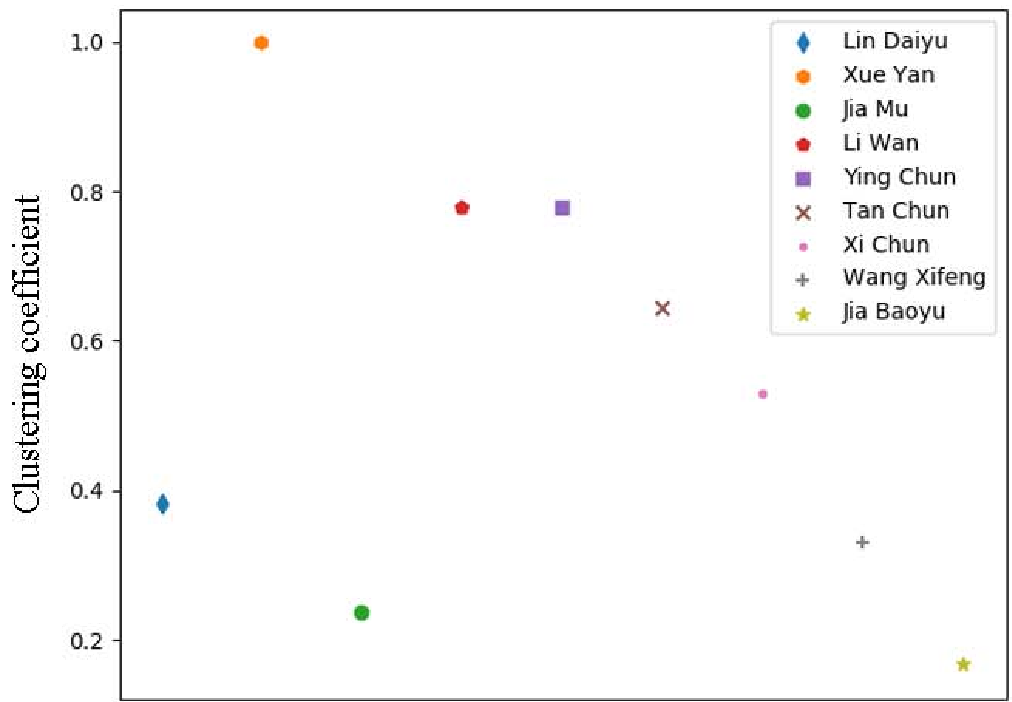 Fig 1: Notice how the raw Clustering Coefficient (left) produces a chaotic ranking, while the proposed Significant Coefficient (right) provides a more tiered, realistic hierarchy.
Methodology: The Smoothing Weight Factor
To fix this, the researchers introduced the Significant Coefficient (). The core innovation is the weight factor :
The Logic:
- Non-Linearity: Influence doesn't grow linearly with the number of friends (). The natural logarithm () models the diminishing returns of new connections.
- Normalization: By incorporating (total nodes), the importance is relative to the entire ecosystem.
- Balancing Act: . If you have high clustering but very few friends, pulls your score down. If you have many friends but a loose cluster, keeps you from dominating unfairly.
Experimental Results
1. Accuracy and Realism
After applying , the results shifted dramatically. Characters like Li Wan and Ying Chun moved to the top, while peripheral characters were correctly downweighted. This adjustment reflects the "prosperous to declining" arc of the novel more accurately over time.
2. Adherence to Power-Law
Important nodes in real networks should follow a Power-law distribution (the 80/20 rule). The authors verified that their values, when plotted on a log-log scale, align with this fundamental law of network science.
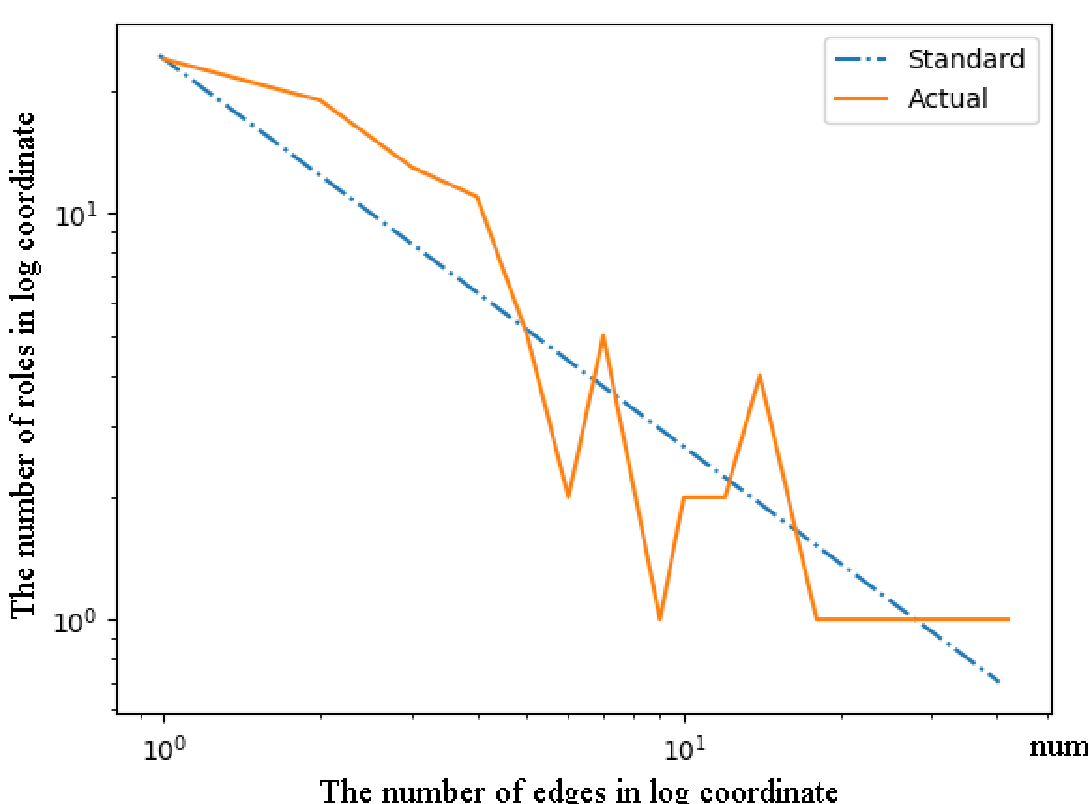 Fig 2: The log-log plot demonstrates that character importance follows a predictable mathematical decay, validating the "Significant Coefficient" approach.
3. Shortest Path Insights
The study also explored the "Small World" hypothesis (Six Degrees of Separation). It found that:
- Protagonists have the shortest average paths between them (high efficiency).
- Servants have the longest paths to other servants, as they often rely on their masters to act as intermediaries.
Critical Insight & Conclusion
The main takeaway of this work is that local density () is noise without global context. By using a logarithmic anchor, we can transform a purely local metric into a reliable indicator of node importance.
Limitations: The dataset ("Dream of Red Mansions") is relatively small. While the math holds for this social microcosm, the logarithmic factor might require further tuning for "massive" graphs where reaches millions, as the influence of a single node might encounter different saturation points.
Future Work: Applying this metric to modern datasets—like detecting "influencers" on X (formerly Twitter) or identifying critical infrastructure nodes—would be the next logical step to prove its scalability.