
Skillrank: Beyond the Endorsement—Using Graph Algorithms to Identify Real Experts
Assesing professional skills in a multi-scale environment by means of graph-based algorithms
This paper introduces Skillrank, a graph-based algorithm designed to assess the quality of professional skills in social networks like LinkedIn. By adapting the SPEAR and HITS algorithms, it evaluates user expertise based on behavioral patterns and aligns these results with established multi-scale knowledge classifications.
TL;DR
In the digital "war for talent," LinkedIn endorsements are often viewed with skepticism. This paper introduces Skillrank, an algorithmic framework that adapts the SPEAR ranking system to evaluate professional expertise. By analyzing when and by whom a skill was endorsed, Skillrank moves beyond simple counting to provide a verified confidence score that aligns with industry-standard competency scales.
The "Noise" in Professional Social Networks
The primary challenge in modern recruitment is the gap between self-disclosed information and actual competence. Traditional expert finding systems fall into three categories: Content-based, Network-based, and Hybrid. However, most social network metrics are "flat"—they treat an endorsement from a novice the same as one from a master, and ignore the temporal context of when a skill was recognized.
The authors argue that expertise involves the ability to select relevant information. Therefore, an "expert" isn't just someone with many endorsements, but a "discoverer" whose skills are validated early and recognized by other high-quality users.
Methodology: The SPEAR Adaptation
The core of the paper lies in the transition from HITS (Hyperlink-Induced Topic Search) to Skillrank.
1. From Hubs and Authorities to Experts and Skills
In the HITS framework, "Hubs" point to "Authorities." Skillrank reinterprets this:
- User Expertise (Authority): Depends on the quality of skills they are recognized for.
- Skill Quality (Hub): Depends on the expertise of the users who possess or endorse that skill.
2. The Discovery Factor
Unlike standard graph algorithms, Skillrank incorporates a temporal dimension. It populates an Adjacency Matrix () where the weight isn't just a binary 1 or 0, but a value based on the order of endorsements:
This formula ensures that "Discoverers" (the first to demonstrate/tag a skill) receive higher credit than "Followers."
3. Community Contexts
The method analyzes two specific contexts:
- Local Context: Interactions within a sub-community (e.g., a university or specific company).
- Global Context: Endorsements bridging different communities, which act as stronger signals of universal expertise.
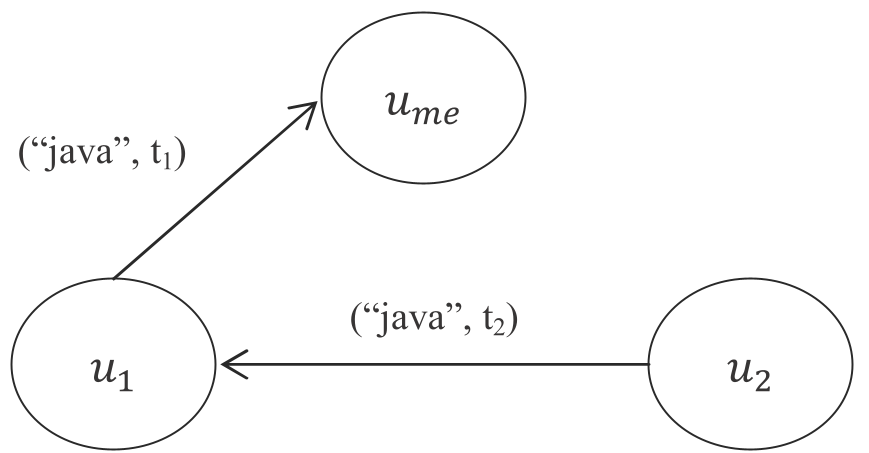 Fig 1: Modeling correlated endorsements within groups to differentiate between independent activity and social validation.
Experiments: Aligning with Professional Scales
The authors tested Skillrank against a real-world dataset extracted via the LinkedIn API, comparing it to three baselines: Frequency, HITS, and standard SPEAR. They mapped the algorithmic scores to two specific professional scales:
- The 4-level Scale (Construx): Introductory, Competence, Leadership, Mastery.
- The 5-level Scale (ICI): None, Basic, Intermediate, Advanced, Expert.
Key Findings
- Higher Accuracy: Skillrank reached 54% accuracy in the 4-level scale, whereas simple frequency counts only managed 40%.
- Better Ranking: Even though total accuracy seems low (due to the complexity of human skill assessment), Skillrank consistently placed "Masters" and "Leaders" at the top of the generated rankings.
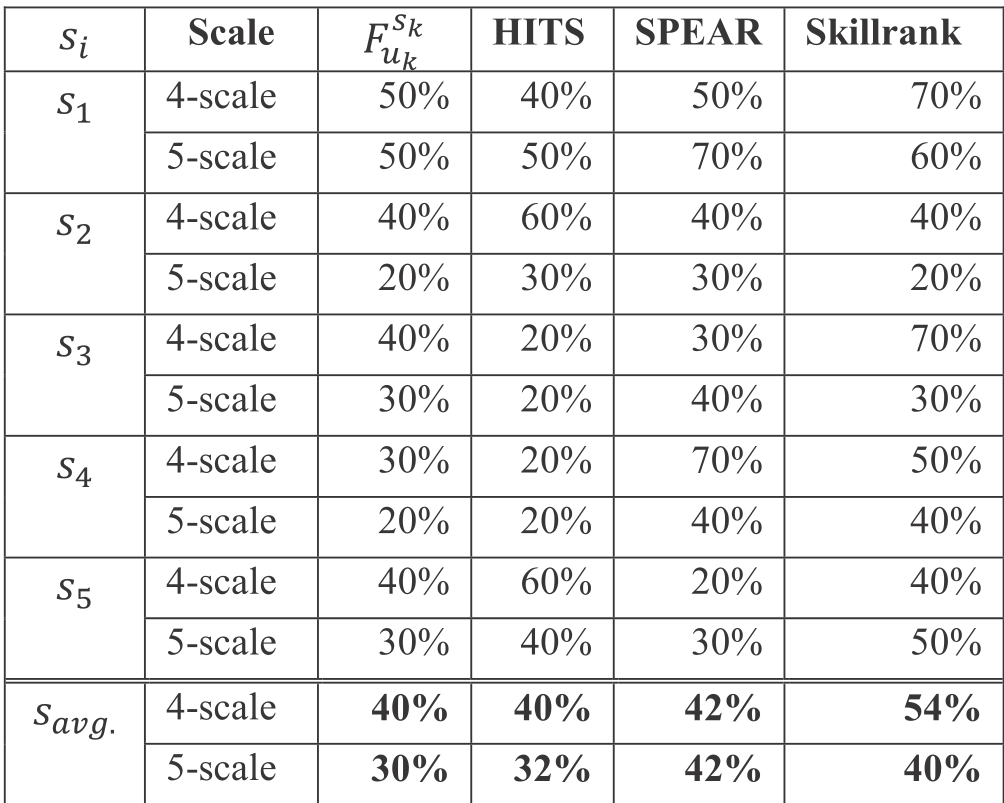 Table 1: Skillrank consistently outperforms prior graph-based ranking methods across different technical skills (S1-S5).
Critical Analysis & Conclusion
While Skillrank shows promise, the study highlights a significant hurdle: Data Accessibility. The restricted nature of LinkedIn’s API (missing exact timestamps for endorsements) forced the authors to use a "hand-made" dataset with expert-estimated times.
Takeaway for HR Tech: The logic of "Discoverer vs. Follower" is a powerful Inductive Bias that should be incorporated into internal talent management systems. By weighting early adopters of new technologies more heavily than those who follow the trend, companies can identify future leaders before their "market value" becomes too high.
Future Work: The integration of Semantic Concept Analysis (understanding the relationship between "Java" and "C#") and Ordered Weighted Averaging (OWA) operators could further refine the confidence scores for professional skills.