
Beyond the Post: Decoding the Long-Term Evolution of Nonprofit Social Media Audiences
Assessing scope and cohesion of nonprofits audiences in social media: A case study
This paper proposes a Social Network Analysis (SNA) approach to evaluate the long-term impact of nonprofit social media activity. By analyzing "co-action networks" (users linked by interacting with the same posts) of a major Chilean nonprofit, it demonstrates how audience behavior evolves differently across Facebook and Twitter, identifying shifts from fragmented clusters to cohesive online communities.
TL;DR
Nonprofits are obsessed with what to post, but few understand the cumulative impact of their digital presence. Using a longitudinal case study of Chile's "Hogar de Cristo," this research reveals a striking divergence: while the organization posted aggressively on Twitter, its audience grew more cohesive and responsive on Facebook. By shifting from content analysis to Social Network Analysis (SNA), the study proves that audience "co-action" patterns can diagnose the health of a digital community.
The "Loudness" Trap: Problem & Motivation
Most nonprofits treat social media as an electronic megaphone. However, the academic community has largely lacked longitudinal data to understand if "shouting louder" (more posts) actually builds a community. Prior work has categorization functions—Information, Community, Action—but fails to track how a series of actions over years changes the structure of an audience.
The authors' central insight: Individual interactions are less important than the networks they form. If two users "Like" the same three posts, they share an interest. If thousands do this, they form a "co-action network" that serves as a proxy for social cohesion and brand visibility.
Methodology: Mapping "Co-Actions" as Networks
The researchers didn't just count likes; they mapped the relationships between users based on shared interactions.
1. The Bipartite Projection
They collected years of data from Facebook and Twitter, building a bipartite graph (Users ↔ Posts). This was then projected into a User-only network, where an edge exists between two users if they interacted with the same piece of content.
2. Network Topology Metrics
- Modularity: Does the audience break into tight-knit niches?
- Clustering Coefficient: How "cliquey" is the audience?
- Gini Coefficient: Is the engagement dominated by a few "super-fans," or is it democratic?
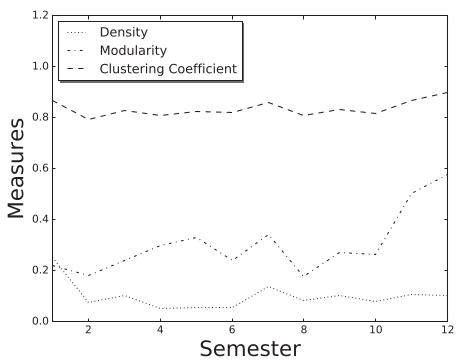 Fig 1: Evolution of User Counts and Average Degree across platforms.
Experiments & Results: Facebook vs. Twitter
The contrast between the two platforms was stark:
- Facebook (The Cohesion Engine): Despite lower posting frequency, Facebook "Likes" skyrocketed. The network evolved from tiny, disconnected dots into few large, dense clusters. This suggests that Facebook is superior for building a broad, visible base where users are frequently exposed to the same messaging.
- Twitter (The Fragmented Megaphone): Hogar de Cristo tweeted much more than it posted on Facebook. Yet, Re-tweets declined and the network remained a collection of small, isolated islands. This suggests "Information Overload"—too much content actually diluted the audience's ability to connect or respond.
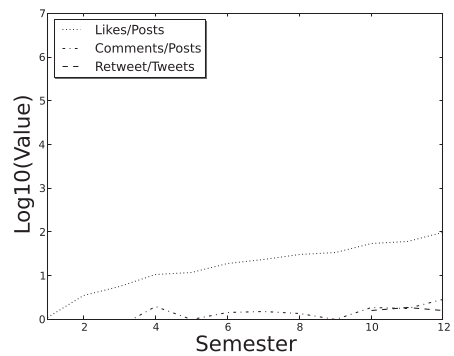 Fig 2: Longitudinal growth of Facebook interactions vs. the stagnant growth of Twitter.
Topology Visualizations
The "Likes" network (Fig 5 in the paper) shows the formation of a "Single Strongly Connected Network," whereas the "Comments" network (Fig 6) remains more hierarchical. This indicates that while many people are willing to "Like" (low-effort engagement), a specific, smaller core group drives the actual discussion.
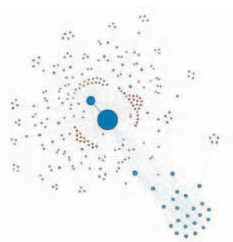 Fig 3: Facebook Likes network morphing into large clusters over 12 semesters.
Critical Insight & Conclusion
The Takeaway
For nonprofits, Facebook is a visibility and community builder, while Twitter currently acts as a high-noise, low-retention channel. The methodology of using co-action networks provides a "blood test" for social media strategy: if your modularity and clustering aren't increasing, you aren't building a community; you're just making noise.
Limitations & Future Work
The study is limited to a single case study of a large organization. Smaller nonprofits might see different dynamics. The authors' next step is the "Holy Grail" of nonprofit tech: proving a statistical link between these SNA metrics and real-world donations or volunteer hours.
Keywords: SNA, Social Network Analysis, Nonprofits, Facebook, Twitter, Longitudinal Study, Co-action Networks.