
Emotions Portal: Solving the "Acting" Problem in Stress Detection via Crowdsourcing
Assessing an Application of Spontaneous Stressed Speech - Emotions Portal
This paper introduces the Emotions Portal, a crowdsourcing and collaborative multilingual framework designed for the acquisition and validation of spontaneous stressed speech. It addresses the lack of standardized spontaneous emotional datasets by utilizing a modular online platform available in Spanish, English, German, and French.
TL;DR
To move beyond artificial, actor-led emotional databases, researchers have built the Emotions Portal—a multilingual, collaborative framework that uses cognitive dissonance and time pressure to elicit genuine, spontaneous stress in speakers. This project aims to create a cost-free, standardized, and regulation-compliant corpus for the global research community.
The "Artificiality" Bottleneck in Emotion Recognition
Most speech emotion recognition (SER) systems are trained on "acted" data (like the Berlin Emotional Database). While high-quality, these recordings lack the nuances of real human biological response. When a pilot or a patient is genuinely stressed, the physiological changes in the vocal tract are different from those produced by an actor.
The field faces a "Cold Start" problem: we need spontaneous data to build better models, but collecting such data is expensive, technically difficult, and legally complex due to privacy laws regarding biometric data.
Methodology: Engineering Cognitive Dissonance
The "Secret Sauce" of the Emotions Portal is its elicitation module. Instead of asking users to "act stressed," it forces them into a state of stressful cognitive processing.
1. The Strategy
Users are asked to answer a survey on controversial topics (e.g., student grant funding, globalization, gender roles). The system then identifies a topic the user feels strongly about and forces them to defend the opposite of their opinion in just 40 seconds.
2. The Architecture
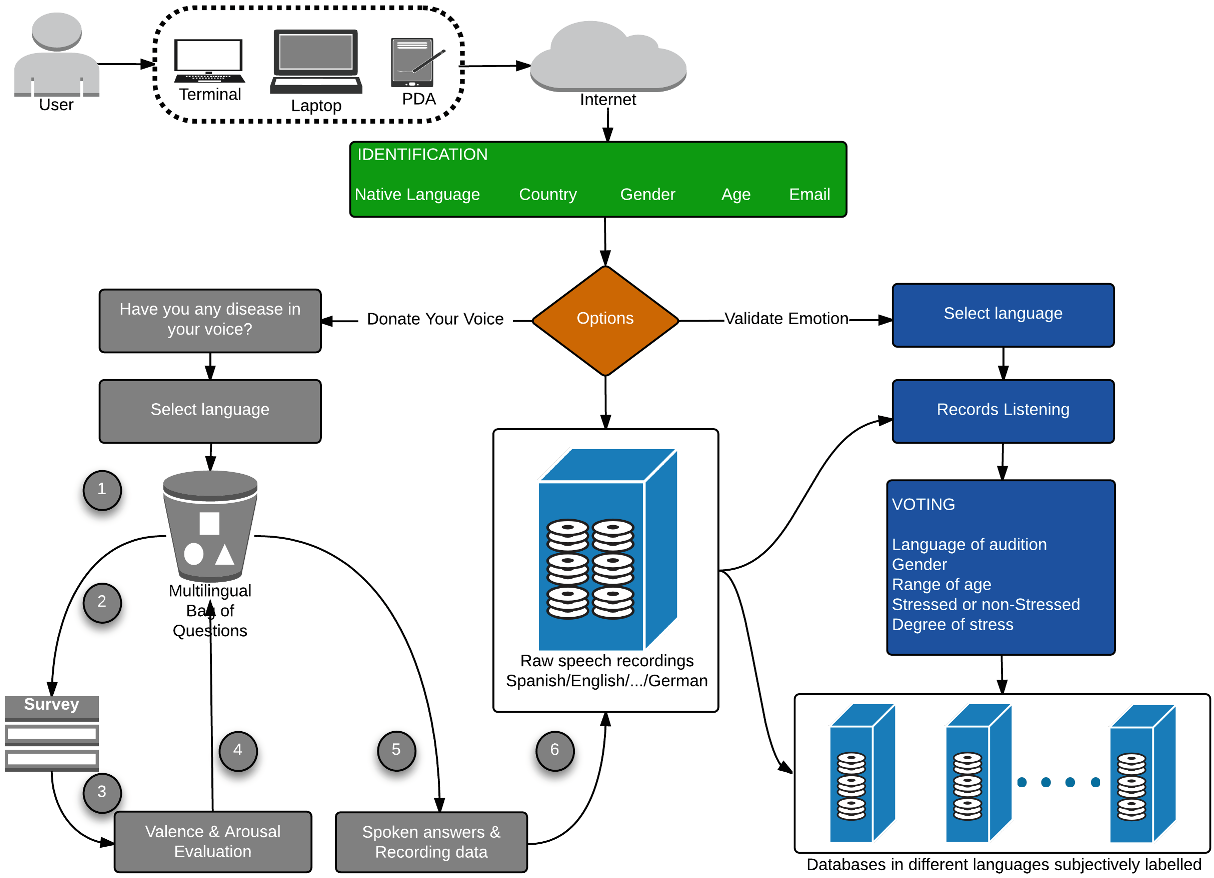
The framework is divided into three distinct phases to ensure data integrity and label quality:
- User Identification: Captures demographics (native language, age, gender) to ensure a balanced corpus.
- Voice Donation: Uses the "Arciuli method" to record the 40-second spontaneous responses.
- Speech Validation: A peer-review system where other users (raters) categorize the arousal and valence of the recorded samples.
Experimental Insights: Authenticity Matters
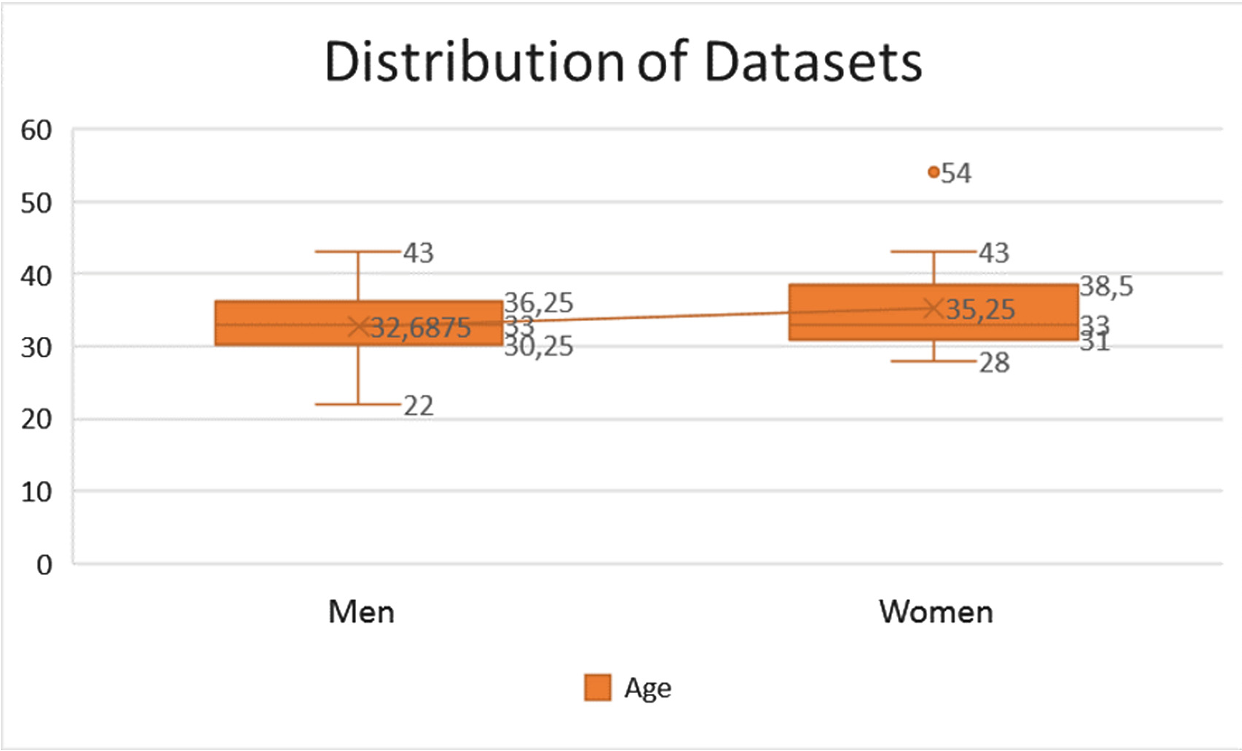
The initial pilot study focused on 32 participants (16 male, 16 female) to ensure gender balance. The results from the "Raters" confirmed the effectiveness of the methodology.
- Authenticity: 100% of raters agreed that the recordings sounded like real people in real situations, not actors.
- Label Consistency: There was a high degree of agreement (85%+) between the donor's self-reported stress and the rater's perception, validating the subjective labeling process.
- Topic Potency: Gender-related questions produced the highest levels of arousal and valence, proving that "controversy" is a reliable trigger for spontaneous emotional expression in phonation.
Critical Analysis & Future Outlook
The Emotions Portal successfully bridges the gap between laboratory-controlled environments and the wild, unpredictable nature of human emotion. By leveraging the internet, it creates a scalable path to a "standard test bench" that the SER community has lacked for decades.
Limitations: The current test was conducted in a controlled environment due to the strict Spanish Personal Data Protection Act. Moving this to a fully public web service requires solving the "biometric custody" problem—ensuring that voice data, which is highly personal, remains anonymous and secure.
Future Work: The modularity of the portal allows for new "elicitation modules." Future research could explore non-verbal communication, such as laughter or hesitation pauses, to further enrich the dataset. This platform paves the way for AI agents that don't just "hear" words, but truly "sense" the internal state of the speaker.
Disclaimer: This study was supported by grants from MINECO (Spain) and the POCTEP program.