
Hierarchical Optimization: A Masterclass in Solving Highly Flexible Job-Shops
12569_Assignment and Scheduling in Flexible Job-Shops by Hierarchical Optimization.
This paper introduces a hierarchical optimization approach for the Flexible Job-Shop Scheduling Problem (FJSP), particularly designed for high-flexibility environments. It decomposes the NP-hard problem into two subproblems—assignment and sequencing—utilizing a combination of Tabu Search, Branch-and-Bound, and Hybrid Genetic Algorithms to minimize makespan and machine workloads.
Executive Summary
TL;DR: This paper tackles the Flexible Job-Shop Scheduling Problem (FJSP)—one of the most challenging puzzles in industrial engineering—by breaking it into two manageable parts: assigning tasks to machines and then ordering those tasks. By combining Tabu Search with a Hybrid Genetic Algorithm, the researchers achieved new SOTA results on classic benchmarks, proving that a "divide and conquer" strategy is superior for highly complex, flexible manufacturing lines.
Positioning: This work serves as a foundational bridge between classical exact methods (Branch-and-Bound) and modern metaheuristics (Evolutionary Algorithms), specifically optimized for systems where machines are highly interchangeable.
Problem & Motivation: The Curse of Flexibility
In a standard Job-Shop, each task has one machine. In a Flexible Job-Shop, you have choices. While flexibility is good for efficiency, it creates a mathematical nightmare: an exponential explosion of possible machine-task combinations.
Existing "integrated" solvers try to optimize everything at once. However, as flexibility increases, these solvers often get lost in the search space. The authors' insight was simple: if we can balance the machine workloads first (the Routing problem), the subsequent task ordering (the Sequencing problem) becomes significantly easier to solve optimally.
Methodology: The Hierarchical Blueprint
The authors proposed a two-step hierarchical pipeline:
Phase 1: Intelligent Assignment (Routing)
To distribute work evenly, they use two distinct flavors of optimization:
- Tabu Search (TS): A local search that uses a "Tabu list" to avoid looping back to previous solutions, allowing it to escape local optima.
- Branch-and-Bound (B&B): For smaller problems, this exact method explores a tree of partial assignments, using mathematical Lower Bounds to prune branches that cannot possibly lead to a better solution.
Phase 2: Hybrid Genetic Algorithm (Sequencing)
Once machines are assigned, the problem turns into a classic Job-Shop scheduling task. The authors use a Genetic Algorithm (GA) with special "DNA" operators:
- POX (Preerving Order-based Crossover): Ensures that if Task A must happen before Task B, their offspring in the algorithm will never violate that rule.
- Local Search Integration: After the crossover, they apply a "two-exchange" search on the Critical Path (the sequence of tasks that determines the total duration) to squeeze out extra efficiency.
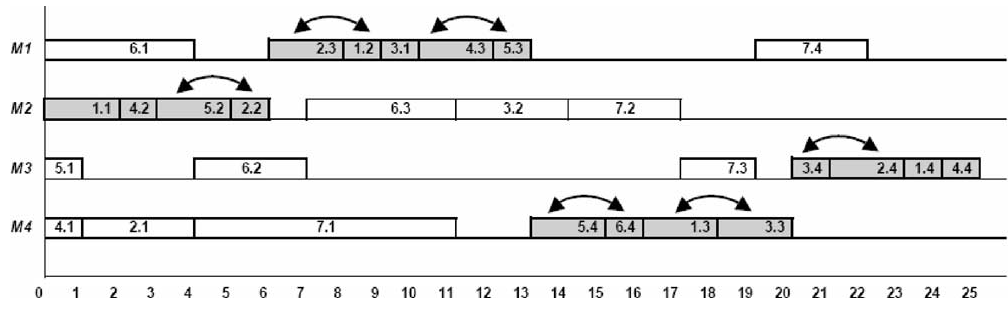 Figure 1: The overall architecture of the hierarchical decomposition.
Experiments: Breaking Benchmarks
The researchers tested their approach against the famous Brandimarte and Dauzère-Pérès datasets.
| Instance | Brandimarte SOTA | This Paper (TS & GA) | Improvement |
|---|---|---|---|
| MK01 | 42 | 41 | ~2.4% |
| MK03 | 211 | 204 | ~3.3% |
| MK04 | 81 | 67 | ~17.3% |
The study also demonstrated the Convergence of the GA (as seen in Figure 2), showing how different mutation rates affect the speed at which the algorithm finds the best schedule.
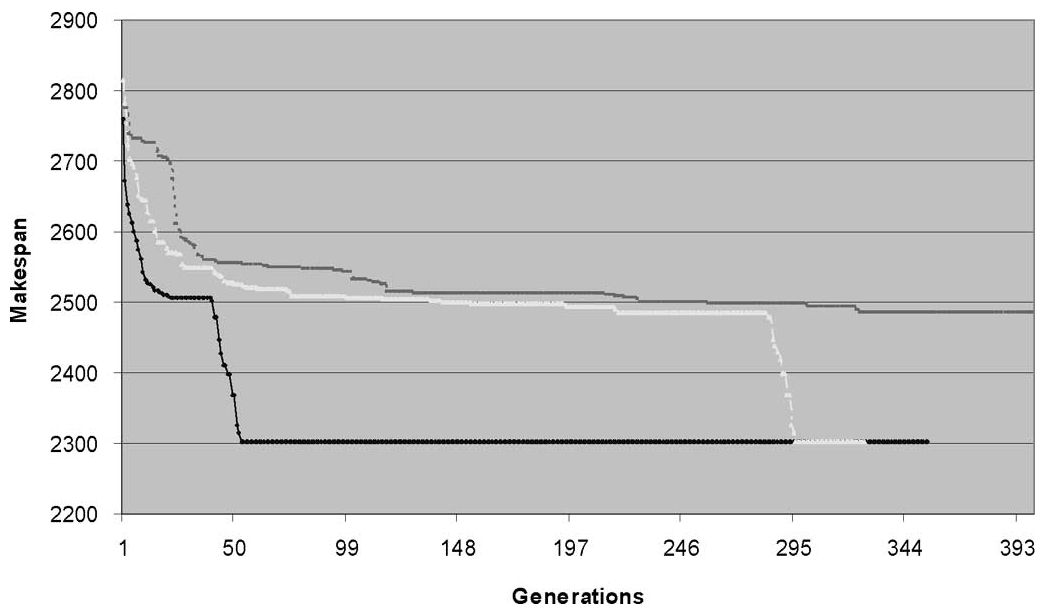 Figure 2: Performance analysis of the Genetic Algorithm under various parameter settings.
Critical Insight & Conclusion
The Takeaway: High flexibility in a factory shouldn't lead to chaos. By using a weighted objective function during the assignment phase—balancing the total machine load against the "bottleneck" machine load—the authors created a rock-solid foundation for the scheduling phase.
Limitations: While the hierarchical approach is fast, it is theoretically possible that the absolute best assignment (optimal for workload) is not the same assignment that allows for the absolute best sequence (optimal for makespan). However, the paper proves that in practice, the gap is negligible compared to the massive speed gains.
Future Outlook: This framework is ripe for adaptation into "Industry 4.0" setups where real-time tardiness and energy consumption are just as important as the total completion time.