
ATLAS: Beyond the "Needle" – Rethinking Long-Context Evaluation as a Capability Profile
ATLAS: All-round Testing of Long-context Abilities across Scales
This paper introduces ATLAS, a comprehensive benchmarking framework for evaluatating long-context Large Language Models (LLMs) across multiple scales, from 8K to 1M tokens. Unlike previous single-point metrics, ATLAS utilizes a layered capability taxonomy and length-aware AUC scoring to create a robust diagnostic profile. Evaluation of 26 models reveals that Gemini-3.1-Pro-Preview and Claude-Opus-4.6 are current SOTA leaders at 128K and 1M scopes, respectively.
TL;DR
As LLMs push context windows toward the millions, the industry has relied on simplistic "Needle-in-a-Haystack" tests that often lie about a model's real-world utility. ATLAS (All-round Testing of Long-context Abilities across Scales) is a new benchmarking framework that replaces single-point scores with length-aware degradation profiles. By testing 26 models over an 8K-1M token grid, it reveals a harsh truth: a model that wins at 128K might be a total failure at 1M.
Key Ranking Shift: Gemini-3.1-Pro-Preview leads the pack at 128K, but Claude-Opus-4.6 takes the crown for robustness at 1M.
1. The Myth of the "Million-Token" Window
Most frontier models (GPT-4, Claude 3, Gemini 1.5) advertise massive windows. However, researchers have noticed two dangerous failure modes:
- The Performance Cliff: A model might work perfectly at 100K tokens but hit a "capability cliff" at 150K, rendering the remaining 850K of its advertised window useless.
- The Retrieval-Application Gap: Successfully finding a "needle" in a haystack (simple retrieval) is not the same as performing complex reasoning, coding, or multi-step analysis on that same data.
Current benchmarks are either broad but short (covering many tasks but only up to 32K length) or long but narrow (reaching 1M tokens but only doing simple retrieval). ATLAS fills this "upper-right" gap.
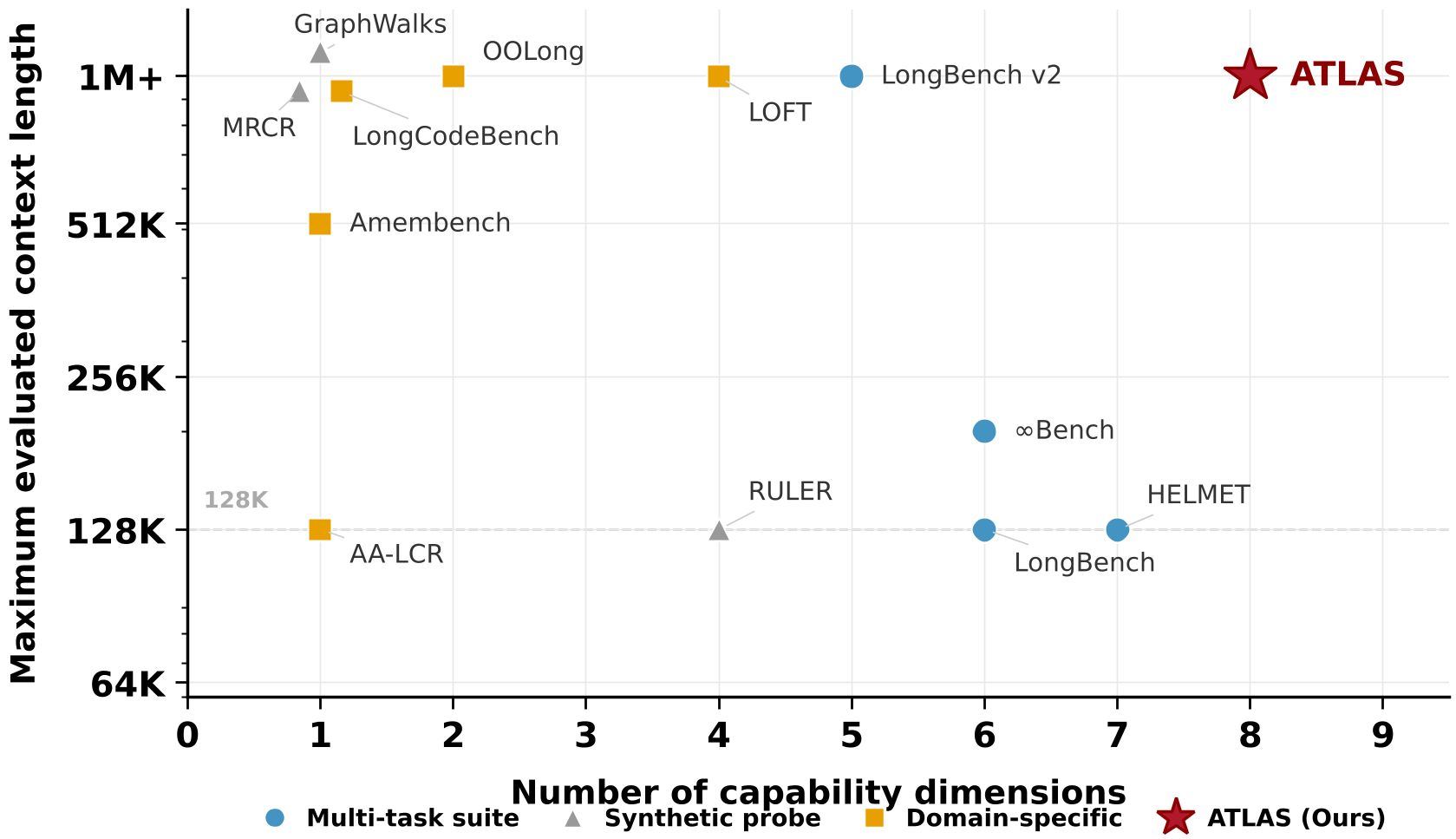 Figure 1: ATLAS occupies the upper-right corner, combining 8 capability dimensions with 1M token evaluation.
2. Methodology: The 3+5 Layered Taxonomy
To accurately diagnose why a model fails, ATLAS splits evaluation into two distinct layers:
- Foundational Layer: Core operations like retrieval, aggregation, and multi-step reasoning.
- Application Layer: Complex pipelines including RAG (QA), In-Context Learning (ICL), Repository-scale Coding, and Long-range Memory.
Scoring with "Length-Aware AUC"
Instead of picking one length, ATLAS evaluates models at {8K, 16K, 32K, 64K, 128K, 256K, 512K, 1M}. It calculates the Area Under the Curve (AUC). This captures the "robustness" of a model—a model that maintains 80% performance across all lengths will outrank a model that starts at 100% but crashes to 0% at 512K.
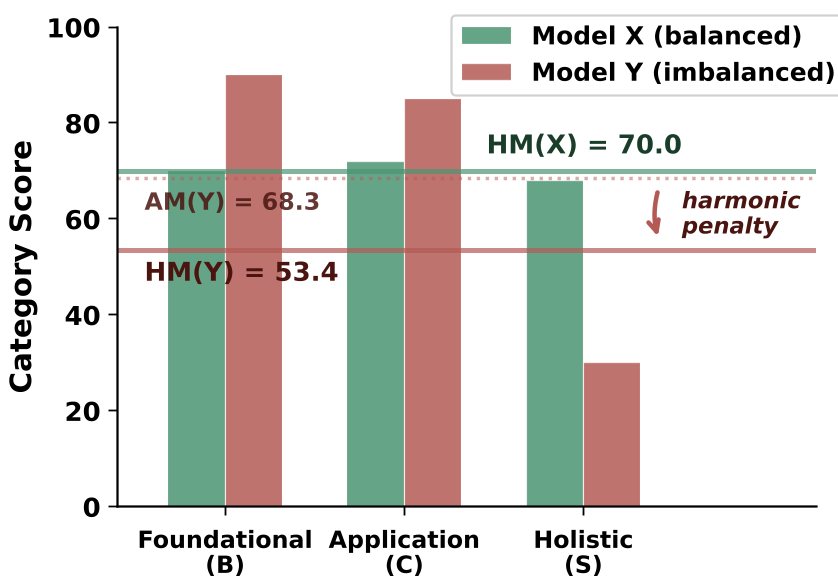 Figure 2: The AUC approach captures the full degradation profile rather than a single snapshot.
3. Key Findings: The Great Reshuffling
The most striking result of the study is how much the leaderboard changes when you move the goalposts from 128K to 1M.
- Decay is Capability-Specific: Models don't degrade uniformly. Reasoning and Coding usually stay stable, but Retrieval and QA performance often collapse at ultra-long lengths.
- The "Frontier" Shuffle: GPT-5.2 (a hypothetical/preview version in the study) dropped 4 positions (from 4th to 8th) when evaluated at 1M tokens because its performance on simple retrieval tanked by nearly 50% despite strong reasoning.
- The Efficiency of "Thinking" Models: Models that use Chain-of-Thought (CoT) or "Reasoning" modes (like the 15 reasoning models in the test) generally showed significantly lower decay than standard models.
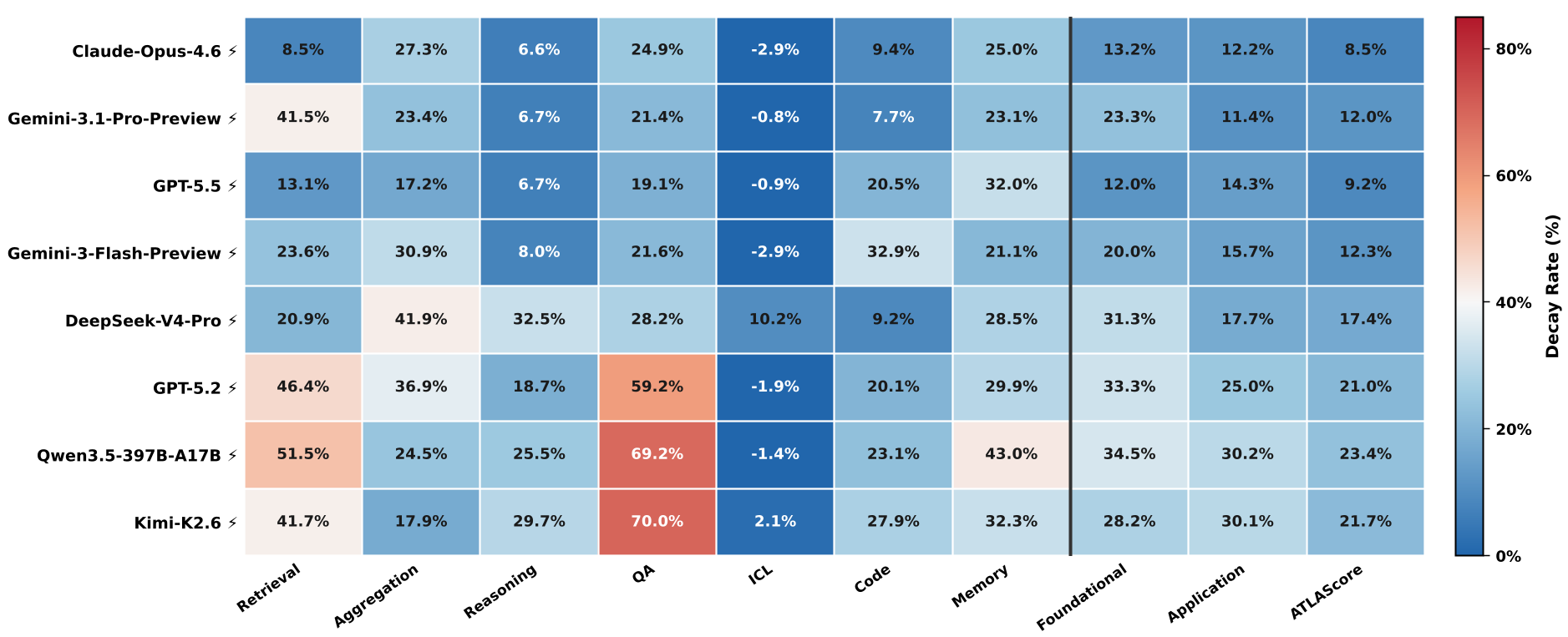 Figure 3: Heatmap of decay rates. Blue represents stability, while Red represents severe performance collapse at 1M.
4. Professional Insight: Why Foundational Strength Isn't Enough
Wait, why did Kimi-K2.6 rank 18th in Foundational tasks but 6th in Application tasks?
This is the "Foundational-Application Gap." Some models are optimized to "pass the test" (synthetic recall) but lack the instruction-following or domain-specific knowledge to handle real document QA or ICL. This is why ATLAS uses a Harmonic Mean for its final ATLAScore—it heavily penalizes models that are "one-trick ponies." If your model can't retrieve (Foundational), it doesn't matter how good its reasoning is; the harmonic mean will pull the total score down toward the weakest link.
 Figure 4: Radar charts comparing profiles at 1M. Notice how profiles "shrink" and "dent" non-uniformly across different capability axes.
5. Conclusion & Takeaways
ATLAS sets a new standard for LLM transparency. The "Million Token" window is currently more of a marketing headline than a technical reality for many.
Main Takeaways for Researchers/Developers:
- Don't trust 128K scores: If your prod use-case is 500K+, you must evaluate the specific decay of your model on that length.
- Retrieval is the bottleneck: Even if a model can "think," it often loses the ability to "find" information in ultra-long contexts.
- Balance over SOTA: A model with a "balanced polygon" on the radar chart is often safer for general deployment than a model with a massive spike in one dimension but a "dent" in another.
ATLAS-Lite (testing only at 128K) is suggested for rapid dev screening, but the full 1M AUC is the only way to prove a model's "All-round" long-context mastery.