
Reclaiming the Social Mask: How "Clique" Solves the Privacy Crisis in Social Networks
Audience Segregation in Social Network Sites
This paper introduces "Clique," a privacy-preserving social network site (SNS) prototype that implements the sociological concept of "audience segregation." It enables users to manage diverse social identities through granular contact collections, visibility rights, and multi-faceted profiles to mitigate privacy risks inherent in monolithic SNS platforms.
TL;DR
Social Network Sites (SNS) have a "context collapse" problem: your boss, your grandmother, and your high school friends are all lumped into one bucket. This paper introduces Clique, a prototype SNS designed to restore Audience Segregation. By using custom contact collections and multi-tabbed "faces," Clique allows users to manage their digital personas with the same nuance and privacy they use in the physical world.
The "One Face" Trap: Why Social Privacy is Broken
In the real world, we are "round characters." We act differently at a boardroom meeting than we do at a dive bar. Sociologist Erving Goffman called this Audience Segregation—the ability to keep our different roles separate so they don't contaminate one another.
However, platforms like Facebook and early MySpace did the exact opposite. They promoted Social Convergence, forcing us to present a "single face" to everyone we know. This creates a massive privacy risk: a photo uploaded for a friend might be seen by a recruiter, and a political opinion shared with a peer might alienate a family member. The authors argue that current SNS designs provide a false sense of intimacy while actually exposing users' entire lives to an opaque, unlimited audience.
Methodology: The Architecture of Clique
The Clique prototype moves beyond the binary "Public/Private" toggle. It introduces a tripartite system to mimic the complexity of human relationships:
1. Granular Contact Management (Collections)
Instead of a flat list of "Friends," Clique allows users to create Collections. Users define the labels—"Colleagues," "Best Friends," "Chess Club"—to reflect the actual fabric of their social lives. Unlike platforms that suggest categories, Clique leaves the granularity to the user, ensuring the labels match their personal reality.
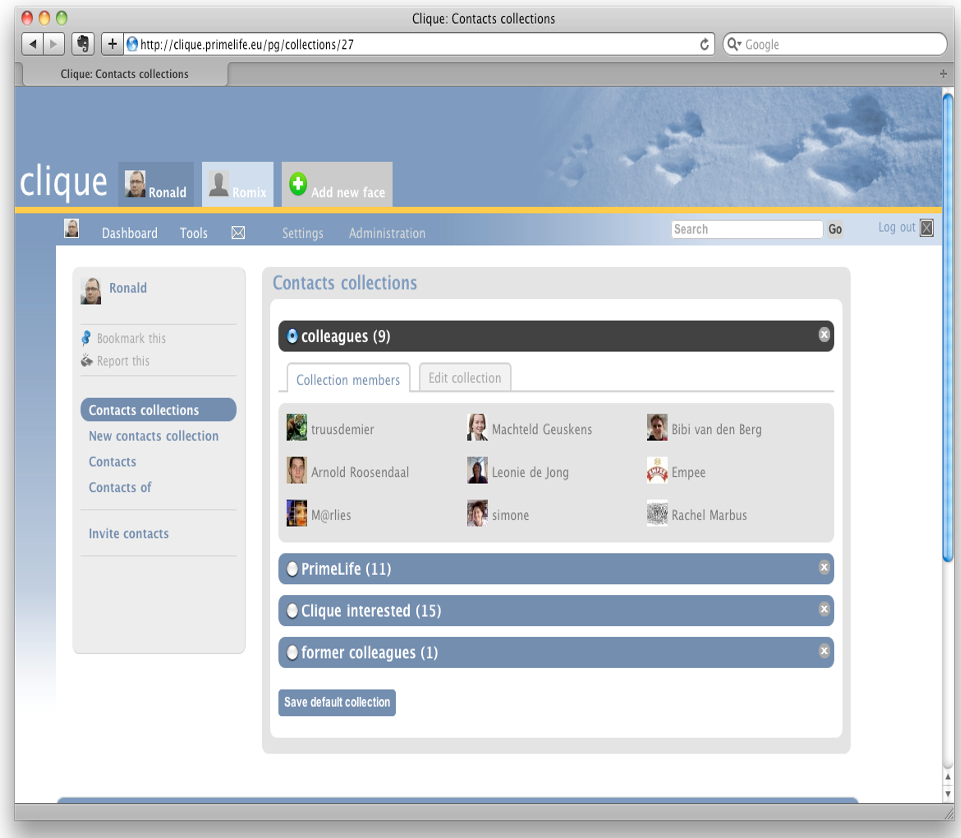 Figure 1: The conceptual hierarchy of Clique, mapping Identities to Faces and Collections.
2. Nudging for Privacy (Visibility Rights)
Clique uses a "nudge" mechanism to encourage privacy-savvy behavior. When posting content, an extended access control dialogue appears. By default, it targets the user’s primary audience for that context, but it allows for "red box" and "green box" exclusions. This means you can share a post with "All Friends" except specific individuals, or vice versa.
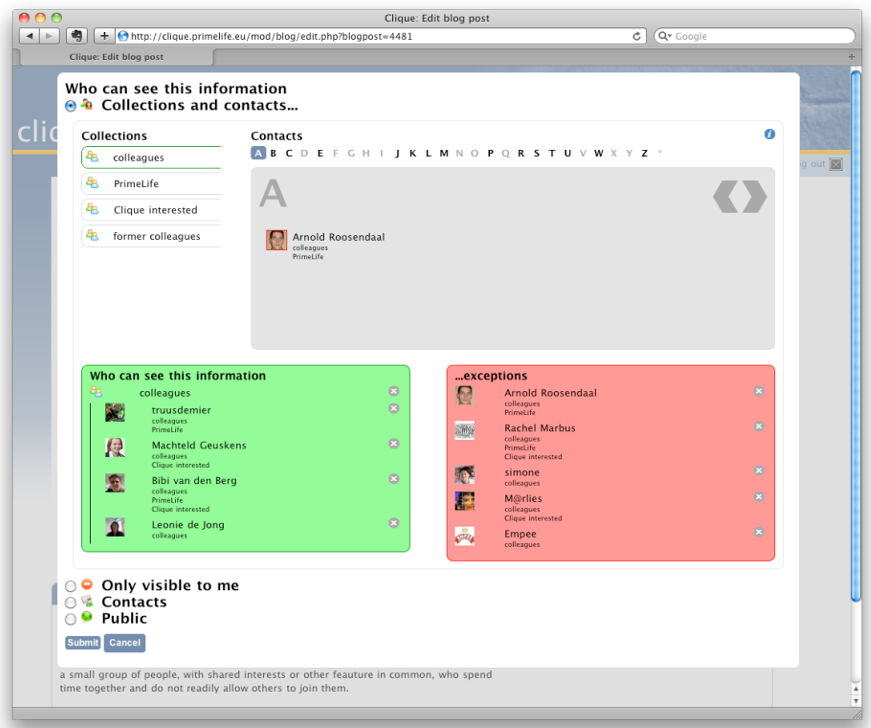 Figure 2: The UI dialogue for managing specific audience exclusions during the posting process.
3. Multiple Faces (The Tabbed Identity)
The most radical feature is the Multi-Face Identity. Instead of having to create different accounts on different platforms (e.g., LinkedIn for work, Instagram for life), Clique allows you to host multiple "Faces" within one dashboard. Users can switch between a "Professional Face" and a "Private Face" using simple UI tabs. Each face has its own set of contacts and its own history, preventing information "leakage" between spheres.
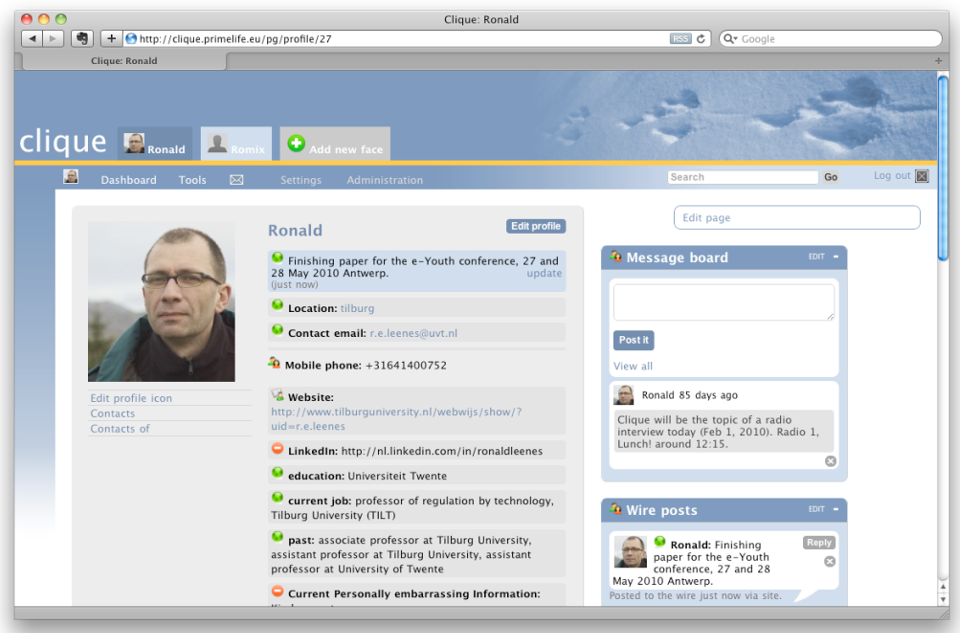 Figure 3: The user profile interface showing the use of tabs to switch between different social "faces".
Critical Insight: Respecting Contextual Integrity
The beauty of this approach is its alignment with Contextual Integrity. Privacy is not about hiding everything; it’s about ensuring that information flows appropriately according to the norms of a specific context.
If you are in a "Work Context," your professional identity is the only one visible. This solves the "social script" problem—users no longer have to find a "middle ground" personality that is acceptable to everyone; they can be their authentic selves in each specific setting.
Conclusion and Future Outlook
The authors acknowledge a major hurdle: User Effort. Managing multiple "faces" and granular collections is "cumbersome" and requires an investment of time. However, as the digital world becomes increasingly fractured and the consequences of data leakage more severe (e.g., "cancel culture" or digital footprint audits), the "Clique" model of audience segregation may become the only viable way to maintain a healthy social life online.
Takeaway: We don't need more social networks; we need better social architectures that respect the complexity of human identity.