
Audio-Aware Personalization: Solving the "Who’s on the Couch?" Problem in TV Recommendations
13837_Audio-based age and gender identification to enhance the recommendation of TV content.
This paper presents an automated TV content recommendation system that identifies the age and gender of audience groups using audio analysis. By integrating a hybrid acoustic-prosodic classifier with a genetic algorithm and a novel group-to-slot adaptation mechanism, the system achieves significant improvements in advertisement relevance for multi-user environments.
TL;DR
Researchers have developed a system that listens to the audience to identify their age and gender, using this data to curate the perfect TV advertisement break. By combining acoustic sensors with a novel "proportional adaptation" algorithm, the system significanty outperforms random content delivery, even when the AI's "hearing" isn't perfect.
The Motivation: The Shared Screen Struggle
In the era of Smart TVs, personalization is surprisingly broken for families. Most systems assume a single user is logged in, but in reality, a living room often contains a mix of children, adults, and seniors. Manually switching profiles is a "friction" users hate.
The authors identify a critical gap: How do we passively and accurately profile a group of viewers and ensure that a 5-minute ad break reflects everyone's interests proportionally?
Methodology: From Soundwaves to Slots
The system operates through three sophisticated stages:
1. Hybrid Audio Classification
The system doesn't just look at what is said, but how it sounds. It utilizes a hybrid model:
- Acoustic Subsystem: Uses Mel Frequency Cepstral Coefficients (MFCCs) to capture the spectral envelope.
- Prosodic Subsystem: Analyzes syllable-level energy, pitch, and duration, modeled via 6th-order Legendre polynomials. This dual approach handles the nuances of different age groups (Children, Young Male/Female, Adult Male/Female, Senior Male/Female).
2. The Proportional Adaptation Algorithm
This is the paper's mathematical crown jewel. If you have 3 viewers but 5 ad slots, how do you divide the time? The authors use a circular binning strategy.
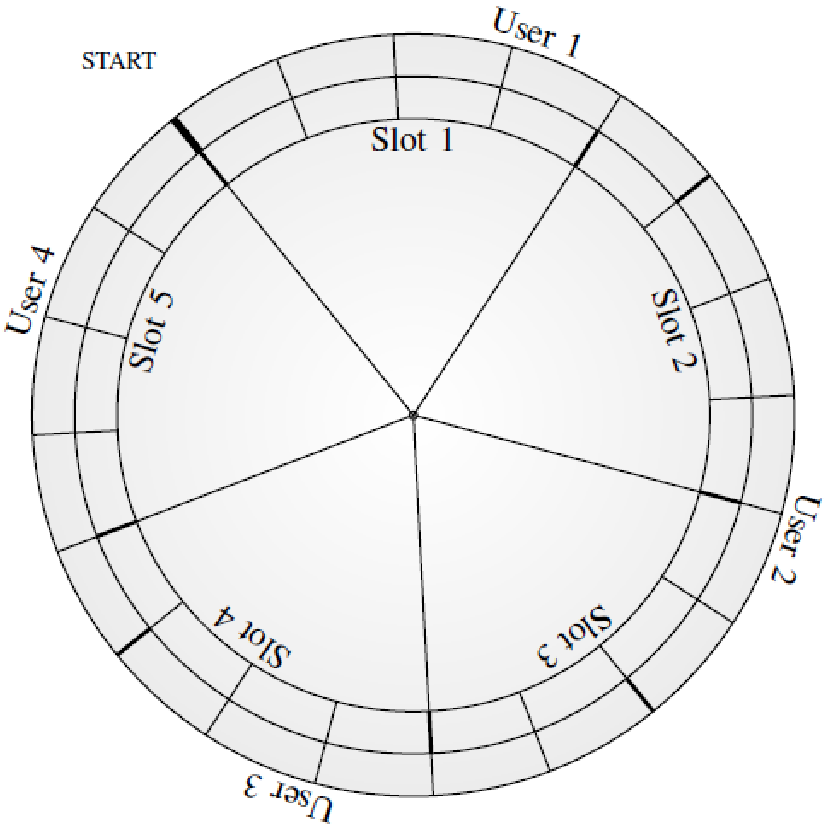 By dividing a circle into segments based on the Least Common Multiple (LCM) of users and slots, the system ensures that if 75% of the room are children, approximately 75% of the "fitness" of the advertisement sequence is driven by child-relevant content.
3. Genetic Optimization
The system uses a Genetic Algorithm (GA) to search through possible sequences of advertisements. Each "chromosome" is a sequence of ads. The GA evolves the population over 500 iterations to find the sequence that maximizes the "trace" of the match between the modified group profile and the advertisement metadata.
Experimental Results: Better Than Boredom
The researchers compared their audio-derived system against an "Ideal System" (where users manually enter their info).
| Metric | Proposed (Audio) | Ideal (Manual) |
|---|---|---|
| Cramer's V (Effect) | 0.2678 (Strong) | 0.4403 (Very Strong) |
| User Rating (1-10) | 7.75 | N/A |
| Random Baseline | 4.25 | N/A |
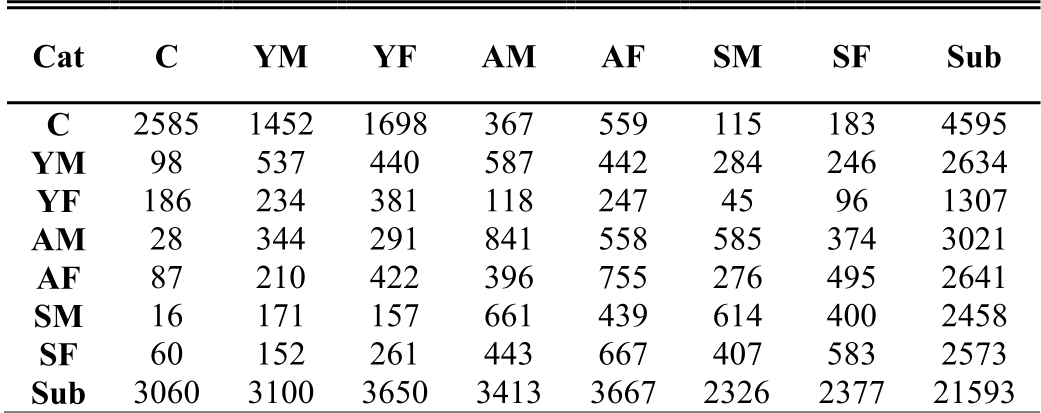
Despite the audio classifier only having about 50% raw accuracy, the recommendation engine was robust. This is because "soft boundaries" in marketing help; an ad relevant to an "Adult Female" is often also relevant to a "Senior Female," cushioning the impact of AI classification errors.
Critical Analysis & Takeaways
The brilliance of this work lies in its error tolerance. The authors didn't wait for a 100% accurate audio sensor; instead, they built a recommendation logic that works with probabilistic inputs.
Limitations:
- Privacy: Passive audio monitoring in the home remains a sensitive topic for consumers.
- Noise: The study used clean segments; real-world environments with crying babies or barking dogs might degrade the GMM-UBM performance.
Future Outlook: As we move toward "ambient intelligence," this proportional adaptation method could be applied to other shared resources, such as background music in public spaces or smart lighting in shared offices. The marriage of paralinguistics and genetic algorithms offers a powerful blueprint for truly "socially aware" technology.