
Optimized Multimodal Emotion Recognition: Mastering the Synergy of Sight and Sound
Audio-visual emotion recognition using FCBF feature selection method and particle swarm optimization for fuzzy ARTMAP neural networks
This paper presents a robust audio-visual emotion recognition system using a Particle Swarm Optimization (PSO)-optimized Fuzzy ARTMAP Neural Network (FAMNN). The method combines speech features (MFCC, pitch, energy) and facial markers via feature-level and decision-level fusion, achieving a SOTA recognition rate of 98.25% on the SAVEE database.
TL;DR
Researchers have developed a high-precision emotion recognition system that bridges the gap between how humans express feelings and how computers perceive them. By combining Fuzzy ARTMAP Neural Networks (FAMNN) with Particle Swarm Optimization (PSO), the system achieves a remarkable 98.25% accuracy on the SAVEE database, significantly outperforming unimodal systems and even human evaluators.
Context: This work resides in the domain of Affective Computing, moving beyond simple classification by treating hyperparameter tuning as an evolutionary optimization problem.
The Problem: Why Unimodal Systems Fail
Humans are multi-modal by nature; we interpret emotions through a blend of facial micro-expressions (55% of cues) and vocal prosody (38% of cues). Existing HCI systems often rely on single modalities, which are prone to noise and ambiguity. For instance, an "angry" voice might be mistaken for "happy" in high-pitch scenarios if visual context (a scowl) is missing. Furthermore, even when using advanced neural networks like FAMNN, the performance is bottlenecked by the difficulty of manually setting hyperparameters like "vigilance" (ρ), which determines how strictly the network categorizes new data.
Methodology: The Fusion Architecture
The authors propose a multi-stage pipeline involving extraction, reduction, selection, and optimized classification.
1. Feature Engineering & Selection
- Audio: 80 features, including MFCC, pitch, energy, and formants.
- Visual: 480 features derived from coordinates of 60 facial markers.
- FCBF (Fast Correlation-Based Filter): This was used to select features that are highly informative for the label but weakly dependent on each other, preventing redundancy.
2. The Hybrid FAMNN-PSO Classifier
The FAMNN is choice-driven, using a "Match Tracking" mechanism to minimize error. However, the authors didn't just use standard values. They employed Particle Swarm Optimization (PSO)—an algorithm inspired by bird flocking—to find the ideal "sweet spot" for the network's learning rate and resonance thresholds.
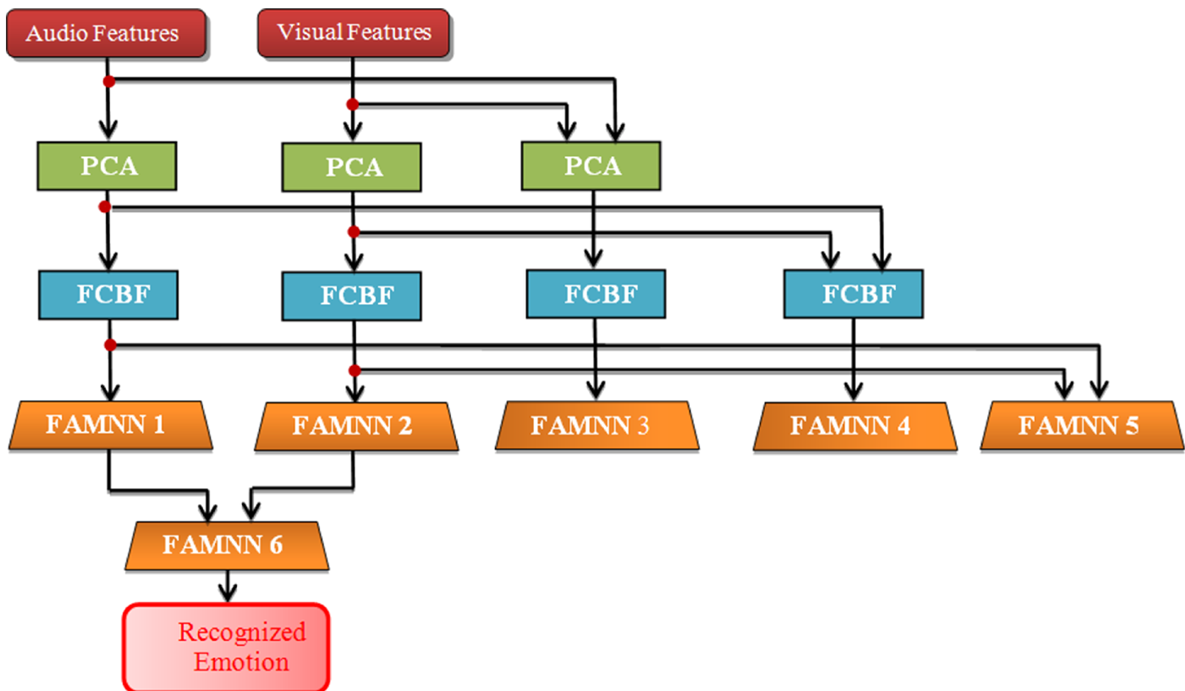 Fig 1: The proposed multi-path fusion and optimization framework.
Experiments & Results: Breaking the Human Ceiling
The system was tested on the SAVEE (Surrey Audio-Visual Expressed Emotion) database across seven emotional states: Anger, Disgust, Fear, Happiness, Neutral, Sadness, and Surprise.
Key Performance Insights:
- Fusion Superiority: Feature-level fusion (after PCA reduction) achieved 97.92% (pre-optimization), showing that the "context" of combined data is more valuable than just averaging separate decisions.
- The Power of PSO: By applying PSO to tune the FAMNN, the final accuracy climbed to 98.25%.
- Vs. Humans: Interestingly, while humans averaged 91.8% accuracy on the same clips, the optimized machine model was more consistent, particularly in distinguishing between "Fear" and "Sadness."
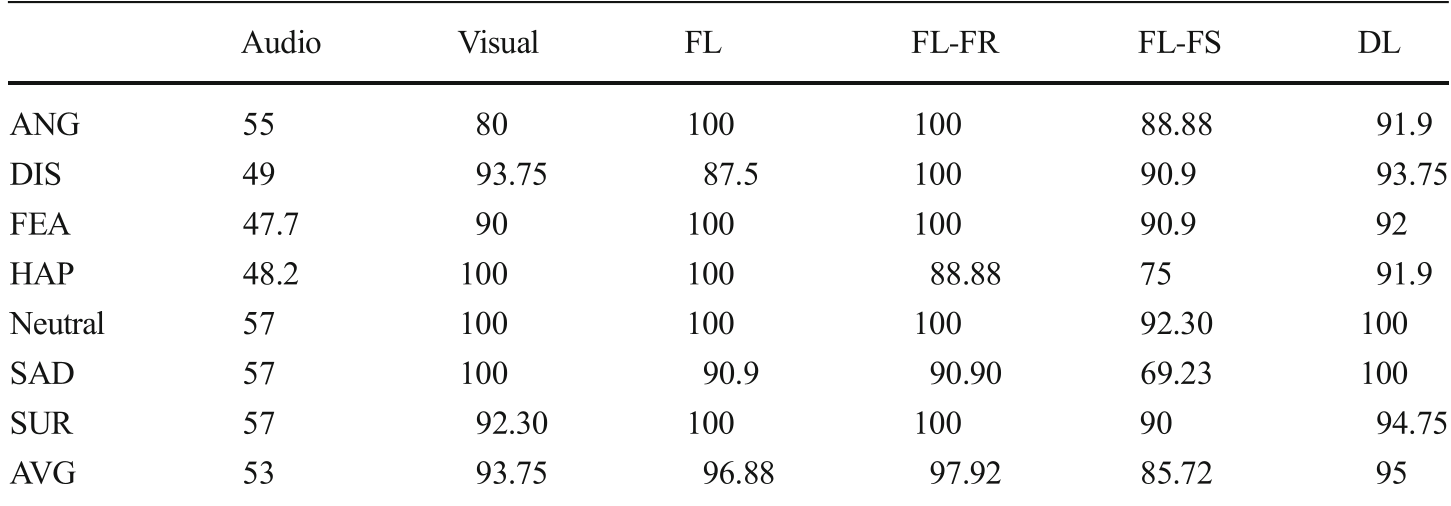 Table 1: Accuracy comparison across different fusion strategies.
Depth Insight: Why Feature-Level Fusion Won?
The study highlights that "Fusion after Feature Reduction" (FL-FR) outperformed "Decision Level Fusion" (DL). This suggests that in emotion recognition, the correlation between a specific vocal frequency and a specific eye-marker movement contains more information than the two outputs processed in isolation. The synergy happens at the latent feature level, not the final label.
Critical Analysis & Future Outlook
Takeaway: This work proves that traditional neural architectures like FAMNN can remain competitive with modern Deep Learning if their hyperparameter space is explored using meta-heuristic algorithms like PSO.
Limitations:
- Marker Dependency: The visual system relies on physical facial markers, which is impractical for real-world spontaneous emotion detection without high-end "markerless" tracking (like AAM).
- Dataset Size: While the results on SAVEE are stellar, the dataset features only 4 male speakers, and future validation on larger, more diverse populations is necessary.
Future Work: The authors suggest exploring newer "Nature-inspired" algorithms like Grey Wolf Optimization or Cuckoo Search to further refine the neural mappings. As we move toward 2026, the integration of these optimized fuzzy systems into "Smart Grids" and "Medical Emergency Domains" looks promising.