
Augmented Personalized Health: Transforming IoT Big Data into Actionable Smart Data
Augmented Personalized Health: How Smart Data with IoTs and AI is About to Change Healthcare
This paper introduces the framework of "Augmented Personalized Health" (APH), which leverages IoT sensors and AI to transition healthcare from episodic clinic visits to continuous, 360-degree wellness monitoring. It utilizes the "kHealth" initiative to convert multimodal big data into "Smart Data" through Semantic, Cognitive, and Perceptual computing.
TL;DR
The healthcare industry is undergoing a "Stethoscopic shift"—moving from episodic, clinic-based reactions to continuous, AI-augmented wellness management. This paper presents Augmented Personalized Health (APH), a paradigm that uses IoT sensors and a triple-layer AI approach (Semantic, Cognitive, and Perceptual computing) to turn overwhelming raw data into "Smart Data" for chronic disease management.
From Episodic to Continuous: The Motivation
For over two centuries, medicine has relied on snapshot data—what a doctor sees during an appointment or what a patient remembers to report. This "episodic" model is failing chronic disease patients. While we now have the sensors (Fitbits, air quality monitors, connected scales) to collect data, we face a "data-action gap":
- Reliability: Consumer sensors lack a "gold standard."
- Context: 10,000 steps mean "high activity" for a sedentary person but "low activity" for an athlete.
- Complexity: Chronic diseases like asthma are multi-factorial, driven by weather, pollutants, and individual physiology.
The authors argue that the solution isn't more data, but Smart Data—contextualized, personalized, and actionable information.
The Core Framework: Semantic, Cognitive, and Perceptual Computing
To bridge the gap between a raw sensor reading and a clinical decision, the authors propose a three-tiered AI architecture:
- Semantic Computing (SC): This layer gives meaning to raw bits. It situates sensor data within medical ontologies, identifying what the data represents (e.g., mapping a Bluetooth signal to a specific "Force Exhaled Volume" metric).
- Cognitive Computing (CC): This layer mimics human interpretation. It abstracts data based on domain expertise. It doesn't just see a "high heart rate"; it interprets it as "anomalous" based on the patient's age, weight, and current physical activity.
- Perceptual Computing (PC): The highest level, focusing on causal reasoning. It builds a model of the current situation to predict future events (e.g., an impending asthma attack) and seeks additional data to minimize uncertainty.
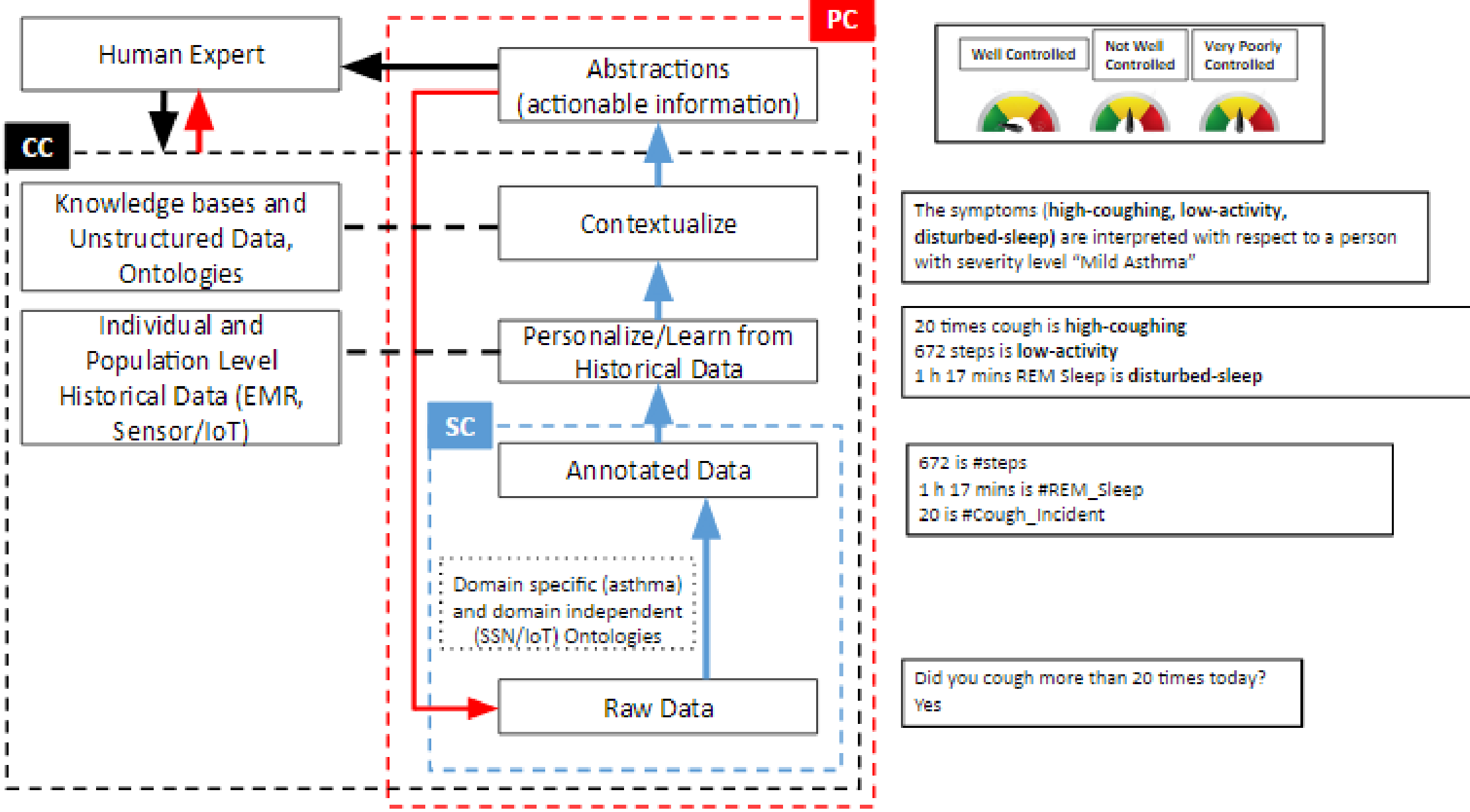 Figure 1: The Semantic-Cognitive-Perceptual computing loop in an asthma-management scenario.
Real-World Applications: The kHealth Initiative
The paper provides concrete evidence through the kHealth project, demonstrating how physical, cyber, and social data converge.
1. Pediatric Asthma
Using a kit (Fig. 2) including a digital spirometer, Fitbit, and "Foobot" (air quality sensor), researchers monitor 200 children. By correlating indoor pollutants (VOCs, CO2) with lung function (FEV1), the system can alert a parent to use an inhaler before wheezing starts, potentially avoiding expensive ER visits.
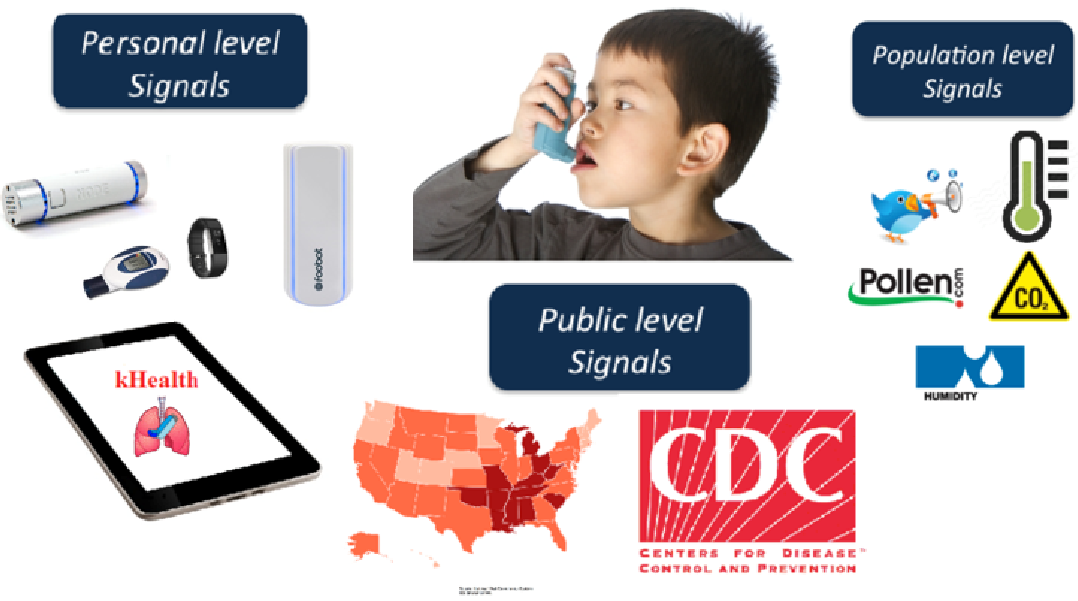 Figure 2: The multimodal kHealth kit for pediatric asthma management.
2. Post-Bariatric Surgery
The challenge here is "weight regain." kHealth monitors water consumption, vitamin intake (via pill-bottle sensors), and protein levels. The AI acts as a digital coach, providing personalized nudges to ensure compliance with the 18-month post-op recovery timeline.
3. Pain Management & Bayesian Reasoning
Perhaps the most technically intriguing part of the paper is the use of Bayesian Networks to model pain. Since pain is subjective, the authors use physiological proxies like blood pressure and heart rate. They demonstrate how causal models (Fig. 4) reduce the amount of training data needed by formalizing the relationships between hypertension, pain levels, and blood pressure readings.
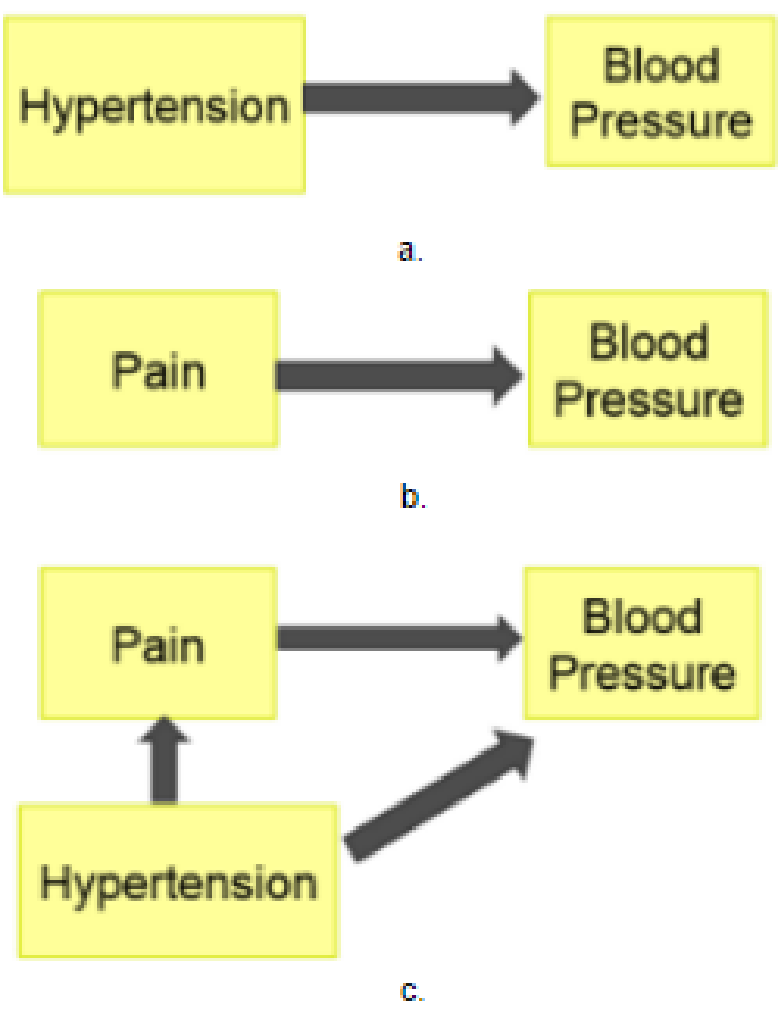 Figure 3: Bayesian modeling of the causal relationship between pain and blood pressure.
Critical Analysis & Takeaways
The Value: This work moves beyond the "Quantified Self" hobbyist movement into formal "Augmented Health." Its primary contribution is the recognition that AI must provide a transparency of reasoning (Semantic and Cognitive) rather than just black-box predictions.
Limitations:
- Sensor Fidelity: As noted, consumer-grade sensors vary wildly in quality.
- Privacy: The 360-degree monitoring (including social media tweets) raises significant ethical and privacy concerns that require robust governance.
- Clinical Integration: While the technology exists, integrating this "continuous data" into a clinician's already-crowded workflow remains a massive systemic challenge.
Conclusion: Augmented Personalized Health is not just about wearable gadgets; it is about a hybrid AI approach that combines probabilistic modeling with declarative medical knowledge. For developers and researchers, the lesson is clear: the most important feature of any health-AI system is its ability to contextually abstract raw data into a human-understandable "Why."