
RB-HORST: Turning Your Home Router into a Socially-Aware Traffic Ninja
Augmenting home routers for socially-aware traffic management
The paper introduces RB-HORST, a socially-aware traffic management mechanism that transforms home routers into "nano data centers" to form a P2P overlay network. By integrating social-aware prefetching (Facebook-driven) and trust-based WiFi offloading, it achieves a significant SOTA-level reduction in inter-domain traffic and enhances end-user Quality-of-Experience (QoE).
TL;DR
Is your home router just a plastic box gathering dust? RB-HORST proposes to turn it into a powerhouse for the neighborhood. By linking home routers in a socially-aware P2P overlay, this system predicts what videos you'll watch based on your Facebook feed, prefetches them at night, and lets your trusted friends offload their mobile data to your WiFi—all while slashing ISP costs by up to 50%.
Academic Positioning: This work is a hybrid architecture—merging Nano Data Centers (NaDa), Distributed Hash Tables (DHT), and Social Network Analysis (SNA) into a deployable hardware prototype using Raspberry Pis.
The Pain Point: The "Video Tsunami"
Standard Content Delivery Networks (CDNs) are struggling. As mobile video consumption accounts for over 55% of global traffic, the gap between backhaul capacity and user demand is widening. The authors identify two main inefficiencies:
- The Inter-Domain Toll: ISPs pay "transit" fees to carry data across networks.
- Reactive Caching: Traditional caches only store data after it's requested, missing the opportunity to utilize idle nighttime bandwidth.
The Secret Sauce: Social & Overlay Prediction
The core "magic" of RB-HORST lies in how it decides what to prefetch. It doesn't just guess; it uses two distinct engines:
1. Overlay Prediction (The Filter Bubble)
If your neighbors in the P2P overlay are watching certain videos, there’s a high statistical probability you’ll like them too. The algorithm calculates a "Similarity Score" based on common cached items.
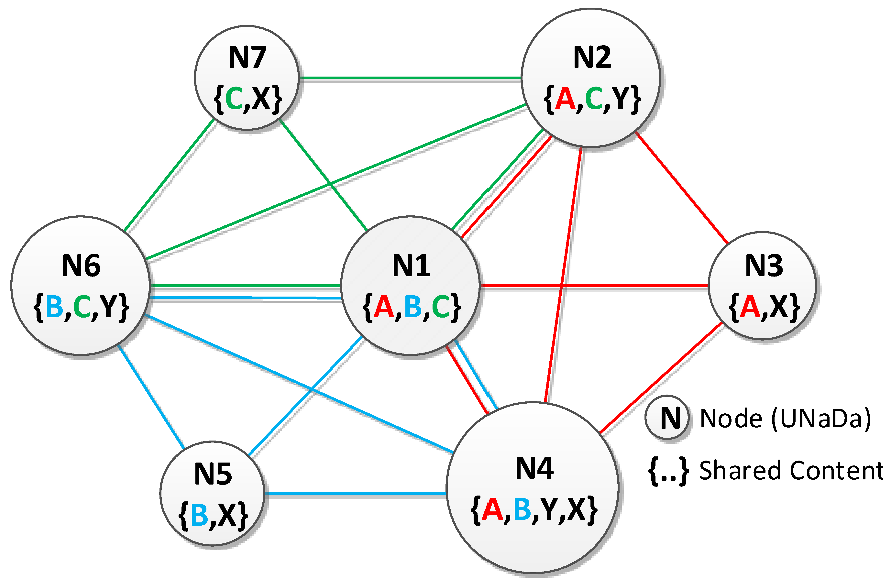
2. Social Prediction (The Facebook Feed)
By analyzing your Facebook News Feed, the system extracts video URLs and scores them across five dimensions: Age, Distance, History, Popularity, and Social Connection (how many friends shared it). This ensures that "viral" content is sitting on your router before you even click "Play."
Methodology: High-Efficiency P2P
Instead of a pure DHT (which is often topology-blind), RB-HORST uses the RB-Tracker. It performs an initial lookup via DHT but then shifts to direct messaging with "close" nodes.
The Rule of Thumb: Content is only downloaded from peers within one AS hop. This ensures that no transit costs are incurred, keeping the traffic "local" and fast.
Experimental Results: The Power of Scale
The evaluation used a massive simulation with 31,256 Autonomous Systems (ASes).
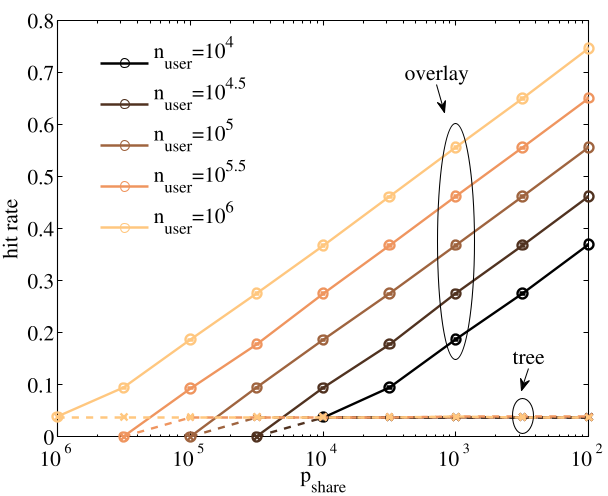
Key Findings:
- ISP Cache Replacement: In large networks, if just 0.1% of users participate, the contribution of the ISP's own expensive centralized cache drops to nearly zero.
- Local Traffic: Over 20% of requests can be served locally within a single ISP domain using 1% cache capacity at the edge.
Prototype Implementation
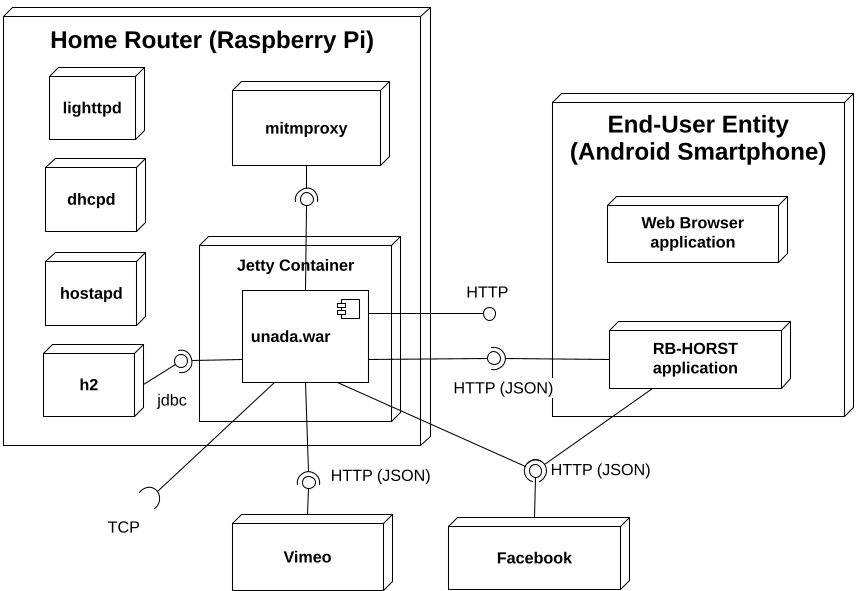
The researchers didn't just stop at math; they built it. Using Raspberry Pis running Raspbian and a custom Java-based "Overlay Manager," they proved that social-aware caching can run on constrained hardware with only 256MB of RAM.
Critical Insight & Conclusion
While RB-HORST presents a "win-win" for ISPs (cost reduction) and users (zero-buffering), its Achilles' heel remains Privacy. Although the authors argue that sensitive data stays on the device and content lists are anonymized, the integration with the Facebook Graph API might face steeper regulatory hurdles today (GDPR) than when the paper was conceived.
Final Takeaway: RB-HORST proves that our social connections are a goldmine for network optimization. By aligning the Network Topology with the Social Graph, we can navigate the impending mobile data explosion.