
RCM: Accelerating Social Network Analysis via Rapid Hybrid Clustering
Augmenting Rapid Clustering Method for Social Network Analysis
The paper introduces the Rapid Clustering Method (RCM), a hybrid framework combining Histogram Sampling, Subtractive Clustering (SCM), and Fuzzy C-Means (FCM). It achieves faster execution times than K-Means and SCM-FCM while maintaining high accuracy for large-scale social network and telecom datasets.
TL;DR
In the era of Big Data, clustering millions of nodes in a social network often requires choosing between the speed of K-Means and the accuracy of Fuzzy C-Means (FCM). The Rapid Clustering Method (RCM) breaks this deadlock. By integrating a density-preserving Histogram Sampling technique with a hybrid SCM-FCM approach, RCM delivers the consistency of fuzzy logic at speeds exceeding traditional K-Means.
Academic Positioning: This work serves as an optimization framework, focusing on reducing the time complexity of fuzzy clustering without sacrificing the probabilistic nuances required for social network overlapping node detection.
Problem & Motivation: The Consistency-Speed Paradox
Data scientists often face a dilemma when segmenting large datasets:
- K-Means: Efficient but "random." Its results depend heavily on the initial centroid selection, making it unreliable for sensitive social network structures.
- Fuzzy C-Means (FCM): Robust and probabilistic (handling overlapping communities), but notoriously slow as the dataset grows.
- Subtractive Clustering (SCM): Often used to find initial centers for FCM, but it has a computational complexity of , making it a bottleneck for millions of records.
The authors recognized that the core issue lies in the initialization overhead. If we can find "good enough" cluster centers quickly using a representative subset of data, we can unlock the full power of FCM on the complete dataset.
Methodology: The Three-Pillar Architecture
RCM employs a sophisticated pipeline to ensure speed and accuracy:
1. Histogram Sampling (Density Preservation)
Unlike random sampling, which might miss sparse but significant clusters, Histogram Sampling segments the data into intervals and samples proportionally. This ensures that the "shape" of the data is maintained even when the volume is drastically reduced.
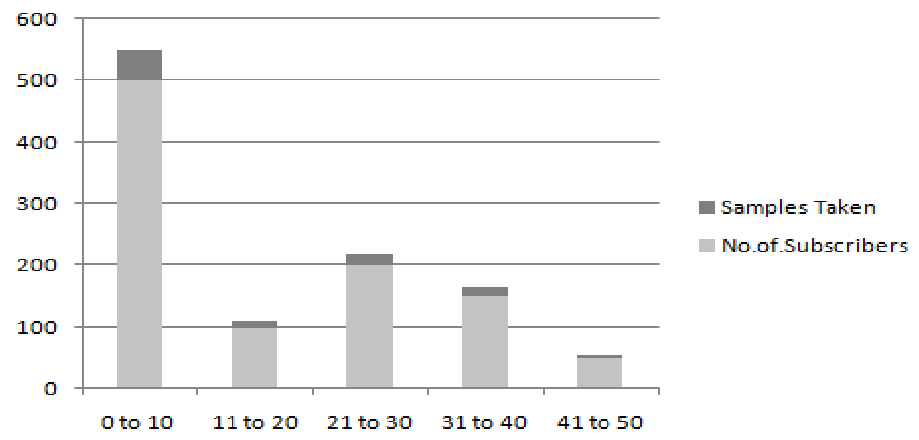 Figure 1: By subdividing dense intervals into smaller sub-intervals, RCM ensures the sampled dataset remains a high-fidelity representation of the original distribution.
2. SCM-FCM Initialization
The SCM is applied only to the sampled dataset. Because the volume is low, the penalty is negligible. These results are then refined through a quick FCM pass on the sample to establish consistent cluster centers.
3. Full-Scale Deployment
Finally, the centers obtained from the sample are used as the "starting point" for FCM on the original, massive dataset. This bypasses the slow convergence phase of standard fuzzy algorithms.
Experiments & Results: Breaking the Speed Barrier
The method was tested on a massive telecom dataset containing 1,208,473 subscriber records. The goal was to cluster subscribers based on voice usage counts.
- Speed: RCM demonstrated a dramatic reduction in execution time compared to standard SCM-FCM.
- Benchmarking: Surprisingly, RCM even surpassed K-Means in execution speed while providing the superior consistency associated with fuzzy clustering.
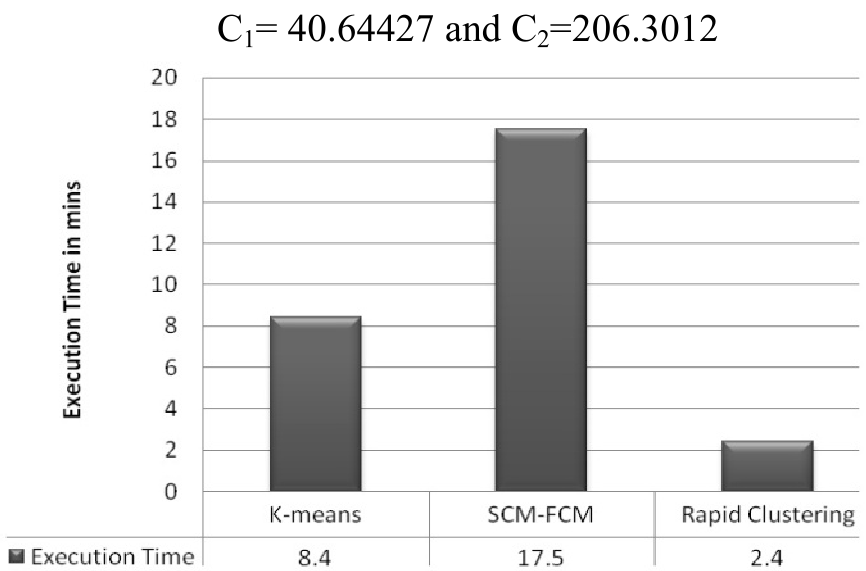 Figure 2: The comparison shows RCM (Rapid Clustering Method) as the clear winner in temporal efficiency, especially critical for real-time social network monitoring.
Industry Applications: Beyond the Math
The paper highlights two high-value use cases for RCM:
- Cross-Selling in Telecom: By identifying "High" and "Low" usage clusters rapidly, companies can apply Quantitative Association Rule Mining to offer the right services to the right people, improving "Lift" and "Confidence" metrics.
- Social Network Overlap: In social graphs, nodes often belong to multiple communities. RCM’s fuzzy approach allows a node to have a membership probability (e.g., 0.6 in Community A, 0.4 in Community B), which is vital for accurately mapping complex human interactions.
Critical Insight & Conclusion
The true innovation of RCM isn't a new mathematical proof, but a system-level optimization. By recognizing that the "intelligence" of a clustering algorithm (finding the centers) can be offloaded to a density-accurate sample, the authors have made fuzzy clustering viable for the Big Data era.
Limitations: The success of RCM depends heavily on the "Interval Size" chosen during Histogram Sampling. If the interval is too large for a non-uniform distribution, the sampled centers might deviate from the global optimal.
Future Outlook: RCM provides a blueprint for "Streaming Clustering," where community structures in social networks can be updated in near real-time as new user data flows in.