
The Authenticity Paradox: Why Being "Real" on Social Media is Harder for Some
Authenticity and well-being on social network sites: A two-wave longitudinal study on the effects of online authenticity and the positivity bias in SNS communication
This two-wave longitudinal study (N=374) investigates the reciprocal relationship between authenticity on Social Network Sites (SNSs) and psychological well-being. Using cross-lagged path models, the authors demonstrate that online authenticity significantly enhances positive affect and life satisfaction while reducing negative affect.
TL;DR
Is social media a mask for our ideal selves or a mirror of our true identity? This longitudinal study proves that online authenticity is a powerful engine for psychological well-being. However, there is a catch: a built-in "positivity bias" on social platforms makes it significantly harder for users struggling with depression or low affect to be authentic, creating a "rich-get-richer" cycle of digital happiness.
Problem & Motivation: The "Mask" vs. The "Mirror"
In the early days of the internet, we viewed online spaces as a playground for identity play—anonymous chat rooms where one could be anyone. Today’s Social Network Sites (SNSs) are different. Because we are "nonymous" (linked to our real names and faces), the Warranting Principle suggests that our online profiles are tethered to our offline realities.
The researchers, Reinecke and Trepte, noticed a gap in our understanding: If we are forced to be "real" by our social circles online, does that authenticity actually make us happier? And more importantly, does the pressure to stay "positive" on Facebook or Instagram prevent people from expressing their true, sometimes messy, lives?
Methodology: Tracking the Pulse of SNS Users
To solve this, the authors conducted a two-wave longitudinal study. By tracking 374 users over six months, they could move beyond simple correlations and see what caused what (causal directionality).
They measured four key pillars:
- Positive/Negative Affect: Daily emotional states.
- Life Satisfaction: Long-term cognitive judgment of one's life.
- Authenticity: Specifically, the gap between the adjectives people use to describe their "online profile self" versus their "true self."
Core Insight: The Positivity Bias
The most striking finding is the "positivity bias in SNS communication."
SNS environments provide rewards (Likes, Shares, Support) for positive content. When users post about success or joy, they receive reinforcement. However, expressing sadness or failure often results in lower social attractiveness or even social avoidance. This creates a psychological barrier:
- High Well-being Users: Their "true self" is currently positive. For them, being authentic is easy and socially rewarded.
- Low Well-being Users: Their "true self" is currently struggling. For them, being authentic—showing their true negative feelings—violates the implicit "happiness contract" of the platform.
Experiments & Results: The "Rich-Get-Richer" Effect
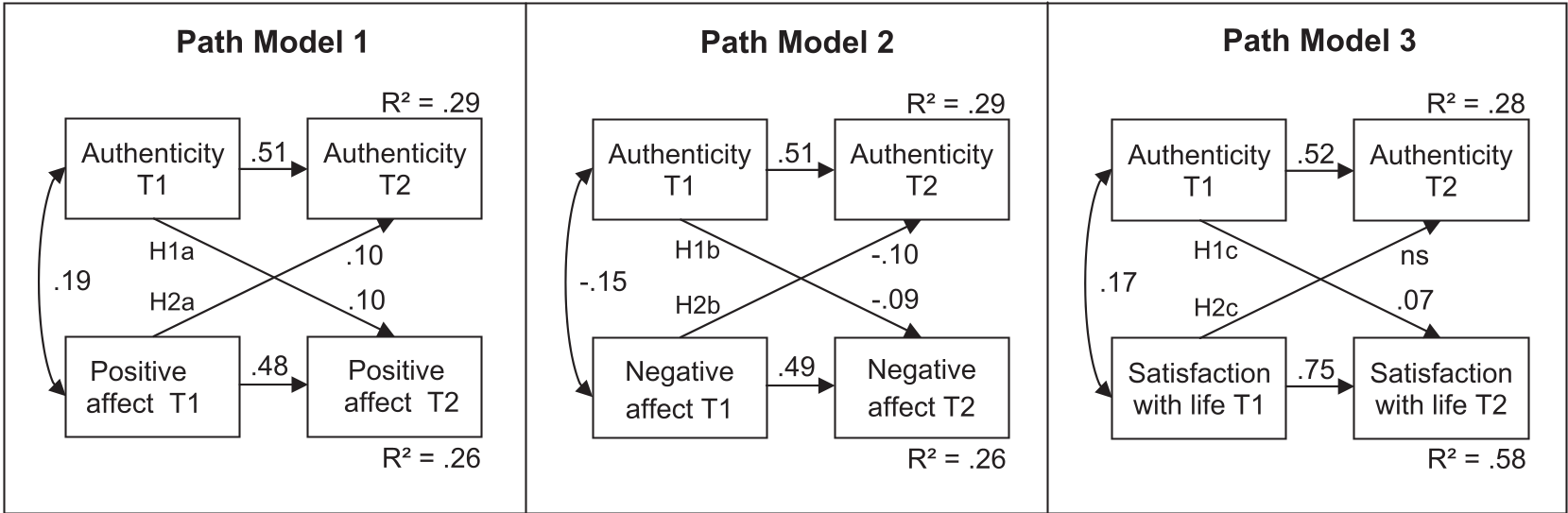
The statistical analysis confirmed three major outcomes:
- Authenticity Drives Happiness: Users who were more authentic at Time 1 showed higher life satisfaction and lower negative affect six months later.
- Affect Drives Authenticity: Interestingly, users who were already happy at Time 1 were more likely to be authentic at Time 2.
- The Marginalization of the Distressed: Negative affect (stress/sadness) at Time 1 predicted decreased authenticity at Time 2.
In short, if you are sad, you feel less "permitted" to be yourself online, which prevents you from reaping the well-being benefits that authenticity provides.

Critical Analysis: A Double-Edged Sword
This study is a landmark because it moves the conversation from "Does social media make us sad?" to "Who does social media help, and who does it hinder?"
Implications for the Future:
- The Social Support Gap: If we cannot be authentic about our pain, we can't get targeted social support. This suggests that "nonymous" platforms like Facebook might actually be worse for crisis support than anonymous forums.
- Design Ethics: Platform algorithms that prioritize "engagement" often inadvertently amplify the positivity bias, further silencing those in need of authentic expression.
Limitations:
The study was conducted in a specific cultural context (Germany) during the dominant era of Facebook. Modern platforms like TikTok or "BeReal" might have different norms, though the underlying psychological pressure of the "Audience" likely remains the same.
Conclusion
The takeaway is clear: Authenticity is a vital nutrient for mental health in the digital age. However, as long as social platforms are engineered to favor the "highlight reel," the users who need the benefits of authenticity the most—those in the midst of psychological struggle—will continue to be left behind by the very networks meant to connect them.