
PDHS: Transforming Daily Lifestyle Data into Actionable Healthcare Intelligence
Automated Healthcare Data Mining Based on a Personal Dynamic Healthcare System
The paper introduces an automated healthcare data-mining system integrated into a Personal Dynamic Healthcare System (PDHS). It utilizes the ITRULE algorithm and information theory to extract personalized lifestyle-health correlations from mobile-contributed time-series data, specifically achieving a rule confidence of up to 72% in predicting body-fat index fluctuations.
Executive Summary
TL;DR: This paper presents an end-to-end framework for a Personal Dynamic Healthcare System (PDHS) that bridges the gap between raw data collection and personalized health insights. By applying an automated rule induction method (ITRULE) to time-series data collected via mobile phones, the system uncovers hidden correlations—such as how a specific five-day window of caloric intake impacts body fat.
Positioning: This work serves as an early SOTA implementation of mobile-centric preventive medicine, shifting the focus from "data storage" to "automated insight generation."
The "Delayed Effect" Challenge
Prior healthcare monitoring systems often treated lifestyle inputs (like a single meal) and health outputs (like weight) as instantaneous events. However, the human metabolism operates with retardation (lag). The author's primary insight is that identifying when a behavior starts affecting a metric is as important as identifying what the behavior is. The challenge lies in automatically selecting which lifestyle factors (independent variables) actually drive health changes (target variables) without overwhelming the system's processing power.
Methodology: Information Theory Meets Metabolism
The core of the system is the ITRULE algorithm, which relies on the J-measure to rank the "interestingness" of rules.
1. The Architecture
The system follows a classic MVC architecture designed for mobile-to-cloud communication, ensuring that data entered by the user is processed securely via HTTPS and stored in a relational database for mining.
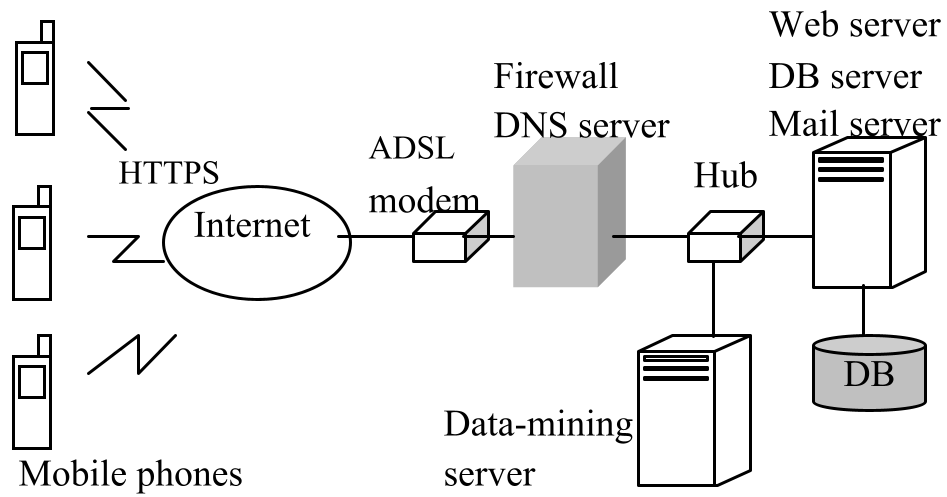 Fig 1: The PDHS Configuration: From Mobile Input to Data-Mining Server.
2. Identifying Correlations
To avoid "CPU-time explosion," the system doesn't mine every possible variable. It uses a Correlation Check process (Fig 3) to find the optimal window () and retardation (). For instance, if body fat today is most highly correlated with alcohol intake from two days ago, the system sets the lag parameter accordingly.
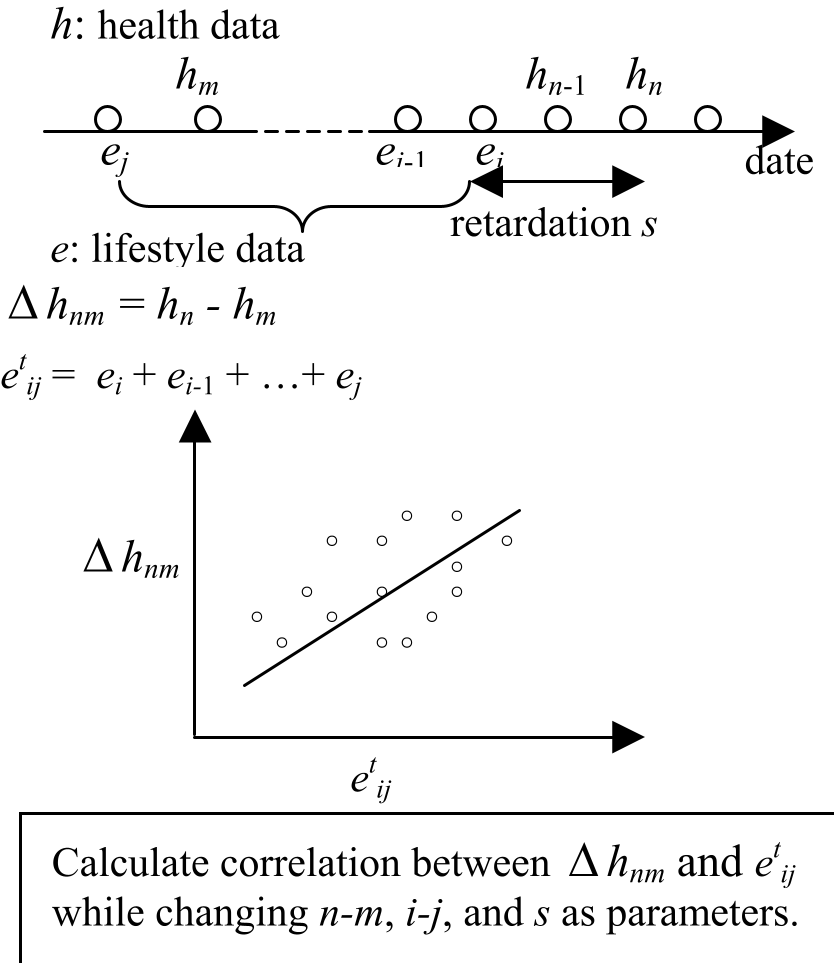 Fig 2: Algorithm for defining input fields by testing various time parameters ().
Experimental Analysis: Mining Body Fat
The researchers tested the system on a volunteer over one year. The most striking result was the emergence of Rule 2, which specialized a general rule about food intake by adding "Energy Expenditure" as a second antecedent.
Key Findings:
- The 5-Day Rule: The system automatically determined that a 5-day cumulative sum of ingestion and expenditure was the most predictive input for body fat.
- High Precision: The rule stating that Low Exercise (<280 kcal/day) + High Ingestion (>2000 kcal/day) results in higher body fat achieved a 72% Confidence.
- Automatic Thresholding: The system successfully categorized numeric health data into "Higher/Moderate/Lower" classes based on data frequency, ensuring the rules were robust across different user profiles.
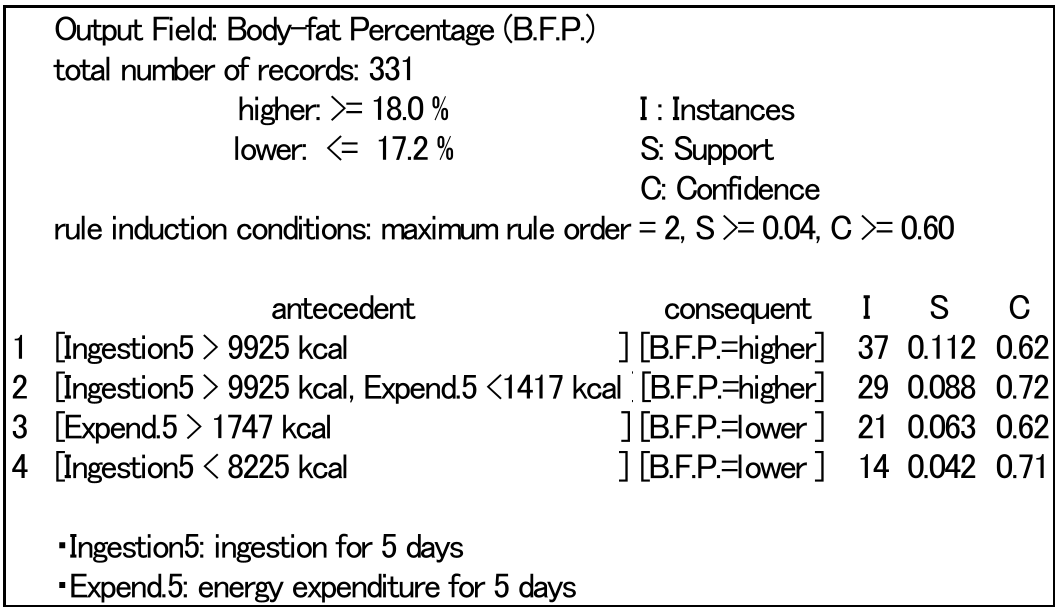 Fig 3: Automated health Rules showing Support (S) and Confidence (C) for body-fat outcomes.
Critical Insights & Future Directions
The strength of this work lies in its interpretability. Unlike black-box neural networks, the ITRULE algorithm provides If-Then statements that a user can immediately act upon (e.g., "I need to burn at least 350 kcal today because I ate heavily over the last 4 days").
Limitations: The current model relies on Pearson’s correlation, which assumes linear relationships. Future iterations could explore non-linear dependencies using Mutual Information or modern Attention-based architectures to capture more complex biological interactions.
Takeaway: This paper proves that for personal health, "context is king." By incorporating temporal dynamics and automated rule generation, mobile health applications can move from being simple "logbooks" to become "intelligent health coaches."