
Automated HCM: Bridging the Semantic Gap in AI-Driven Recruitment
Automated human capital management system
The paper introduces a scalable, micro-service-based Automated Human Capital Management (HCM) system. It combines Natural Language Processing (NLP), Semantic Web ontologies, and Machine Learning (ML) to cluster, categorize, and rank job postings and candidate profiles with high precision.
TL;DR
Human Capital Management (HCM) is undergoing a paradigm shift from manual screening to automated intelligence. This paper presents a stateless, scalable architecture that merges Semantic Web technologies with Machine Learning to solve the "matching problem." By building a massive ontology of 43,000 skill nodes, the system doesn't just look for keywords—it understands the functional hierarchy of a candidate's expertise.
Problem & Motivation: The Keyword Trap
Most HR tech relies on simple keyword matching or collaborative filtering. The former fails because it ignores synonyms and related skills (e.g., a "Java" expert likely knows "Hibernate"), while the latter fails for new job posts or fresh candidates (the "Cold Start" problem).
The authors identify a critical technical gap: non-linearity in candidate profiles. Experience, education prestige, and skill depth cannot be measured on a simple linear scale. They argue that a system must first "understand" the domain (Semantic) before it "predicts" a match (ML).
Methodology: The Hybrid Intelligence Pipeline
1. The Skill Ontology & Skill-Filling
The core innovation is the use of an acyclic directed graph to represent skills. Using Jaccard Similarity on Stack Overflow datasets, the authors define relationships like NumPy → Python or Spring → Java.
This allows for Skill-Filling: if a candidate omits a common tool used in their field, the system infers its presence, refining the feature vectors and improving clustering accuracy.
2. Scalable Micro-service Architecture
To handle compute-heavy tasks like real-time analytics, the framework uses a Tier-based structure (Web Client, Services, Storage, and Messaging Queue).
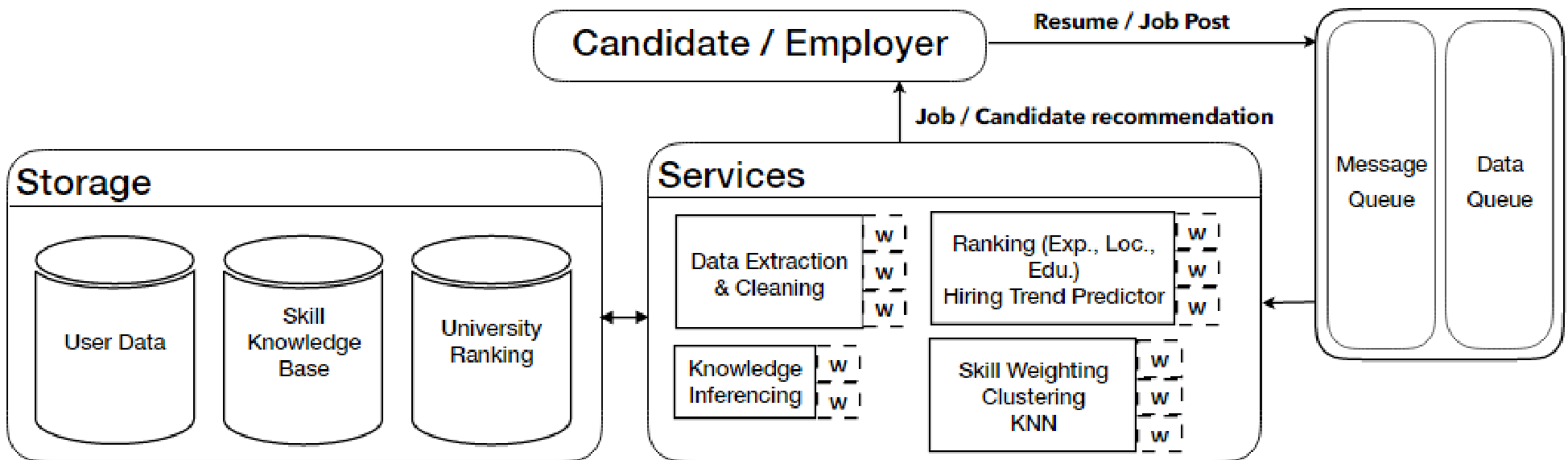 Fig 1: The holistic view of the stateless architecture, ensuring horizontal scalability.
3. Multi-Dimensional Ranking
The system doesn't just calculate a "score"; it processes four distinct modules:
- Experience Ranking: Uses a hybrid linear-exponential model to penalize candidates who fall outside the 4–6 year "sweet spot."
- Location Ranking: Integrates Google Maps API to calculate "commute-ability."
- Education Ranking: Uses a modified Error Tolerance Index (ETI) and Fuzzy String Matching to handle typos in university names.
- Hiring Trend Predictor: Adjusts weights based on a company's historical hiring patterns via a back-propagation mechanism.
Experiments & Results: Beyond Keyword Matching
The researchers tested the system on 600 real-world data points from Indeed.com. A standout result was the comparison of Increasing vs. Decreasing weight strategies for derived skills.
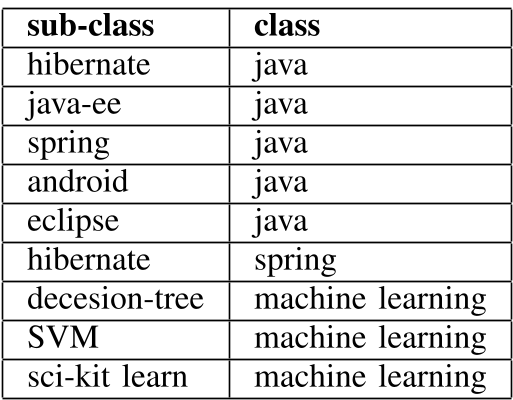 Table 1: Examples of generated skill hierarchies.
The "Decreasing weights with derived skills" approach proved most effective. It assigns higher priority to specific skills explicitly mentioned by the user (like "Hibernate") while giving lower, background weights to abstract parent terms (like "Java"). This ensures specific expertise is rewarded without losing the context of general proficiency.
Deep Insights: Is It "Truthful"?
The authors make a fascinating observation about "truthfulness" in AI:
- Decreasing weights provide better accuracy but can be "gamed" by candidates keyword-stuffing specific technical terms.
- Increasing weights (rewarding abstract mastery) are harder to cheat but might overlook niche specialists.
Conclusion & Future Outlook
This work demonstrates that the future of HR Tech isn't just "more data," but "better structured data." By utilizing a stateless micro-service design, the system remains fast enough for global platforms like Indeed or Glassdoor.
The next frontier? Career Progression Modeling. Instead of just matching you to a job today, the authors envision a system that suggests which skill you should learn next to reach your target role—transforming HCM from a search engine into a career coach.