
The Instrumented Cane: Turning a Traditional Mobility Aid into a Smart Diagnostic Tool
4219_Feasibility of Automated Mobility Assessment of Older Adults via an Instrumented Cane.
This paper presents the Instrumented Cane System (ICS), an offset cane retrofitted with inertial, force, and ultrasound sensors to objectively characterize functional mobility. The system aims to automate falls risk assessment by correlating sensor-derived metrics with clinical standards like the Dynamic Gait Index (DGI) and Functional Gait Assessment (FGA).
TL;DR
Researchers have developed an Instrumented Cane System (ICS) that uses inertial sensors, load cells, and a novel grip pressure sensor array to objectively measure gait quality. Unlike subjective clinical observations, this system provides quantitative data that aligns with traditional falls risk assessments like the FGA, offering a path toward continuous, home-based mobility monitoring.
Background: The Gap in Geriatric Care
Falls are a leading cause of injury and loss of independence for adults over 65, with annual medical costs exceeding $34 billion. Currently, Physical Therapists (PTs) use observational tools (DGI, POMA) to assess risk. However, these "snapshots" in the clinic often miss the declining function that happens in daily life. Wearables are a potential solution, but they often face the "drawer effect"—patients simply forget to wear them. This paper addresses these issues by instrumenting a tool the patient is already using: their cane.
Why Grip Pressure Matters
While previous research focused on weight-bearing (axial load), this study introduces Grip Pressure (GP) as a critical metric.
- Physical Intuition: Patients who feel unstable often "white-knuckle" their mobility aids.
- Clinical Utility: High grip pressure can lead to secondary injuries in the wrist and shoulder. By measuring this, the ICS provides a more holistic view of how a patient relies on their device.
Methodology: The System Architecture
The ICS uses an offset aluminum cane for structural stability. It integrates:
- 9-DOF IMU: Positioned in the handle to track linear acceleration and rotational velocity.
- Load Cell: Located at the base to measure weight-bearing.
- 8-FSR Array: Wrapped around the handle to capture grip intensity.
- Ultrasound Sensor: Fixed to the shaft to detect potential collisions with the user's legs or obstacles.
 Figure 1: The Instrumented Cane System (ICS) showing the distribution of sensor components.
Data is processed via a custom software suite that uses polynomial mapping to linearize force signals, ensuring that the non-linear nature of FSRs and rubber-capped load cells doesn't skew the results.
Experimental Insights
The researchers conducted two studies: a feasibility study with 9 patients and a comparative study between 9 patients and 9 healthy controls.
Key Findings:
- Grip Pressure as a Discriminator: Patients had significantly higher mean grip pressure (p = 0.041) and higher variation in that pressure than healthy controls.
- Rotational Velocity (gy): The variation in rotational velocity around the y-axis (representing the "swing" or "tilt" of the cane in the direction of movement) was strongly correlated with better mobility scores (r = 0.61). This suggests that more mobile users have a more fluid, dynamic range of motion with the device.
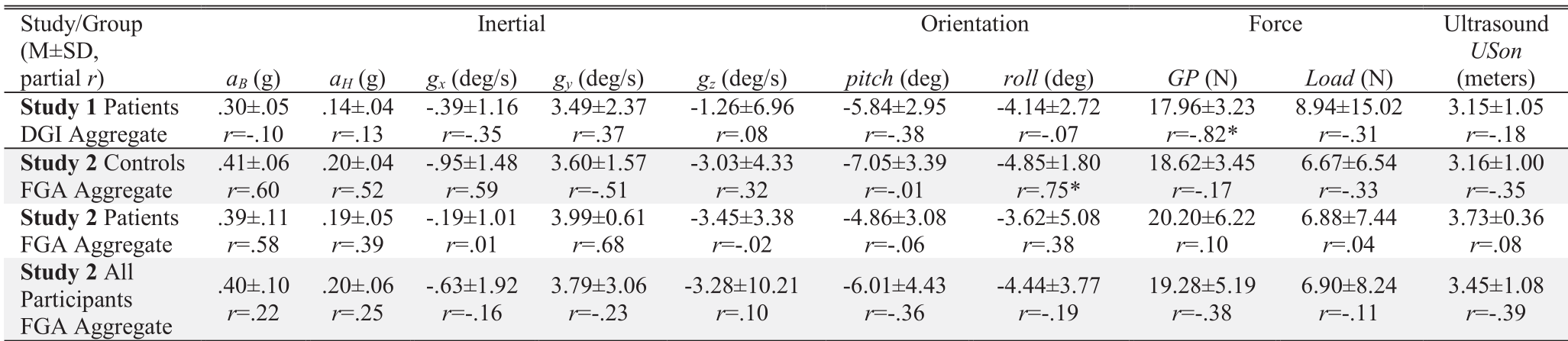 Table 1: Comparison of sensor metrics across different mobility levels.
Critical Analysis & Conclusion
This work represents a vital shift from "event detection" (detecting a fall after it happens) to "risk characterization" (predicting a fall before it happens).
Limitations:
- Sample Size: With only 18 participants, the statistical power is limited for generalizable conclusions.
- Sensor Resolution: The authors noted that the load cell range was too large (2500 N), which reduced precision for measuring lighter weight-bearing typical of cane users.
- Experience Bias: A long-term cane user might use the device differently than a healthy control given a cane for the first time, a factor future studies must account for.
The Future:
The next step for the ICS is the integration of Machine Learning (e.g., Logistic Regression, Decision Trees) to handle the high-dimensional, non-linear sensor data. Moving these devices into patients' homes for longitudinal studies will allow researchers to catch "aberrant behaviors" and non-compliance—events that currently go unnoticed until an actual injury occurs.
Ultimately, the ICS doesn't just measure a walk; it measures the quality of independence.