
Automated Speech Emotion Recognition: Bridging the Gap in Mobile HCI
Automated Speech Emotion Recognition on Smart Phones
This paper presents an automated Speech Emotion Recognition (SER) system designed for mobile and cloud environments. By leveraging Mel-frequency cepstral coefficients (MFCC) for feature extraction and Support Vector Machines (SVM) for classification, the system achieves a 95.3% accuracy rate on the RAVDESS database across seven archetypal emotions.
TL;DR
This research introduces a robust Speech Emotion Recognition (SER) system that brings emotional intelligence to smartphones. By combining MFCC feature extraction with Support Vector Machine (SVM) classifiers, the authors achieved an impressive 95.3% accuracy on the RAVDESS database. The study highlights the transition of SER from complex laboratory setups to real-time mobile applications using a cloud-hybrid model.
Background & Positioning
In the realm of Human-Computer Interaction (HCI), machines have long been able to understand what is said (ASR), but they often fail to understand how it is said. This paper positions itself as a bridge between traditional signal processing and modern mobile computing, aiming to provide a high-accuracy solution for real-world scenarios like criminal intent detection, psychiatric diagnostics, and intelligent toys.
Problem & Motivation: The Acoustic Challenge
Machines do not naturally possess the mental power to interpret emotional states from speech signals. While humans do this instinctively, automating the process faces several hurdles:
- Feature Selection: Identifying which spectral or prosodic features (pitch, energy, frequency) truly represent emotion.
- Complexity: High-dimensional multiclass features often make training difficult for standard algorithms on mobile platforms.
- Noise: Real-world mobile environments are noisy, requiring sophisticated pre-processing.
Methodology: The SER Pipeline
The authors propose a structured pipeline that moves from raw audio to emotional classification.
1. Architecture
The system uses a high-level pattern recognition architecture. Input audio undergoes pre-processing (noise reduction and silence removal) before hitting the feature extraction engine.
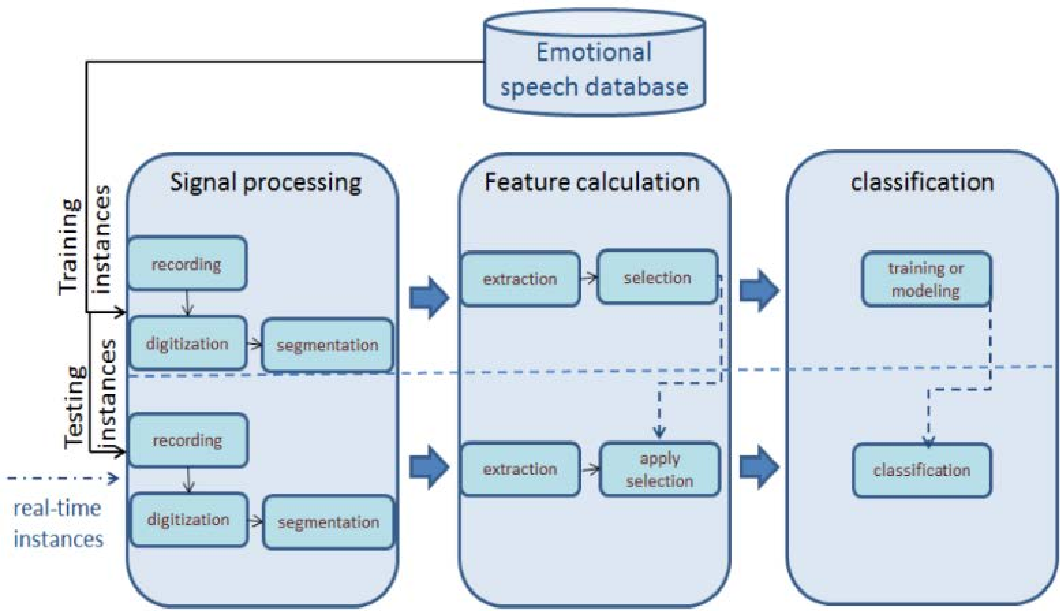 Fig 1: High-level architecture of the proposed SER system.
2. Feature Extraction (MFCC)
The core "insight" relies on the Mel-frequency cepstral coefficient (MFCC). Unlike linear frequency scales, the Mel scale mimics human hearing by using logarithmic intervals. The mathematical foundation relies on the formula: The process uses a 20ms window with a Hamming window for sidelobe suppression, ensuring that spectral leaks are minimized during the transformation of speech into discrete frames.
3. Classification via SVM
Despite the rise of Neural Networks, the authors utilized SVM for its effectiveness in classification tasks with limited but high-quality training data. By using kernel functions, they transformed non-linear inputs into high-dimensional spaces where emotions become linearly separable.
Experiments & Results: Real-World Performance
The system was evaluated against two major benchmarks: RAVDESS and SAVEE.
- RAVDESS Success: The system achieved 95.3% accuracy. The confusion matrix reveals that "Disgust" was the most identifiable emotion (97.39%), while "Neutral" was sometimes confused with "Surprise" or "Sadness."
- Acoustic Signatures:
- Anger: Characterized by high energy and the highest rate of pitch change.
- Disgust: Defined by a slower speech rate and descending pitch inflection at the end of phrases.
- Happiness: Shows sharp oscillations in pitch contour and positive valence.
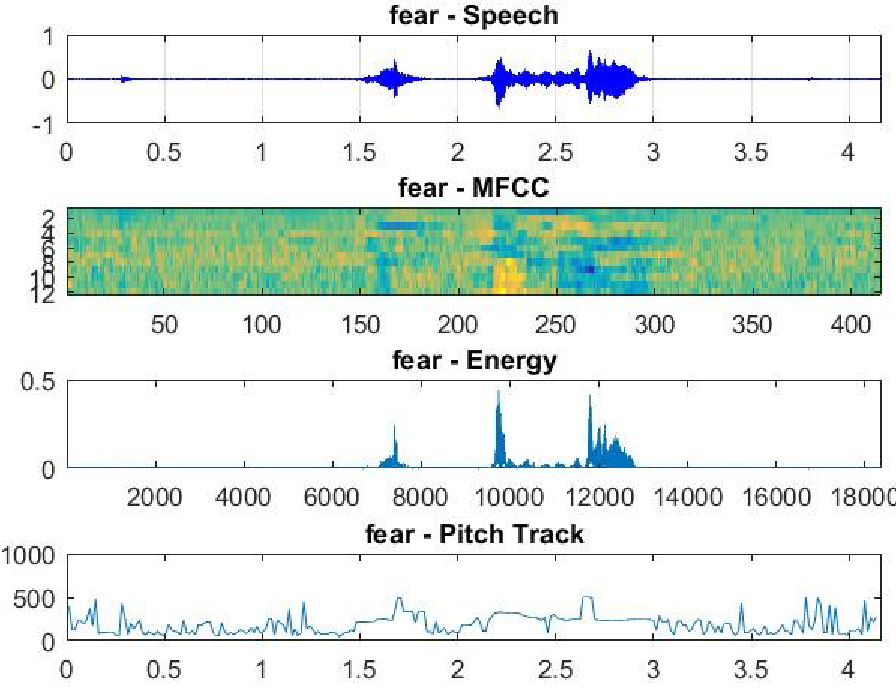 Table 1: Performance metrics showing high accuracy across the emotional spectrum.
Critical Analysis & Conclusion
Takeaways
The research proves that sophisticated emotion detection is feasible on mobile platforms by offloading heavy simulation tasks to tools like MATLAB while maintaining a light Android front-end. The reliance on MFCC confirms its status as a "gold standard" for spectral feature representation in SER.
Limitations & Future Work
The authors noted that the SVM occasionally struggled with the sheer volume of multiclass features, requiring a specific combination of Android tools and MATLAB to function effectively. Future iterations aim to test the system on multilingual datasets to ensure that "emotion" is recognized across cultural and linguistic boundaries, not just acoustic ones.
Final Insight: As we move toward a world of robots and AI personal assistants, the ability for a smartphone to "feel" a user's frustration or joy represents a significant leap toward truly natural Human-Computer Interaction.