
ASMEP: Revolutionizing Educational Monitoring with Big Data and Machine Learning
Automated System for Monitoring of Educational Processes: Collection, Management, and Modeling of Data
The paper introduces the Automated System for Monitoring of Educational Processes (ASMEP), a comprehensive framework for collecting, managing, and modeling big data in the Kazakhstani education sector. It leverages Knowledge Discovery in Databases (KDD) and Machine Learning to replace manual analytical processes with real-time, automated scoring and predictive modeling.
TL;DR
The Automated System for Monitoring of Educational Processes (ASMEP) is a high-performance framework designed to eliminate human error in educational analytics. By integrating API-based data collection, sophisticated signal processing for data cleaning, and Fuzzy Logic for predictive modeling, it provides government bodies with real-time insights into school performance, digitalization levels, and resource management.
Contextual Background: Moving Beyond Manual Reporting
In many educational administrations, reporting still feels like a relic of the past—fraught with manual spreadsheets and reactive decision-making. ASMEP positions itself as a SOTA "Situational Analytical Center" solution, shifting the paradigm from static record-keeping to dynamic, predictive monitoring.
The Pain Points: The Human Factor and Data Noise
The authors identify two critical barriers in existing educational management:
- The Human Factor: Manual data entry and visualization result in significant delays and questionable accuracy.
- Raw Data vs. Useful Knowledge: While databases exist, extracting "useful knowledge" (e.g., identifying at-risk learner groups or prioritizing facility upgrades) remains a manual, non-standardized task.
Methodology: The ASMEP Architecture
The system follows a rigorous 5-step Knowledge Discovery in Databases (KDD) cycle, but with modern technical enhancements at each stage.
1. Advanced Data Engineering & Mapping
To create a "complete vision," the system maps the internal database with the Kazakhstani National Educational Database.
- Mechanism: Use of ElasticSearch and ZomboDB (PostgreSQL extension) to search and map organizations by name and location.
- API Integration: Real-time data collection through national APIs, subsequent validation, and structuring into relational DBMS.
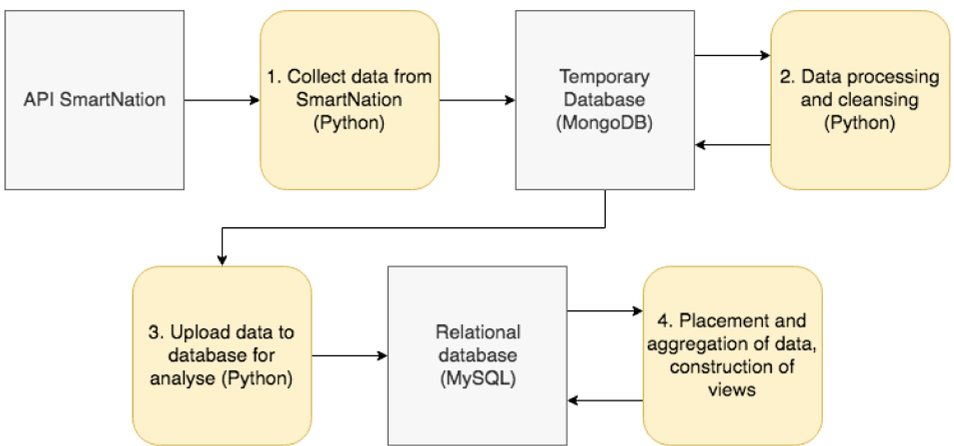 Figure 1: Simplified scheme of data collection and processing showing the pipeline from raw sources to refined analysis.
2. Signal-Level Data Cleaning
Unlike standard systems that simply drop "null" values, ASMEP treats educational data as a signal:
- Smoothing: Employs Fast Fourier Transform (FFT) and Wavelets to filter low-frequency noise.
- Imputation: Uses Approximation for ordered data strings and Maximum Likelihood for disordered datasets.
3. Fuzzy Logic Scoring Model
The "heart" of the system is a 6-factor assessment model:
- Additional Education
- National Testing (UNT) Results
- Material-Technical Base
- Building Infrastructure
- Teaching Staff
- Digitalization Level
The authors utilize a Fuzzy Logic Interface in Matlab to handle the linguistic uncertainty of qualitative data (e.g., evaluating a school's digital level as "Satisfactory" vs "Good").
Results & Strategic Value
The pilot implementation in the Turkestan region (South Kazakhstan) provided a clear performance distribution.
- Ranking: The system automatically generated rankings that identified the "Worst 10 Schools," allowing for immediate intervention.
- Predictive Power: By modeling input variables like "Level of Digitalization" and "Teaching Levels," the system can simulate future trends.
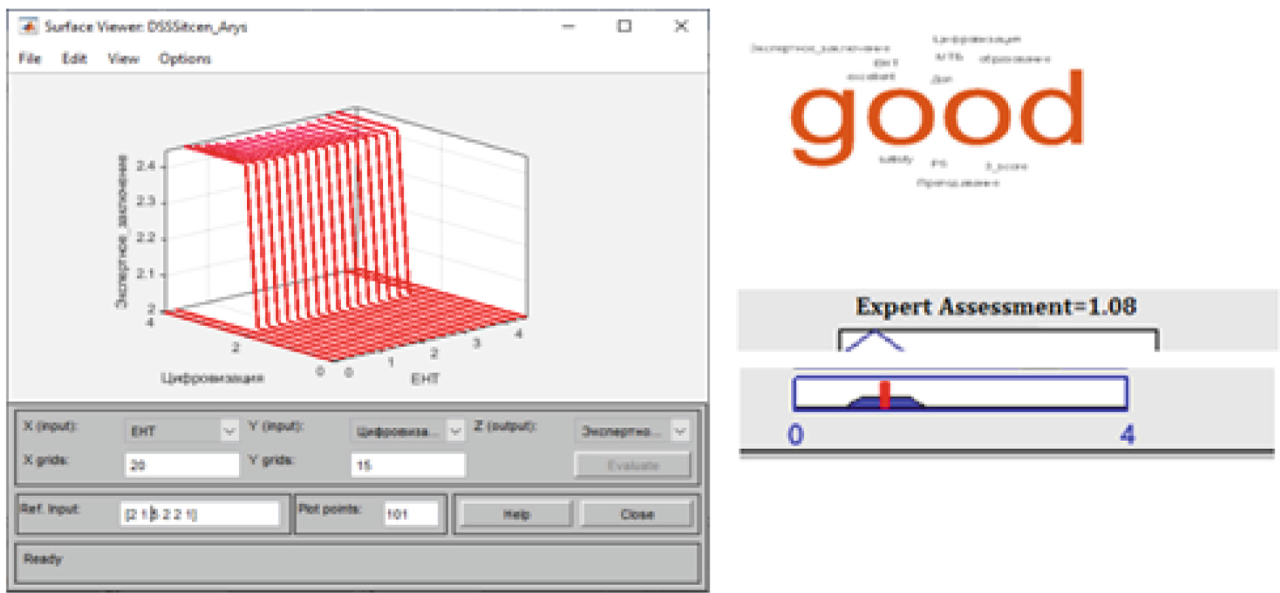 Figure 2: Results of scoring data modeling and simulation, providing predictive outlooks for regional education officials.
Critical Insights & Future Outlook
Why it works: ASMEP's strength lies in its Data Fusion. By combining "User Experience" data from educational sites with rigid administrative statistics, it builds a more nuanced view of the educational landscape than traditional ERP sets.
Limitations: While the Fuzzy Logic provides excellent interpretability, the weighting of criteria (e.g., "Museum availability" at 2.5% vs "Sports sections" at 50%) currently relies on expert sets. Future iterations could benefit from Attention Mechanisms to learn these weights automatically from historical performance outcomes.
Conclusion: This research is a vital step toward "Smart Nation" governance, proving that with the right data engineering pipeline, even legacy administrative processes can be transformed into high-accuracy predictive assets.