
Bio-Inspired Ears: Revolutionizing Biodiversity Monitoring through Multi-Environmental Acoustic Analysis
Automatic acoustic analysis for biodiversity preservation: A multi-environmental approach
The paper presents an automated, non-invasive bioinspired intelligent system for multi-environmental acoustic monitoring to preserve biodiversity. By leveraging Mel-Frequency Cepstrum Coefficients (MFCC) and Machine Learning classifiers like SVM and MLP, the system successfully distinguishes between human activity, nature, and specific animal species across diverse geographical regions.
TL;DR
Preserving the Earth's biodiversity requires constant monitoring, yet traditional manual methods are insufficient for the task. This paper introduces an automatic system that uses acoustic biomarkers and Machine Learning to identify species and human activity across diverse global ecosystems. By simulating human hearing models (MFCC), the researchers achieved high-accuracy classification in complex, real-world environments.
The Challenge: Monitoring the Unreachable
Environmental health is the "canary in the coal mine" for human quality of life. However, capturing biodiversity data is notoriously difficult. Jungles are dense, caves are dangerous, and human presence often disturbs the very species scientists wish to study.
Prior work has often been confined to specific species or limited frequency ranges. The authors identify a critical gap: the need for a multi-environmental approach that can handle "complex conditions"—noise, wind, rain, and poor data quality—while distinguishing between natural sounds and human-induced disturbances (urban activity).
Methodology: Simulating Human Perception
The core "Insight" of this work is its bioinspired approach. Rather than processing the entire raw audio spectrum equally, the system mimics the human ear's ability to filter and prioritize specific frequency regions.
1. Feature Extraction (The "Ear")
- MFCC (Mel-Frequency Cepstrum Coefficients): These simulate how the human ear concentrates on certain frequencies, providing a robust representation of sound that filters out irrelevant noise.
- Spectral & Time Domain Features: The system analyzes Harmonicity (HNR), Pitch, Jitter, and Shimmer. These serve as "biomarkers" to differentiate between the rhythmic patterns of insects, the melodic calls of birds, and the erratic noise of wind or urban traffic.
2. System Architecture
The researchers built a modular pipeline consisting of signal preprocessing, feature extraction, and an automatic classification module.
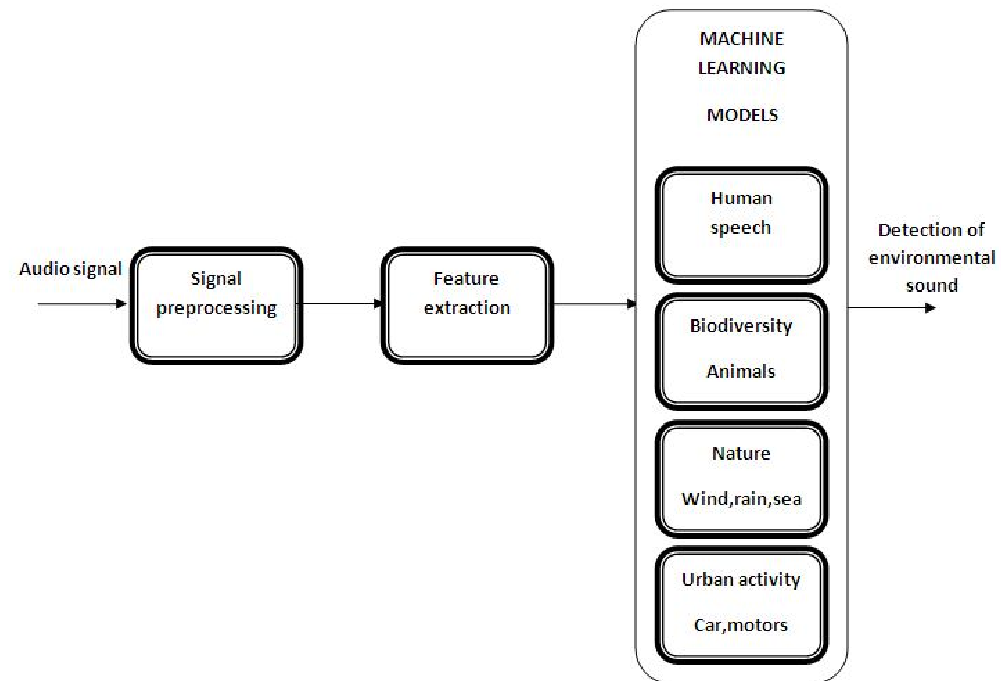 Figure 1: Diagram of the basic architecture of the automatic acoustic system oriented to biodiversity preservation.
Global Validation: From Costa Rica to the Basque Country
To ensure the system wasn't overfitted to a single location, it was tested on a massive 10-hour multi-environmental database captured over several years in:
- The Strait Natural Park (Spain): High wind and migratory bird routes.
- Costa Rica: Home to 4% of the world's species, dominated by insect and tropical sounds.
- The Basque Country: A temperate region with unique amphibian and avian groups.
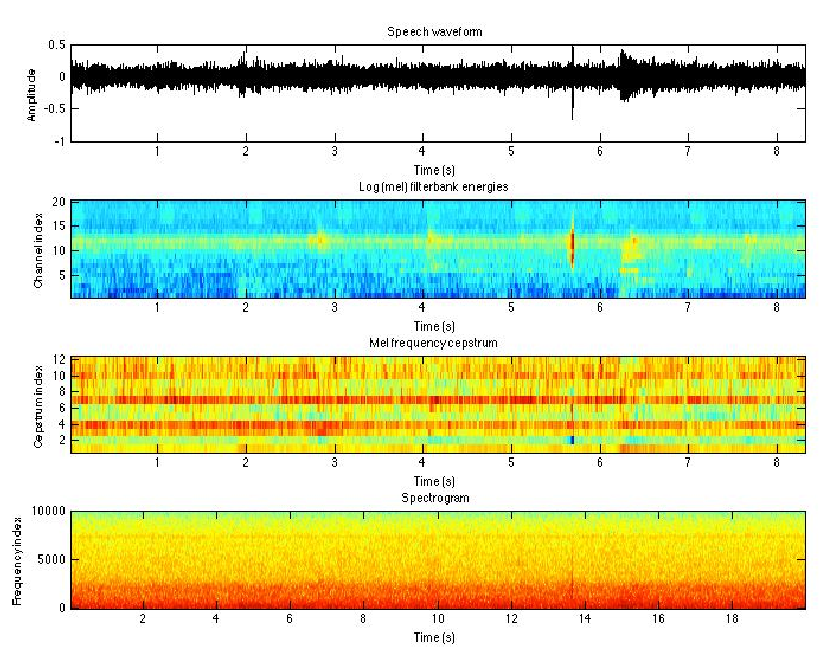 Figure 2: Spectrograms and MFCC visualizations show distinct "acoustic signatures" for (a) Human speech, (b-d) Birds/Insects, (e) Wind, and (f) Urban activity.
Experiments and Results
The study compared three primary Machine Learning paradigms: Support Vector Machines (SVM), Multi-Layer Perceptron (MLP), and k-Nearest Neighbors (k-NN).
- Top Performers: Both MLP and SVM showed superior performance in reducing the Classification Error Rate (CER). They were particularly adept at discriminating human speech from biodiversity.
- The Trade-off: k-NN was the most computationally efficient (ideal for low-power sensors), but it struggled with "categorical confusion," often mistaking nature sounds for biodiversity.
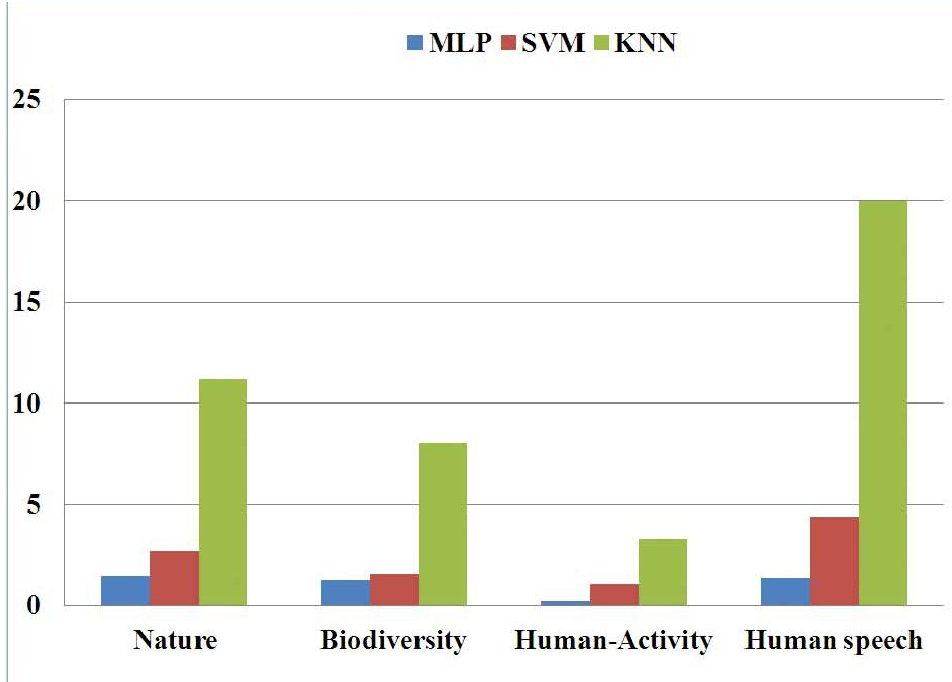 Figure 3: Comparative Classification Error Rate (CER) across the three models.
Critical Insight & Future Outlook
The primary takeaway is that acoustic sensors are non-invasive powerhouses. They allow for simultaneous monitoring of organic (animals) and inorganic (wind, rain) activity across different continents.
Limitations: As a preliminary study, the dataset (AKUINGUORE) is relatively small (200 segments for the core experiment). Future iterations will need to explore Parallel Multilevel Architectures to handle the sheer volume of data generated by 24/7 environmental monitoring.
The Future: We are moving toward a world where "smart forests" can automatically alert conservationists to specific species declines or illegal human encroachment in real-time, purely by "listening" to the heartbeat of the ecosystem.