
Emotional Temperature: Deciphering Alzheimer’s via Spontaneous Speech Analysis
On Automatic Diagnosis of Alzheimer’s Disease Based on Spontaneous Speech Analysis and Emotional Temperature
This paper introduces a non-invasive diagnostic framework for Alzheimer’s Disease (AD) using Automatic Spontaneous Speech Analysis (ASSA) and a novel "Emotional Temperature" (ET) metric. By combining fluency features with emotional response analysis via machine learning, the system achieves high classification accuracy across different stages of AD severity.
TL;DR
Researchers have developed a non-invasive, low-cost diagnostic tool that "listens" to the emotional and rhythmic nuances of human speech to detect Alzheimer’s Disease (AD). By combining spontaneous speech fluency analysis with a novel metric called Emotional Temperature (ET), the system can distinguish between healthy individuals and AD patients at various stages with over 93% accuracy.
Perspective: Moving Beyond Memory Tests
The clinical standard for Alzheimer's diagnosis is often a process of exclusion—ruling out other dementias through expensive neuroimaging (MRI/PET) or invasive spinal taps. This paper shifts the paradigm toward Digital Biomarkers. The core insight is that AD doesn't just erode memory; it fundamentally alters the prosody of speech and the regulation of emotion, often before significant cognitive collapse is visible.
The Problem: The Diagnostic Gap
Physicians often struggle to diagnose AD in the Early Stage (ES) because patients and families dismiss early symptoms as "normal aging." By the time clinical dementia is obvious, therapeutic interventions are less effective. There is a dire need for a tool that is:
- Non-invasive: Doesn't stress the patient.
- Low-cost: Requires only a microphone and a processor.
- Objective: Removes the subjectivity of long neuropsychological batteries.
Methodology: The Fusion of Fluency and Emotion
The authors utilize a multicultural database (AZTIAHO) to extract three primary feature sets:
- Automatic Spontaneous Speech Analysis (ASSA): Focuses on duration (voiced vs. voiceless segments), energy, and spectral centroid (the "brightness" of sound).
- Emotional Speech Analysis (EF): Measures pitch, intensity, shimmer, and jitter to capture the "texture" of the voice.
- Emotional Temperature (ET): The paper’s "Secret Sauce." It uses a Sliding Window (0.5s) to analyze the frequency distribution across four specific bands (B0-B3) and uses an SVM to classify if the "emotional state" of that frame appears pathological.
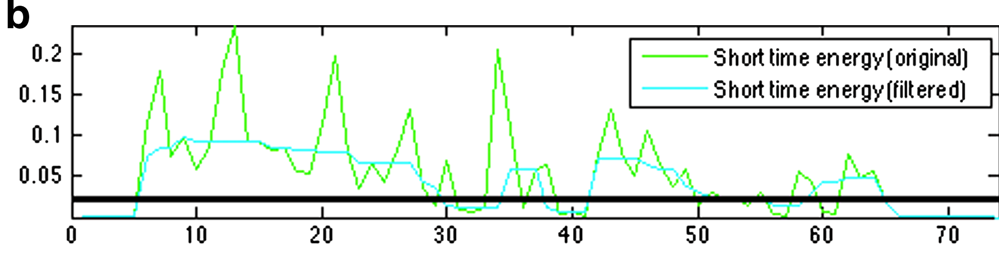 Fig 1: The signal processing pipeline from speech input to feature extraction.
Why "Emotional Temperature" Works
The researchers found that AD patients exhibit a higher "spectral centroid" and a significantly higher percentage of voiceless segments. Essentially, the speech of AD sufferers becomes fragmented; they lose the rhythmic "flow" and the spectral energy shifted to different frequency bands, which the ET metric quantifies as a diagnostic score (Threshold = 50).
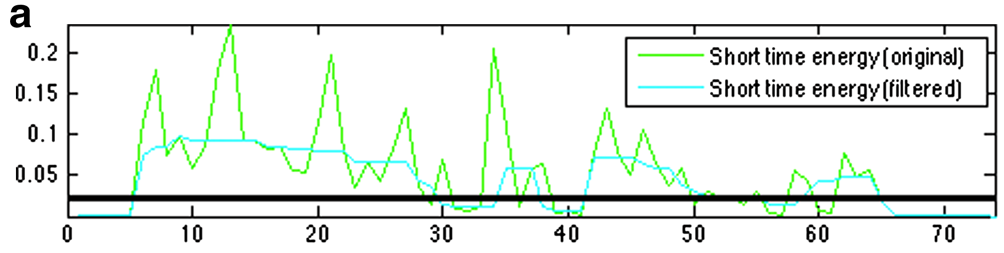 Fig 2: Comparison of Short-Time Energy and Spectral Centroid between a Control subject and an AD patient.
Experiments & Results
The study evaluated five classifiers, including SVM, Multilayer Perceptron (MLP), and KNN.
- The Power of Integration: Using only fluency features (SSF) provided decent results, but adding Emotional Temperature pushed the accuracy to near-optimum levels.
- Early Detection: The model achieved a 60% accuracy rate for the Early Stage (ES), which is encouraging given that these patients are often indistinguishable from healthy elderly in casual conversation.
- Class Separation: As shown in the results, the system was particularly effective at isolating the Intermediate (IS) and Advanced (AS) stages.
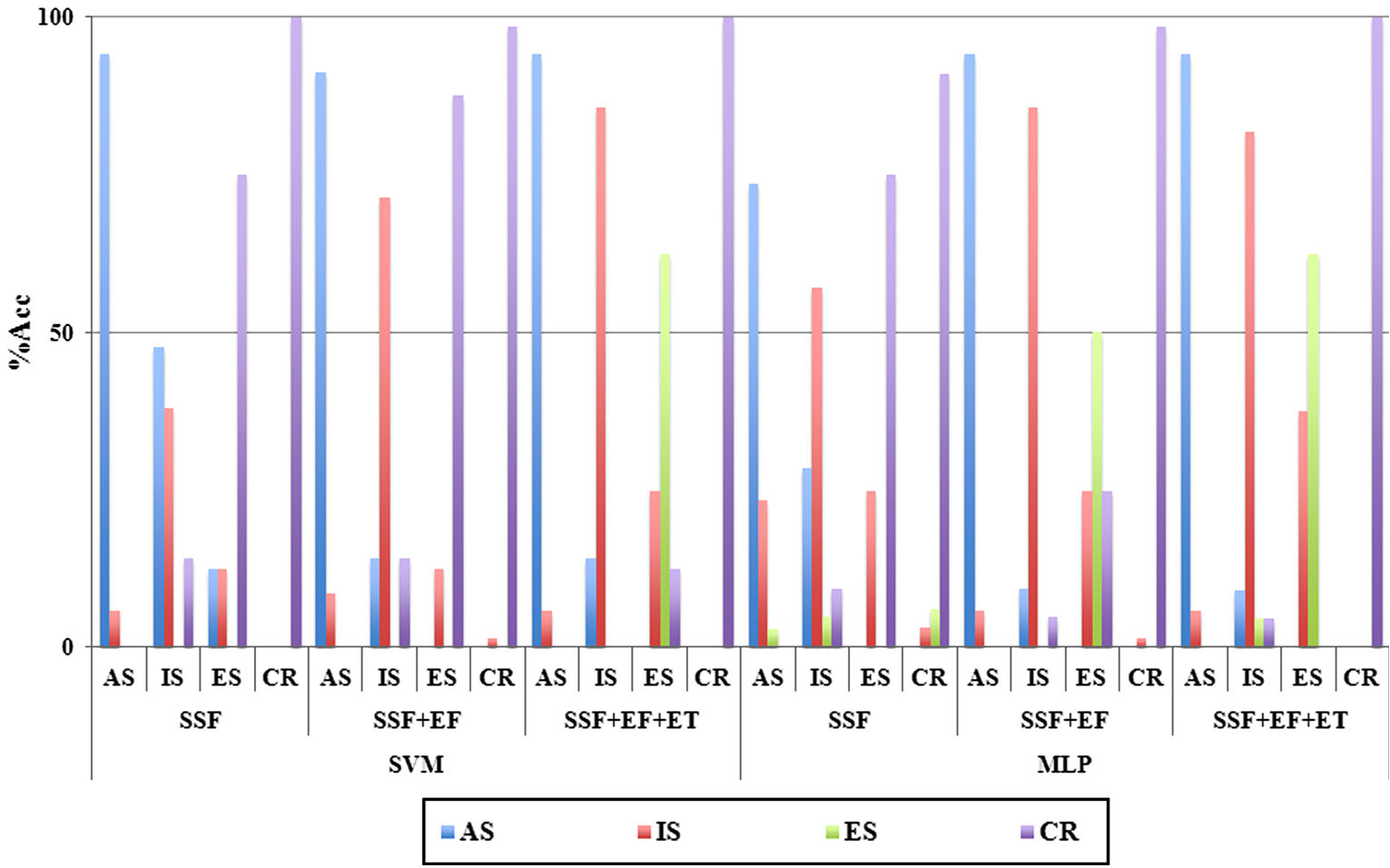 Fig 3: Accuracy across different AD levels (ES, IS, AS) when incorporating ET.
Critical Insight & Conclusion
The true value of this work lies in its robustness. By using 0.5s Hamming windows and z-normalization, the features remain relatively independent of the specific language spoken (English, Spanish, Basque, etc.), making it a candidate for a global screening tool.
Limitations: The pilot study used a relatively small subset (AZTITXIKI). While the results are statistically significant, the "Early Stage" detection (60%) still leaves room for improvement. Future iterations will likely need to incorporate Non-linear Dynamics and potentially LLM-based semantic analysis to capture the loss of vocabulary (Anomia) alongside the prosodic "Temperature" identified here.
Future Outlook: This technology paves the way for "Smart Home" diagnostic assistants that could subtly monitor a patient's speech during daily phone calls, flagging potential cognitive decline years before a formal clinical visit.