
Crowdsourcing Sustainability: Automating the Future of Pedestrian Navigation
Automatic Crowdsourcing Demand and Supply Management for Sustainability of Pedestrian Navigation Service
This paper proposes an automated management platform for spatial crowdsourcing demand and supply, specifically designed for sustainable pedestrian navigation services. The method integrates multi-modal sensor fusion (WiFi, BLE, Geomagnetism) and a hybrid incentive model to maintain high-accuracy indoor/outdoor positioning at a low cost.
TL;DR
Sustainable indoor positioning has long been hindered by the "Maintenance Wall"—the high cost of keeping signal maps updated. This paper presents an automated platform that orchestrates crowdsourcing demand and supply, using a clever mix of sensor fusion and social welfare incentives to ensure long-term service viability for everyone, including the elderly and disabled.
The "Maintenance Wall" in Indoor LBS
While outdoor GPS is ubiquitous, indoor navigation relies on complex "Fingerprinting" (FP) of WiFi, BLE, and geomagnetic fields. The problem? Environments change. New routers are installed, furniture moves, and signal maps decay. Historically, this required professional surveyors to walk floors with expensive equipment—a model that is neither scalable nor affordable for public welfare services.
Previous crowdsourcing attempts often struggled with data reliability and participant fatigue. If the crowd provides "noisy" data, the navigation fails; if there is no immediate reward, the crowd stops contributing.
Methodology: The Automated Demand-Supply Engine
The core innovation lies in the platform's ability to treat spatial data collection as a self-regulating market.
1. Architectural Framework
The authors propose a modular "Manager Block" system to handle the lifecycle of a location resource:
- Requirement & Status Manager: Automatically triggers "collection tasks" based on construction notices or signal decay detection.
- Quality Manager: Uses statistical modeling to filter out "bad actors" or low-quality sensor data before it hits the database.
- Privacy Manager: Ensures anonymization, a critical factor for public adoption.
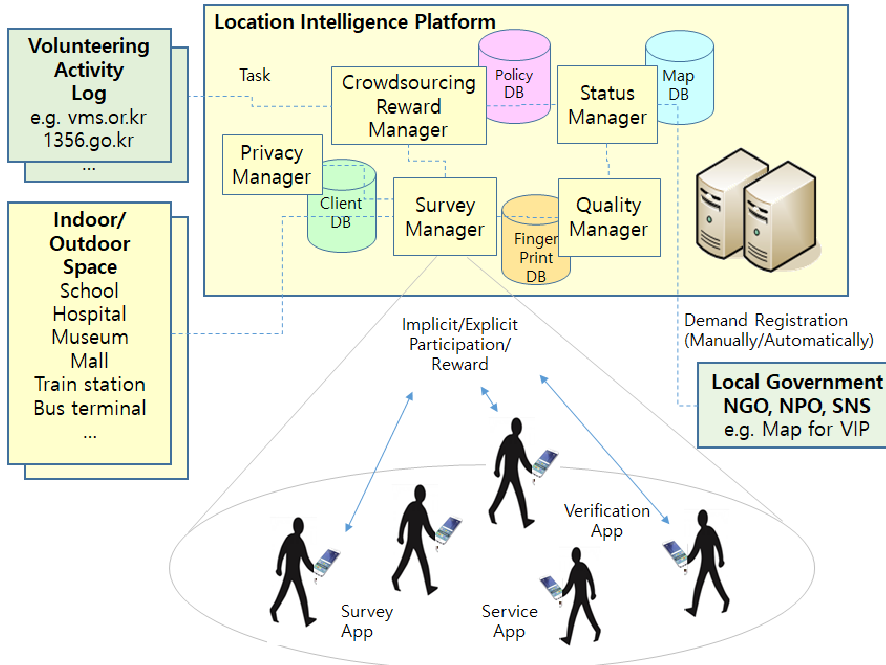 Figure 1: The proposed management blocks for balancing supply and demand.
2. Social Welfare as an Incentive
The paper introduces a critical distinction in incentive design. While commercial LBS focuses on "Auction" or "Market" models, this platform adds Public Welfare Contribution. By rewarding users with social welfare points or the intrinsic motivation of helping the visually impaired, the system taps into a more sustainable, non-monetary resource.
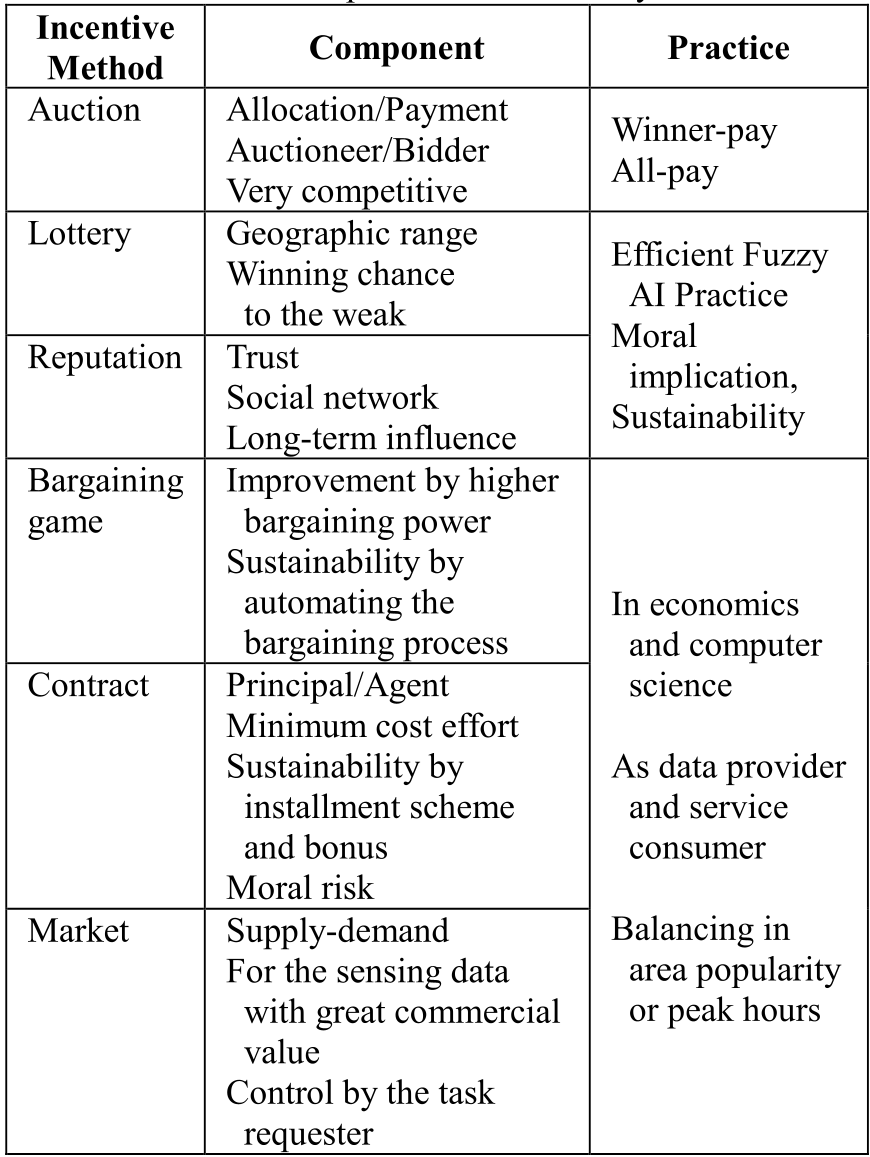 Table 1: Comparative analysis of different crowdsourcing incentive strategies.
Experiments and Real-World Validation
The system was not just theoretical; it was battle-tested across several international sites:
- University Campus (Brazil): Testing dense signal collection in complex academic buildings.
- ETRI (Korea): Focused on seamless transitions between outdoor GPS and indoor signals.
- Smart GEO Expo (COEX, Seoul): Validating performance in high-traffic, signal-congested exhibition halls.
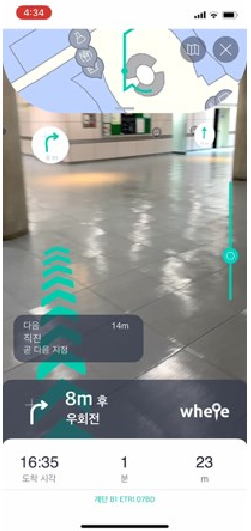 Figure 2: Real-world deployment showing seamless indoor/outdoor navigation.
Critical Insight: Beyond Technology
The brilliance of this work isn't just in the sensor fusion—it’s in the Inductive Bias that service sustainability is a social problem as much as a technical one. By converting "labor" into "welfare contribution," the authors provide a blueprint for national-level LBS platforms that don't go dark the moment the research grant ends.
Limitations
While the platform scales well, the paper notes that terminal posture (how a user holds their phone) remains a challenge for raw signal quality. Future iterations will likely need deeper AI-driven posture compensation to further lower the barrier for "unskilled" crowd contributors.
Conclusion
This paper serves as a vital bridge between LBS technology and the "Smart City" vision. By automating the supply and demand of spatial data, it ensures that high-precision navigation isn't just a luxury for shopping malls, but a universal utility for those who need it most.