
Evolutionary Feature Selection: Elevating Emotion Recognition in Spanish and Basque Speech
A Comparison Using Different Speech Parameters in the Automatic Emotion Recognition Using Feature Subset Selection Based on Evolutionary Algorithms
The paper presents a study on Automatic Emotion Recognition (AER) focusing on Spanish and Basque languages using the RekEmozio multimodal database. By expanding the speech parameter set to 91 features and applying Feature Subset Selection (FSS) through Evolutionary Algorithms (specifically EDA), the authors achieved significant improvements in emotion classification accuracy across multiple machine learning paradigms.
TL;DR
Recognizing human emotion through speech is a complex high-dimensional problem. This paper demonstrates that by using Evolutionary Algorithms (specifically EDA) to surgically select the most relevant speech features from a set of 91 parameters, emotion recognition accuracy in Spanish and Basque can be boosted by up to 10%, reaching over 75% accuracy in certain cases.
Context: This work acts as a significant "SOTA upgrade" for minority and bilingual emotional datasets, proving that advanced Feature Subset Selection (FSS) is the key to making standard classifiers like k-Nearest Neighbors (IB) and Decision Trees highly effective.
The Problem: The "Curse of Dimensionality" in Speech
In Affective Computing, more data doesn't always lead to better results. Previous efforts in automatic emotion recognition (AER) often plateaued because speech signals are inherently noisy.
- Irrelevance: Many prosodic features (like pitch variance) might be crucial for one language but redundant for another.
- Redundancy: Having too many overlapping parameters (e.g., multiple energy metrics) confuses supervised learning algorithms like Naive Bayes or C4.5.
- Language Specificity: Models trained on English often fail on languages like Basque due to different phonetic and prosodic structures.
Methodology: From 91 Features to the "Gold" Subset
The authors expanded their toolkit to 91 speech parameters, categorized into two main pillars:
- Prosodic Features: Tracking F0 (pitch) curves, energy variance, and the duration of voiced vs. unvoiced regions.
- Quality Features: Analyzing voice "texture" via formants, Harmonicity-to-Noise Ratio (HNR), and energy band distributions.
To find the optimal subset within a search space of possibilities, they employed an Estimation of Distribution Algorithm (EDA). Unlike simple greedy searches, EDA builds a probabilistic model of the best feature sets, iteratively refining it to find the global optimum.
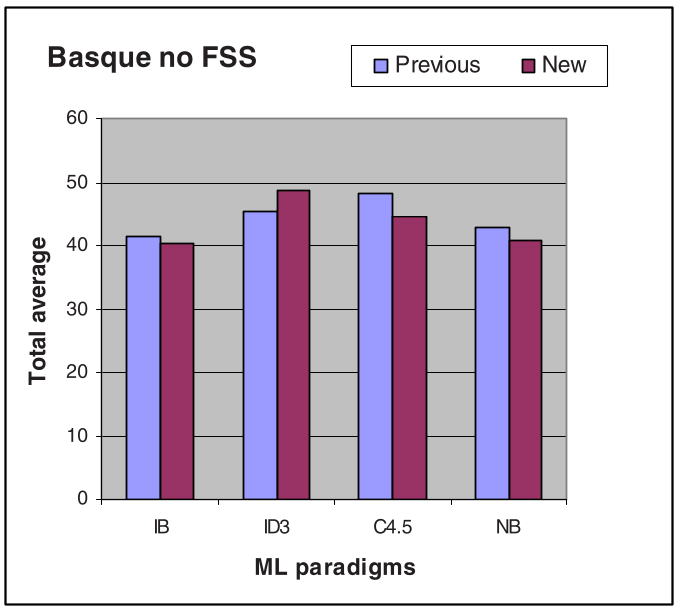 Fig 1: Comparison showing that simply adding more variables (New Params) without selection (FSS) does not necessarily improve results over previous studies.
Experiments and Results
The study utilized the RekEmozio database, featuring 7 emotions (Ekman’s 6 basic + neutral). They tested four main classifiers: IB (Instance-Based), ID3, C4.5, and Naive Bayes.
The FSS Breakthrough
While using the raw 91 features yielded mediocre results (often below 50% accuracy), applying Feature Subset Selection changed the game entirely.
- Performance Leap: Accuracy for the IB classifier jumped from ~40% to 75.5% for Basque.
- Consistency: FSS improved the performance of all machine learning paradigms tested.
- Gender Divergence: Interestingly, the study found that the "relevant" features for men and women differ. Men's emotion recognition relied heavily on pitch regression coefficients, while women's models favored tremor (energy curve derivative) and harmonicity.
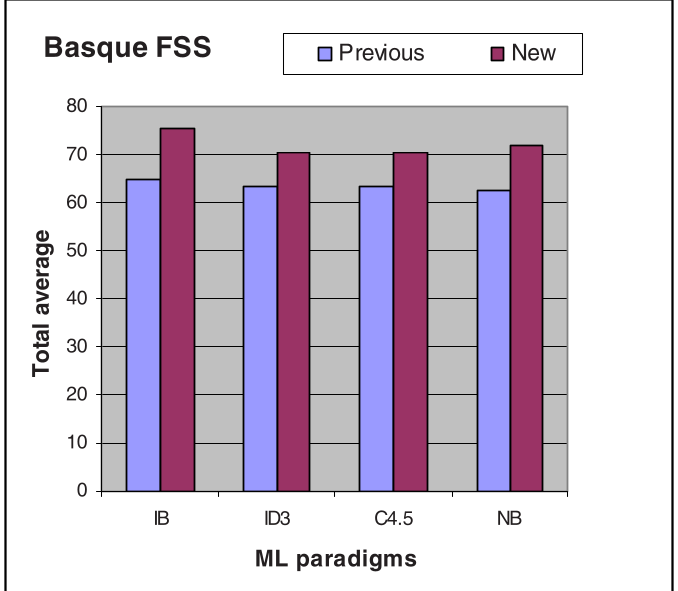 Fig 2: The marked improvement in accuracy after applying EDA-based Feature Subset Selection (FSS) compared to previous benchmarks.
Critical Analysis & Conclusion
Takeaway
The core contribution of this paper is the verification that Evolutionary Algorithms are exceptionally well-suited for pruning speech features. By identifying that voice quality features (like HNR) and specific prosodic derivatives are the "hidden signals" of emotion, the researchers bypassed the limitations of traditional, manually-tuned feature sets.
Limitations & Future Work
The accuracy, while improved, still hovers around 70-75%, suggesting that speech alone might have an upper bound. The authors suggest that the next frontier is Multimodal Fusion: combining these optimized speech features with facial gesture recognition and physiological data to create a truly robust affective recognizer.
Practical Impact
For developers building bilingual or localized AI assistants, this research provides a roadmap: don't just throw raw audio at a model. Use evolutionary selection to find the language-specific and gender-specific "acoustic fingerprints" of emotion.