
Beyond the Skill Curve: Orchestrating Immersion through Automatic Emotional Balancing
Automatic Emotional Balancing in Game Design: Use of Emotional Response to Increase Player Immersion
This research proposes a theoretical model for "Automatic Emotional Balancing" in game design. It introduces an API-driven framework that utilizes real-time biofeedback (EDA, BVP, heart rate) and AI to dynamically adjust game difficulty and narrative based on a player's emotional state.
TL;DR
This research introduces a framework for games that "feel" your frustration or boredom. By integrating biosensors with an AI-driven API, the authors propose a system that moves past static difficulty settings, instead using a player's real-time physiological response (biofeedback) to dynamically reshape the narrative and gameplay challenge.
Academic Context: This work sits at the intersection of Affective Computing and Game Design (Ludology). It moves the needle from performance-based Dynamic Difficulty Adjustment (DDA) toward emotion-based adaptation.
The "Hidden Ingredient" of Gaming Success
Why does a low-fidelity game like Minecraft succeed while ultra-realistic AAA titles often fail? The authors argue the "hidden ingredient" is individual emotional resonance.
Current game balancing relies on "Passive Balancing"—a one-size-fits-all statistical approach. If a level is too hard, players quit (Frustration); if it's too easy, they disengage (Boredom). The industry's current solution—linear narratives with the "illusion of choice"—fails to provide a truly personalized experience. The core challenge is that different players elicit different emotional responses to the same stimuli.
Methodology: The Emotional Game API
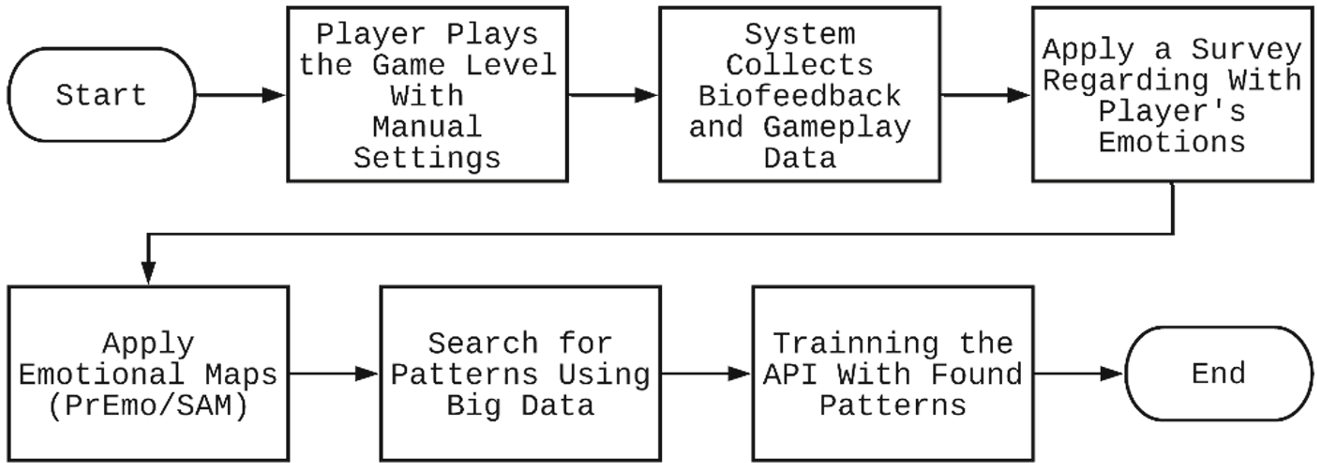
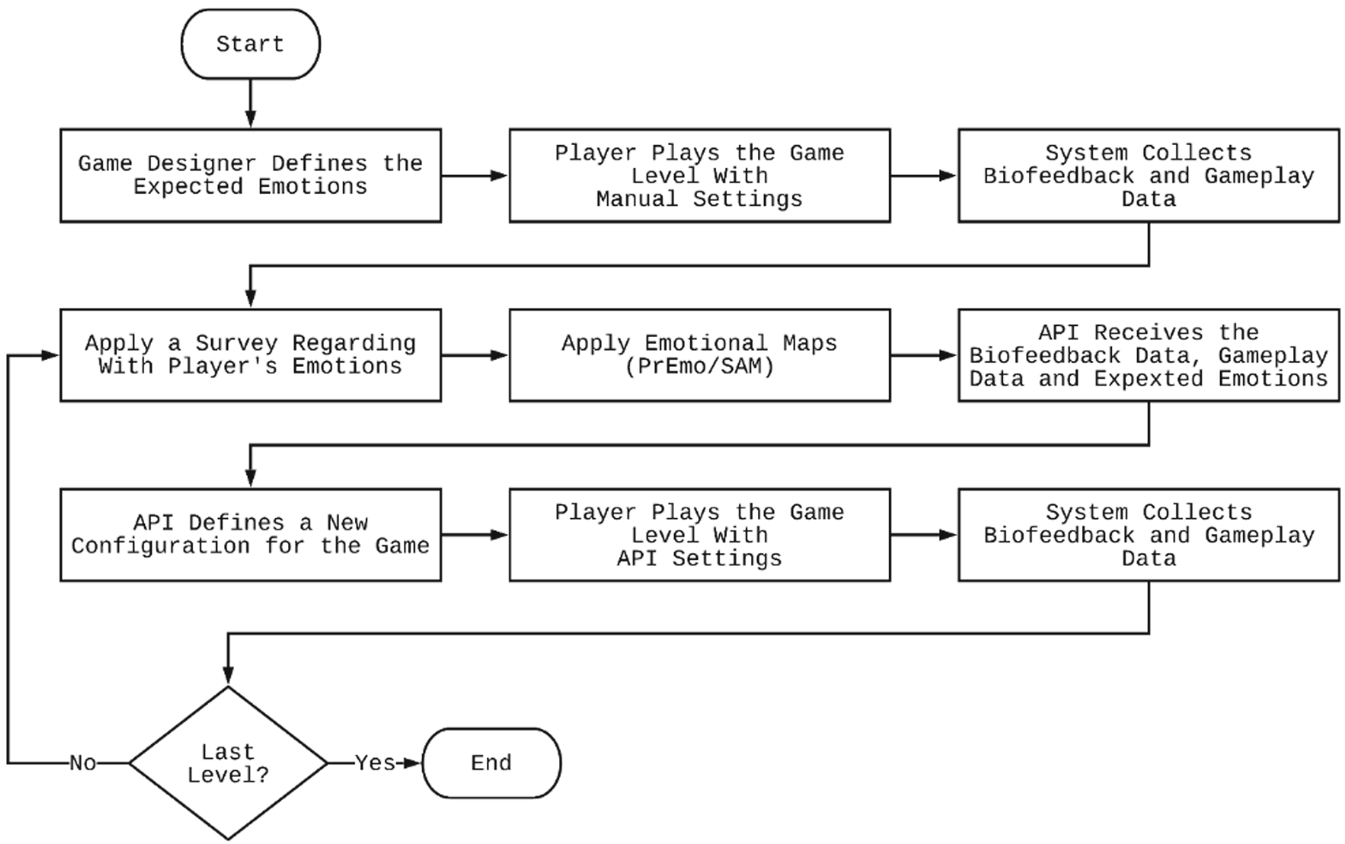
The authors propose a closed-loop system called the Emotional Game API. Unlike traditional systems that only look at what the player does (telemetry), this system looks at how the player feels (biometry).
The Triple-Input Architecture
The API functions by triangulating three critical data sources:
- Biosensors: Measuring Electrodermal Activity (EDA), Blood Volume Pulse (BVP), and ECG via hardware like BITalino.
- Gameplay Telemetry: Tracking variables like character health, enemy distance, and item collection.
- Expected Emotion Patterns: A "Designer's Intent" map that tells the AI whether a player should feel stressed or powerful at a specific moment.
Why the "Expected Emotion" Matters
A critical insight of this paper is that emotions are context-dependent. On a standard emotional map, "anger" or "fear" is negative. However, in a survival horror game, fear is a positive indicator of success. By allowing game designers to define the "target emotion," the API avoids the pitfall of misclassifying intended stress as a failure of game design.
Experimental Insights & Results
In a study involving 40 players, the authors utilized the BrainAnswer platform to cross-reference physiological spikes with recorded gameplay.
Key Findings:
- Activation vs. Valence: While telling the difference between "good" stress and "bad" stress is hard, detecting arousal levels (activation) is highly feasible.
- The Feedback Loop: When the API detects low arousal (boredom) during a collection quest, it can trigger AI-controlled enemy spawns to reignite interest. Conversely, if a boss fight triggers excessive anger/physiological distress, the API can subtly lower the boss's resistance.
Critical Analysis & Future Outlook
The beauty of this model lies in its recognition of the "Individual Difference" problem. One player's "difficult" is another's "meditative."
Limitations
- Hardware Friction: While BITalino is low-cost, professional gaming still lacks a widespread, non-intrusive standard for biosensor integration (though smartwatches and VR headsets with built-in sensors are changing this).
- Noise: Physiological data is messy. Movement or environment noise can trigger false positives in emotional activation.
Conclusion
The "Emotional Game API" marks a shift toward Affective Videogames. By quantifying the "unquantifiable"—the player's internal state—designers can move from being architects of a static world to conductors of a living, breathing emotional experience. In the future, the game won't just react to your buttons; it will react to your heartbeat.