
Decoding Engagement: The Path to Automated Robot-Mediated Autism Therapy
Automatic Engagement Recognition of Children within Robot-Mediated Autism Therapy
This paper introduces a framework for the automatic engagement recognition of children with Autism Spectrum Disorder (ASD), ADHD, and Delayed Speech Development (DSD) during Robot-Mediated Therapy (RMT). Utilizing the OpenPose library, the researchers extract 2D spatial keypoints of facial features and body joints from session videos of 36 children to build a data-driven model for assessing interaction levels with a NAO robot.
TL;DR
Quantifying engagement is the "holy grail" of therapeutic intervention for children with Autism Spectrum Disorder (ASD). This research presents an automated pipeline using OpenPose to transform raw video data from NAO robot therapy sessions into structured postural and facial data. By mapping these features to a 5-point clinical engagement scale, the authors lay the groundwork for AI that can "read the room" and assist therapists in real-time.
The Challenge: Subjectivity in Autism Therapy
In Robot-Mediated Therapy (RMT), social robots like NAO act as mirrors or mediators, helping children practice social cues. However, measuring whether a child is truly engaged or simply present is a complex task. Current methods involve hours of manual video coding by specialists using tools like ELAN—a process that is not scalable and often subjective.
Furthermore, the presence of co-occurring conditions like ADHD or Delayed Speech Development (DSD) introduces significant "noise" into behavioral data. A child might be engaged but physically restless, or quiet but highly attentive. Traditional SOTA methods often struggle to generalize across these diverse behavioral profiles.
Methodology: From Pixels to Psychology
The authors propose a data-driven architecture that moves beyond simple motion detection. They focus on Pose Estimation as the primary feature extractor.
1. Data Collection & Pre-processing
The dataset involves 36 children participating in diverse activities (dancing, storytelling, emotions) over two-week periods. These interactions are categorized by the NAO robot's prompts and the child's reactions.
2. Feature Extraction via OpenPose
Instead of using standard image processing which might fail under varying lighting or occlusion, the team utilized OpenPose. This choice provides:
- Body Symmetry: 25 keypoints representing the skeletal structure.
- Affective Cues: 70 facial keypoints to capture smiles, eye gaze, and micro-expressions.
- Manual Dexerity: 42 keypoints for hand movements (interaction with the robot).
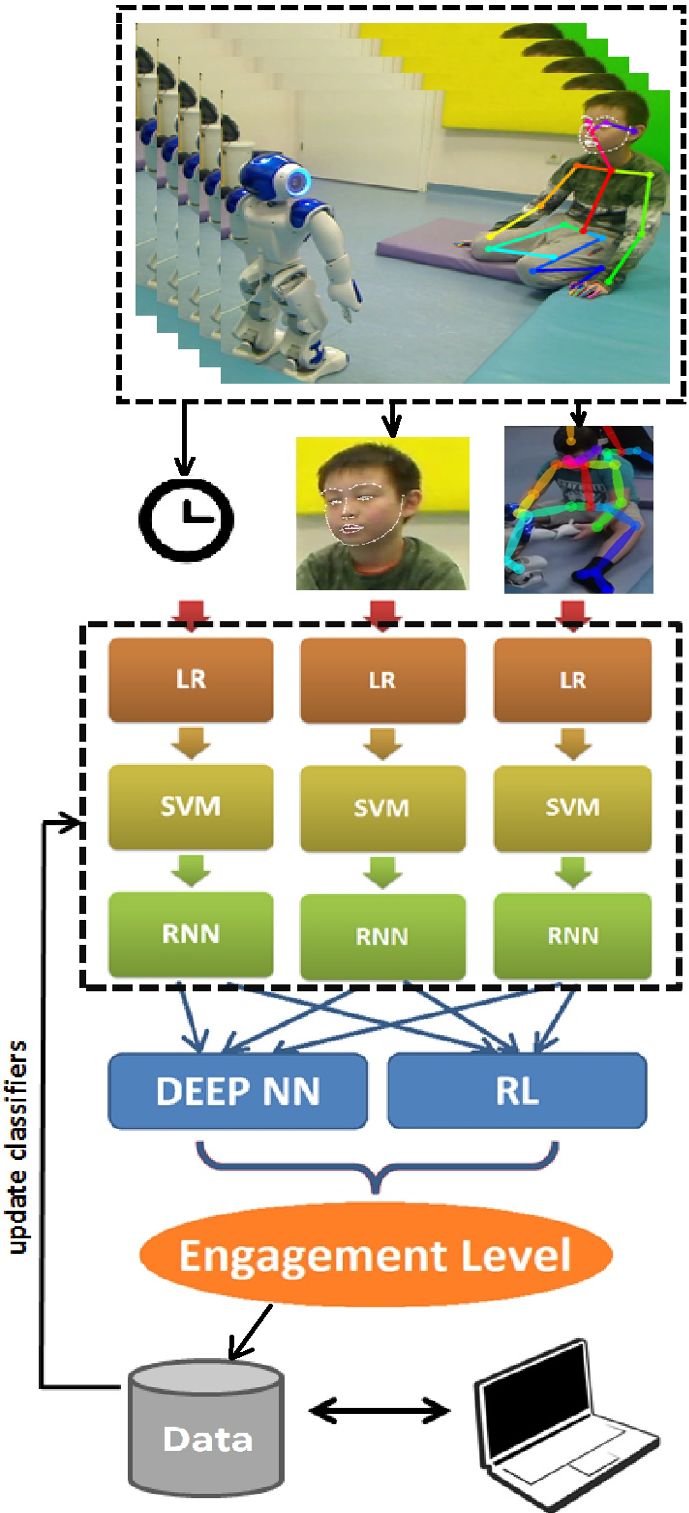 Figure 1: The pipeline from video capture to engagement classification.
3. The Engagement Scale
The ground truth is established through a specialized 5-point scale:
- Level 1: Intense non-compliance.
- Level 5: Immediate, proactive reaction to the robot.
Anticipated Outcomes & Future Work
The next phase of this research involves training SVMs (Support Vector Machines) and Neural Networks on these extracted keypoints. The authors also highlight the potential of Transfer Learning—applying models trained on general engagement datasets to this specialized ASD context.
The ultimate goal is to predict not just engagement, but also valence (emotional state) and compliance, allowing the robot to adjust its behavior dynamically if a child becomes overwhelmed or bored.
Critical Insight: Why This Matters
The shift from "Human-in-the-loop" to "AI-assisted observation" is vital for the democratization of therapy. By utilizing a real-time tool like OpenPose, this framework moves closer to a future where robots can provide therapists with automated "Engagement Reports" immediately after a session, highlighting specific moments of progress or distress that might have been missed by the human eye.
Conclusion
This work represents a critical step in the "quantified self" movement within clinical psychology. While still a work-in-progress, the integration of robust pose estimation with nuanced clinical labeling provides a blueprint for the next generation of inclusive, responsive social robotics.
Future Outlook: The adoption of Transformer-based architectures (like Vision Transformers) could further enhance this pipeline by capturing long-term temporal dependencies in the child's behavior, moving from static frame analysis to fluid interaction understanding.