
Pyramid Database: Slashing Face Annotation Time by 87% via Social Context
Automatic Face Annotation System Used Pyramid Database Architecture for Online Social Networks
The paper introduces a novel automatic face annotation system for Online Social Networks (OSNs) centered on the Pyramid Database Access Control (PDAC) module. By leveraging social network contexts, the system drastically narrows down searching candidates, achieving state-of-the-art performance in both accuracy and processing speed.
TL;DR
The explosion of photo sharing on Social Networks (OSNs) has made manual tagging obsolete. However, automated systems often struggle with the "needle in a haystack" problem—searching for a face among thousands of contacts. This paper introduces the Pyramid Database Access Control (PDAC) module, which uses your social habits to predict who is in your photos, boosting accuracy by ~37% and speed by ~87%.
The Bottleneck: The Cost of Connection
In the world of Facebook or MySpace, your "social circle" is a goldmine of information. Yet, prior face annotation methods often treated social data as a secondary feature or used collaborative filters that grew sluggish and "time-consuming" as the number of connections increased. The fundamental problem was Search Space: Why compare a face against 500 acquaintances when the person is likely one of the 5 friends you hung out with last night?
Methodology: The Pyramid of Probability
The core innovation is the Pyramid Database Architecture. Instead of a flat list of candidates, the system organizes identities into a hierarchy based on four dimensions of Social Network Context:
- Recurrence Context: If a person appears in one photo of a batch, they are highly likely to appear in others.
- Temporal Context: People you have interacted with recently receive higher priority.
- Group Context: Leveraging existing social groups (e.g., "Family" or "Colleagues").
- Temporal-Group Context: Identifying which groups are active now.
The Connection Score (CS)
The system doesn't just guess; it calculates a Normalized Connection Score using a unidirectional function (how often you tag them) and a bidirectional function (how often you both appear together).
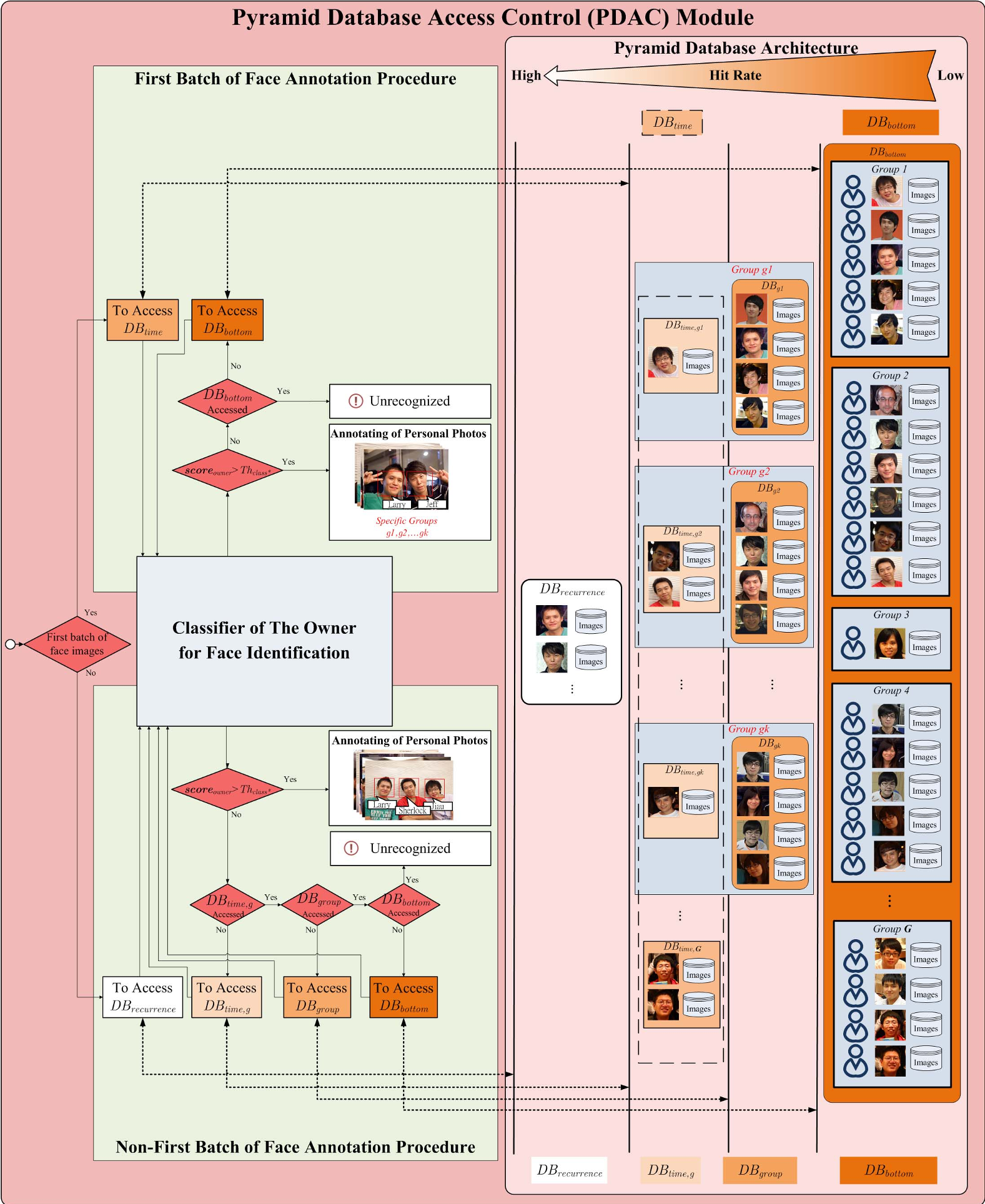 Figure 1: The PDAC flow demonstrates how the system transitions from high-priority (recurrence/temporal) to low-priority (bottom) database layers.
The system employs two procedures:
- First Batch Annotation: Sets the foundation by identifying key individuals in the initial photos.
- Non-First Batch Annotation: Uses the "learned" context from the first batch to speed up the rest of the album.
Experimental Mastery: Faster and Smarter
The researchers tested their PD-FA (Pyramid Database Face Annotation) against several heavyweights, including BDRF and CMVF, across four different query sets.
Performance Gains
The results were categorical. By focusing the classifier on a "select few" individuals with high probabilities, the system reduced noise and false positives.
- Accuracy: F-measure and Similarity metrics were up to 37% higher than prior methods.
- Efficiency: The most striking result was the 87.44% reduction in execution time.
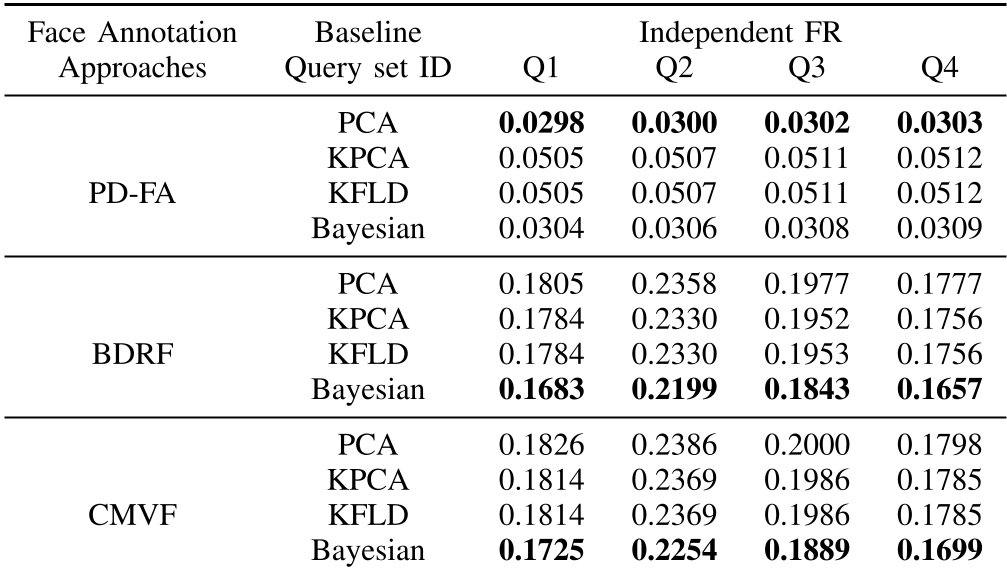 Table II: Comparison of execution times showing PD-FA consistently outperforming BDRF and CMVF across various base classifiers (PCA, KPCA, Bayesian).
Critical Insight: Why it Works
The "Pyramid" works because it mirrors human psychology. When we look at a blurry photo from a wedding, we don't scan our entire memory of everyone we've ever met; we limit our search to "people who were at the wedding" and "people I see often." By mathematically modeling this Inductive Bias through the Connection Score, the authors successfully converted a complex computer vision problem into a simplified retrieval task.
Conclusion
This paper proves that the "Social Graph" is the most effective indexing tool for personal AI. While modern deep learning (CNNs/Transformers) has improved face feature extraction since this paper's publication, the Pyramid Database logic remains a vital strategy for edge computing and real-time systems where brute-force search is not an option.
Future Outlook: Integrating this hierarchical social context with modern Latent Space embeddings could potentially create the most robust private photo management systems available today.