
Physician Collaboration Networks: A New Frontier for Automated Medical Image Annotation
Automatic medical image annotation on social network of physician collaboration
This paper introduces a collaborative framework for automatic medical image annotation leveraging a social network of radiology residents. The system employs a hybrid NLP approach combining Levenshtein-Jaccard spell correction, TF-IDF term weighting, and MeSH thesaurus mapping to generate high-quality semantic tags.
TL;DR
This research addresses the inefficiency of manual medical reporting by tapping into a social network of trainee radiologists. By implementing a sophisticated NLP pipeline that corrects medical typos and filters keywords through the MeSH (Medical Subject Headings) thesaurus, the authors demonstrate an 88.2% word correction rate and a substantial leap in image retrieval precision.
Context & Motivation: The "Noise" in Medical Social Data
Medical social networks (e.g., Sermo, PatientsLikeMe) have revolutionized how clinical knowledge is shared. However, the data generated—comments, informal reports, and annotations—is often "noisy." Physicians working under pressure frequently make typographical errors. These typos are catastrophic for traditional indexing systems; "Macroadenoma" and its misspelled counterpart "Macroadene" are treated as distinct entities, fracturing the search index and creating a Semantic Gap.
The authors argue that the "wisdom of the crowd" in a radiology-focused social network can be harvested for automatic annotation, provided there is a robust mechanism to handle clinical linguistic variability.
Methodology: The NLP Correction Pipeline
The core of the paper lies in its multi-layered extraction and correction architecture.
1. Pre-processing and "Anti-Dictionaries"
The system first strips the text of common "empty words" and emotions (standard social media noise) using specialized filters.
2. The Levenshtein-Jaccard Hybrid Correction
To fix misspelled clinical terms, the authors use a medical dictionary (LEXILOGOS) and a dual-metric approach:
- Levenshtein Distance: Counts edits (insertions, deletions, substitutions).
- Jaccard Similarity: Evaluates the overlap of letter sets between the misspelled word and dictionary candidates.
By taking the Max(DLev, DJac), the system identifies the most probable intended medical term with high reliability.
 Figure 1: Conceptual illustration of the social network collaboration for annotation.
3. Concept Mapping via MeSH
Once the tokens are corrected, the system doesn't just store the word; it searches for the Concept. Using TF-IDF to determine word importance and Cosine Similarity to map terms to the MeSH thesaurus, the images are tagged with standardized clinical concepts.
Experimental Results & SOTA Comparison
The study evaluated 500 medical images from Charles Nicolle Hospital.
- Dictionary Size: 19,745 medical terms.
- Performance: The Word Correct Rate (WCR) reached 88.2%.
- Efficiency: 45,271 words were corrected in approximately 22 minutes.
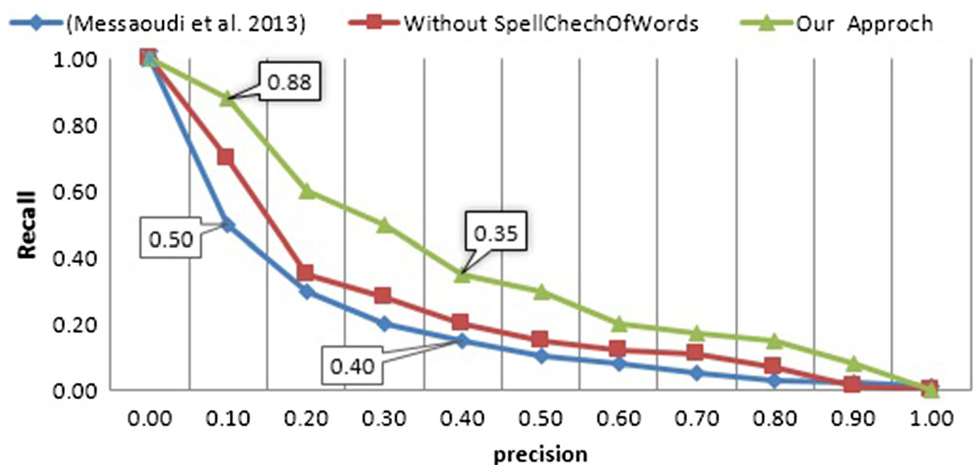 Figure 2: Precision/Recall curve comparing the proposed approach against baselines.
The results shown in Figure 2 highlight that the inclusion of the "Correction Phase" (blue curve) dramatically outperforms standard collaborative approaches. At high recall levels, the precision remains significantly higher, ensuring that users find relevant images even as the search space expands.
Critical Insight & Future Outlook
The primary value of this work is its Inductive Bias toward domain-specific corrections. Unlike general-purpose spellcheckers, this system understands the high-stakes vocabulary of radiology.
Limitations:
- The current study focuses on the French language.
- It relies on a static medical dictionary, which may struggle with emerging medical terminology or acronyms not yet in the MeSH hierarchy.
- The methodology is primarily "text-first," largely ignoring the visual features (CNN-based descriptors) that could further bridge the semantic gap.
Conclusion: This research proves that medical social networks are not just for discussion—they are structured data goldmines if handled with the right NLP precision. Future iterations integrating Multilingual LLMs could potentially eliminate the need for fixed dictionaries altogether.