
CaaS: Reimagining Crowdsourcing as an Automated Cloud Service
6001_Automatic Quality Management in Crowdsourcing [Leading Edge].
The paper introduces "Crowds as a Service" (CaaS), an automated crowdsourcing platform designed to streamline human-task outsourcing through an auction-based market. It bridges the gap between cloud computing and human computation by implementing automated quality management and skill evolution for a global workforce.
Executive Summary
Crowdsourcing is no longer just a buzzword for digital labor; it is evolving into a sophisticated socio-technical system. In this paper, Daniel Schall from Siemens Corporate Technology introduces Crowds as a Service (CaaS).
TL;DR
- The Core Problem: Current platforms like Amazon Mechanical Turk (AMT) are manual-intensive and lack reliable quality control.
- The Innovation: An auction-based marketplace that treats human labor like a cloud resource, utilizing a "Human-Provided Services" (HPS) model to automate task assignment and quality management.
- The Result: A system that moves beyond "simple, low-cost" tasks to "complex, high-quality" collaborative work through automated skill tracking and misbehavior compensation.
This work serves as a foundational blueprint for integrating human intelligence into automated business workflows, treating the "crowd" as a programmable API.
Problem & Motivation: The "Manual" Bottleneck
While cloud computing allows for the on-demand scaling of CPUs, Human Computation remains notoriously difficult to scale. The author identifies three critical pain points in existing systems:
- Unknown Capabilities: Unlike a virtual machine with fixed RAM, a human worker's skills are unknown and variable.
- Information Overload: Both consumers (who need results) and producers (who need work) are overwhelmed by the volume of tasks and the lack of smart filtering.
- Quality Decay: Without active management, the race to the bottom in pricing often results in low-quality output and a lack of worker growth.
Methodology: The CaaS Architecture
The CaaS platform is built on the principle of Self-Management. Instead of a static "bulletin board" of tasks, it uses a dynamic auction mechanism to match supply and demand.
Proactive Matching and Auctions
When a consumer submits a task, CaaS doesn't just wait for a volunteer. It runs a Matching Algorithm that analyzes:
- Skill Profiles: The declared abilities of the worker.
- Historical Performance: Data-driven evidence of past reliability and quality.
Key Architecture Components
The system maintains a clear Separation of Concerns, protecting members from information overload through "Information Hiding" while ensuring task completion via Misbehavior Compensation.
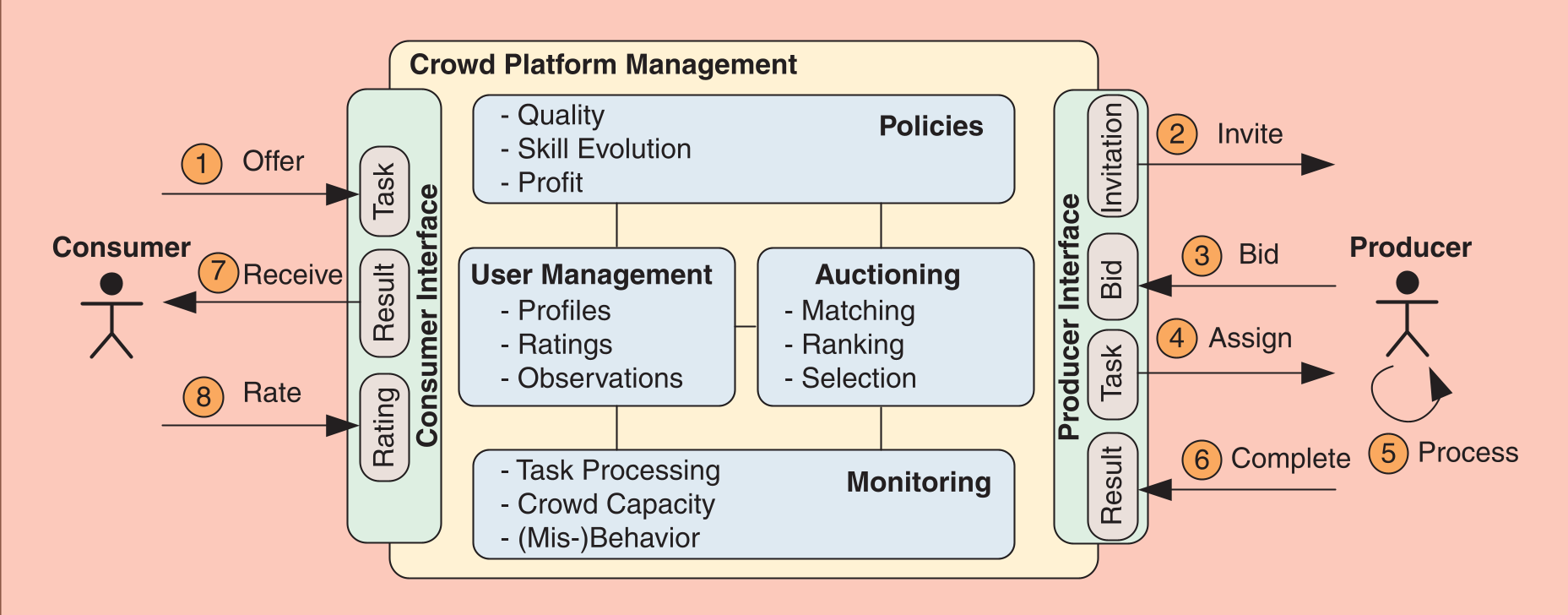 Figure 1: The Auction-based CaaS Platform Architecture.
Why it Works: Quality Management & Evolution
Unlike traditional platforms that prioritize the cheapest bid, CaaS focuses on Skill Evolution.
- Training & Retention: The platform identifies "recurring" members and assigns tasks that slightly exceed their current skill level to foster growth.
- Profit Shift: By improving worker quality, the platform can transition from low-margin, simple tasks (like image tagging) to high-margin, complex tasks (like collaborative software testing).
Comparison with Industry Giants
The author compares CaaS against AMT, Yahoo! Answers (YA), and Wikipedia to highlight the void in "Automated Management."
| Requirement | AMT | YA | Wikipedia | CaaS |
|---|---|---|---|---|
| Outsourcing | Yes | No | No | Yes |
| Automated Management | No | No | No | Yes |
| Social Profiles | No | Yes | No | Yes |
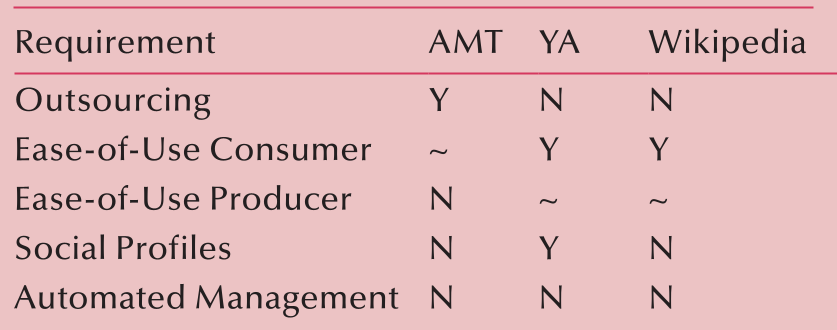 Table 1: Comparison of Requirements across popular platforms.
Deep Insight & Future Outlook
The "Human-Provided Services" (HPS) model is the silent engine of this paper. By standardizing human interaction via Web Services technology (like WS-HumanTask), CaaS turns human labor into a modular component of any enterprise IT architecture.
Limitations & Future Work
The current model still faces challenges in Collaborative Tasks—work that requires multiple humans to interact in real-time. The author notes that future iterations must extend standards to account for the dependencies between crowd workers in complex workflows.
Conclusion
CaaS represents a shift from "human computation as an afterthought" to "human computation as a core infrastructure." For developers and researchers, the takeaway is clear: the future of crowdsourcing isn't just about finding people; it's about building the automated systems that manage them.