
CaaS: Revolutionizing Crowdsourcing through Automated Auction Markets
6001_Automatic Quality Management in Crowdsourcing [Leading Edge].
This paper introduces Crowds as a Service (CaaS), an automated crowdsourcing platform that utilizes an auction-based mechanism to manage task distribution. It aims to bridge the gap between human labor and automated workflows by integrating skill management and quality assurance into a "Cloud-like" service model.
TL;DR
The vision of "Human Computation" has long promised to treat human intelligence as a scalable cloud resource. However, current platforms like Amazon Mechanical Turk are plagued by manual overhead and inconsistent quality. This paper presents Crowds as a Service (CaaS), a framework that automates the entire lifecycle—from task invitation to quality assurance—using a sophisticated auction-based market mechanism.
The "Human Cloud" Bottleneck
While Cloud Computing (IaaS/PaaS) has perfected the on-demand delivery of CPU cycles, Human-power remains difficult to commoditize. The authors identify three primary pain points in the status quo:
- Unknown Capabilities: Worker skills are dynamic and often undocumented.
- Information Overload: Workers are overwhelmed by irrelevant tasks, leading to efficiency loss.
- Manual Management: Consumers must manually filter results and manage quality, which is not scalable for enterprise workflows.
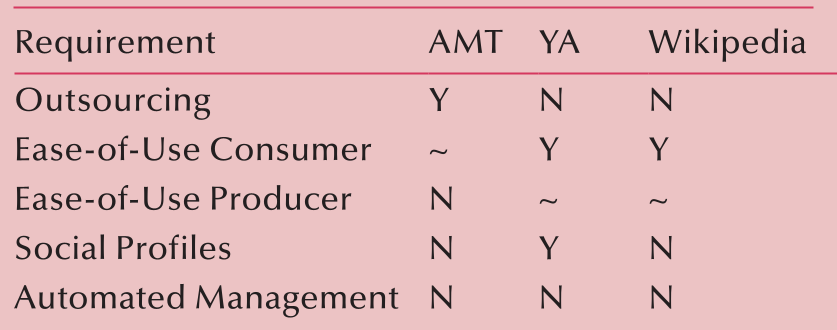
The following comparison highlights where popular platforms fall short of the "Automated Management" ideal:
Methodology: The Auction-Based CaaS Architecture
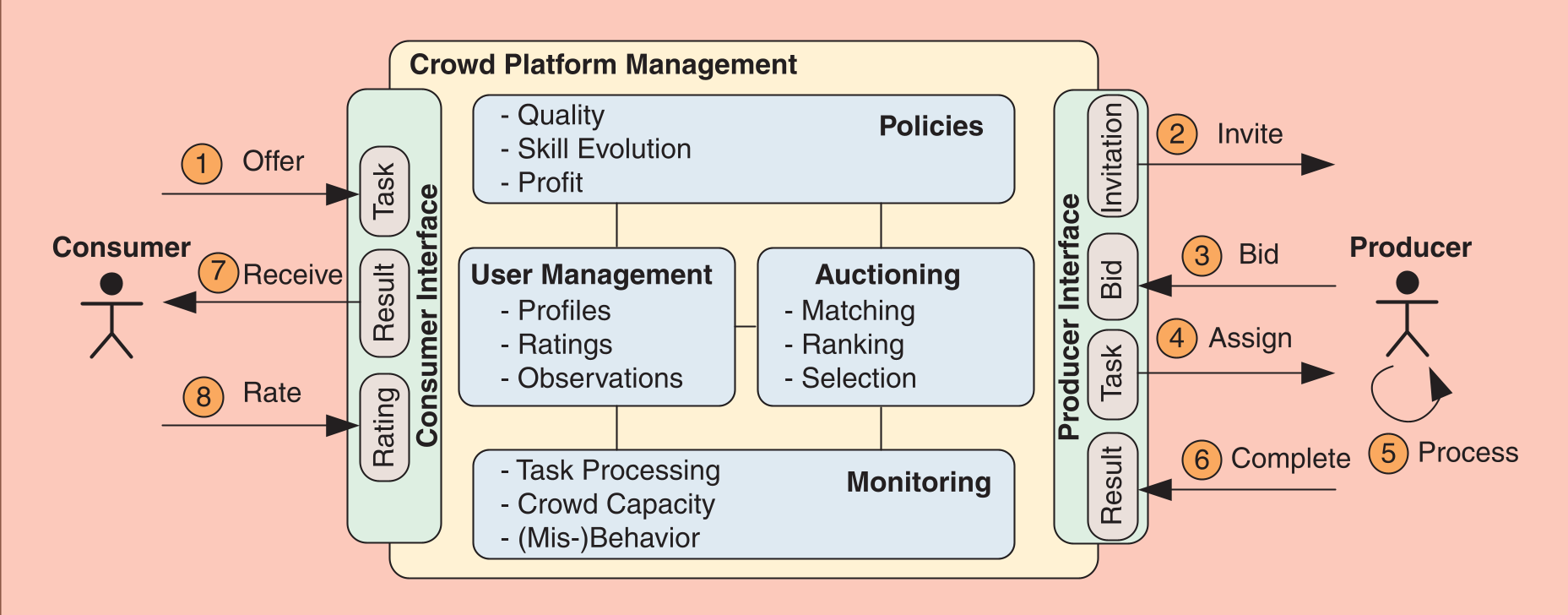
The core innovation of CaaS is the transition from a "grab-it-if-you-can" task model to a selective auction model. Instead of broadcasting tasks to everyone, the platform acts as an intelligent intermediary.
1. Intelligent Matching & Bidding
When a consumer posts a task, CaaS doesn't just list it. It uses a matching algorithm that scans producer profiles and historical performance data. Only suitable workers receive an "Invitation to Bid."
2. Design Principles for Quality
- Misbehavior Compensation: The system observes real-time behavior. If a worker's performance dips or profiles change, the assignment strategies adjust automatically.
- Skill Evolution: Unlike static platforms, CaaS aims to train members. By improving worker skills, the platform can evolve from "low-price, simple tasks" (micro-tasks) to "high-quality, complex tasks."
- Separation of Concerns: IT-aided management handles the "role rights" and resource anticipation, ensuring tasks are completed without the consumer needing to micromanage the crowd.
Critical Insight: Why Auctions?
The choice of a market-based auction is not merely for price discovery. In the CaaS context, the Bid serves as a commitment signal. By requiring a bid, the system ensures that the worker has actually evaluated their own capacity and interest, which naturally filters out "spammers" and improves the quality of the final result.
Future Outlook: Collaborative Crowds
The paper concludes with a forward-looking perspective on Complex Tasks. The authors suggest that the future of crowdsourcing lies in collaborative work supported by standards like WS-HumanTask. This would allow for a seamless blend of software services and human services—a "hybrid cloud" of intelligence.
Conclusion
CaaS represents a significant step toward making human labor as easy to "call" as a Web Service. By moving the burden of quality management from the user to the platform’s internal auction mechanism, we move closer to a truly automated, pervasive working environment.