
Facebook’s Achilles' Heel: Identifying Malicious Posts in Real Time During Breaking News
Towards automatic real time identification of malicious posts on Facebook
The paper introduces a real-time identification system for malicious Facebook posts during news-making events. Using a dataset of 4.4 million posts, the authors developed a Random Forest-based classifier that achieves 86.9% accuracy by leveraging 42 features across entity profiles, text, metadata, and URLs.
TL;DR
Cybercriminals capitalize on the surge of user engagement during major world events (like the World Cup or natural disasters) to spread malicious links. This paper presents a machine learning approach that detects these threats at the moment of posting using only public metadata, achieving 86.9% accuracy and significantly outperforming traditional campaign-based detection systems.
Problem & Motivation: The "Zero-Hour" Blind Spot
When a global event occurs, Facebook activity skyrockets. Attackers exploit this by luring users with "scam-bait"—such as fake nude photos of celebrities or "exclusive" footage of disasters.
The core challenge is timing:
- Data Unavailability: Most state-of-the-art (SOTA) research relies on features like "account age" or "network density," which are not public on Facebook's API.
- Engagement Lag: Methods relying on likes or comments are useless for real-time prevention because by the time a post has 100 likes, the damage is already done.
- Campaign Evasion: Previous systems (like Gao et al.) detected "spam campaigns" by looking for clusters of similar messages. If an attacker sends a unique or first-time message, these systems fail.
Methodology: High-Dimensional Public Features
The authors curated a massive dataset of 4.4 million public posts from 17 news events. They identified 11,217 malicious posts by cross-referencing URLs with six major blacklists and the Web of Trust (WOT).
To solve the zero-hour detection problem, they proposed 42 features categorized into four buckets:
- Entity (E): Is the poster a User or a Page? (Pages are statistically more prone to spreading malware).
- Text Content (T): Use of hashtags, uppercase characters, and specific punctuation.
- Metadata (M): Crucially, the application source. Legitimate users mostly use mobile apps, while malicious content disproportionately originates from web or custom third-party apps.
- Link (L): URL length, hyphen counts, and parameter complexity.
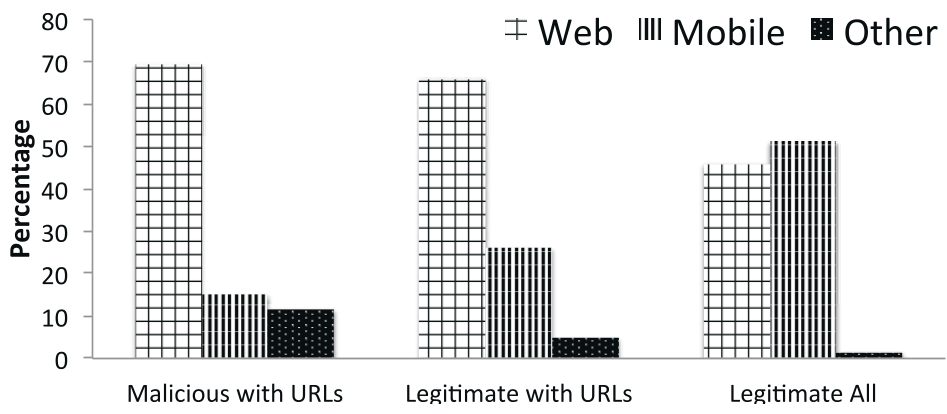 Fig 1: Notice how legitimate content is highly mobile-centric, while malicious content leverages "Other" custom applications for automation.
Experiments & Results: Crushing the Baseline
The researchers tested several classifiers, with Random Forest emerging as the winner.
Key Findings:
- The Power of 10: While 42 features were used, the accuracy peaked using just the top 10 features, with "Presence of Facebook.com URL" and "Application used to post" being the highest indicators (Information Gain).
- Failure of Clustering: When the authors applied previous clustering SOTA methods to their dataset, the old methods missed 61.7% of the malicious posts. Why? Because many malicious posts are "one-offs" or slightly modified to avoid being recognized as part of a cluster.
- Event-Specific Sensitivity: A model trained on "general" spam significantly underperformed on "event-specific" data. This suggests that attackers change their vocabulary and behavior specifically to mimic the news cycle.
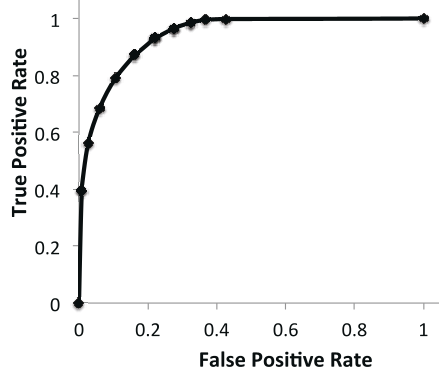 Fig 2: Performance plateauing at the top 10 features, demonstrating that a lean, real-time feature set is highly effective.
Critical Analysis & Conclusion
This work demonstrates that Facebook's current "Immune System" is surprisingly slow; 65% of malicious posts identified by the authors remained active on the platform four months later.
Takeaways for the Future:
- Application Provenance Matters: The most significant signal for a malicious post is the API/Application used to generate it. Restricting third-party app permissions during high-profile events could be a viable defense strategy.
- The Rise of Malicious Pages: Since Pages have unlimited "fans" compared to a User's 5,000-friend limit, they are much more dangerous. The study found malicious pages had an average of 123,255 likes, giving them a massive radius for infection.
Limitations:
The study focuses heavily on URL-based threats. As social media pivots toward "image-only" or "text-only" misinformation (hoaxes), the link-based features (L) will need to be replaced with vision-language models (VLM) for content analysis.
Conclusion: By focusing on real-time, public metadata rather than historical social graph data, this model provides a practical blueprint for browser-level plugins and APIs that protect users at the very second a post appears on their feed.