
REMINDS: Bridging Social Media Noise and Journalistic Relevance with Dynamic Ensembles
A System to Automatically Predict Relevance in Social Media
The paper introduces an automated system to detect journalistic relevance in social media posts, leveraging a dynamic ensemble classifier and an extensive feature extraction pipeline. The authors also present REMINDS, a web-based visualization platform that provides transparency and interpretability for the system's "relevance" and "veracity" predictions.
TL;DR
Researchers from the University of Porto have developed a sophisticated pipeline to automatically filter the "noise" of social media, identifying posts with actual journalistic value. By using a dynamic ensemble of classifiers that adapt to the specific characteristics of each post, they've boosted accuracy by over 6% and launched REMINDS, a tool that visualizes sentiment, veracity, and entity extraction to help journalists verify information faster.
Context: Why "Relevance" is a Moving Target
In the era of the 24-hour news cycle, information travels faster on Twitter than on traditional wires. However, most automated systems are "narrow"—they only look for specific events like disasters or disease outbreaks. The challenge this paper addresses is General Relevance Detection: how do we build a system that understands the "journalistic criteria" (novelty, authority, scope) across any topic?
The authors argue that a single static model cannot handle the diversity of social media text. Instead, they propose a system that "chooses its own expert" based on the linguistic signature of the input.
Methodology: The Dynamic Ensemble Selection
The system's architecture is a sophisticated pipeline consisting of Four Modules: Crawler, Data Cleaning, Feature Extraction, and the Analysis Engine.
1. Massive Feature Engineering
The system extracts over 120 features, including:
- Surface Features: Word count, punctuation, capitalization.
- Linguistic Features: Politeness, use of first/second person, part-of-speech patterns.
- Sentiment: Using the
ifeelRpackage and external APIs (Watson, Azure, Google). - Semantic Embeddings: Word2Vec features to capture deep contextual meaning.
2. The Dynamic Switching Mechanism
Instead of simply averaging model outputs (a standard ensemble), this system uses a threshold-based switching logic:
- Variable Ranking: It identifies the top 2 features that most influence prediction across multiple models (Linear SVM, Radial SVM, Random Forest, etc.).
- State Space Partitioning: It creates four distinct "zones" based on these features.
- Local Expertise: For each zone, it identifies which specific algorithm performed best during training. When a new post comes in, it is routed to the "local expert" for that specific zone.
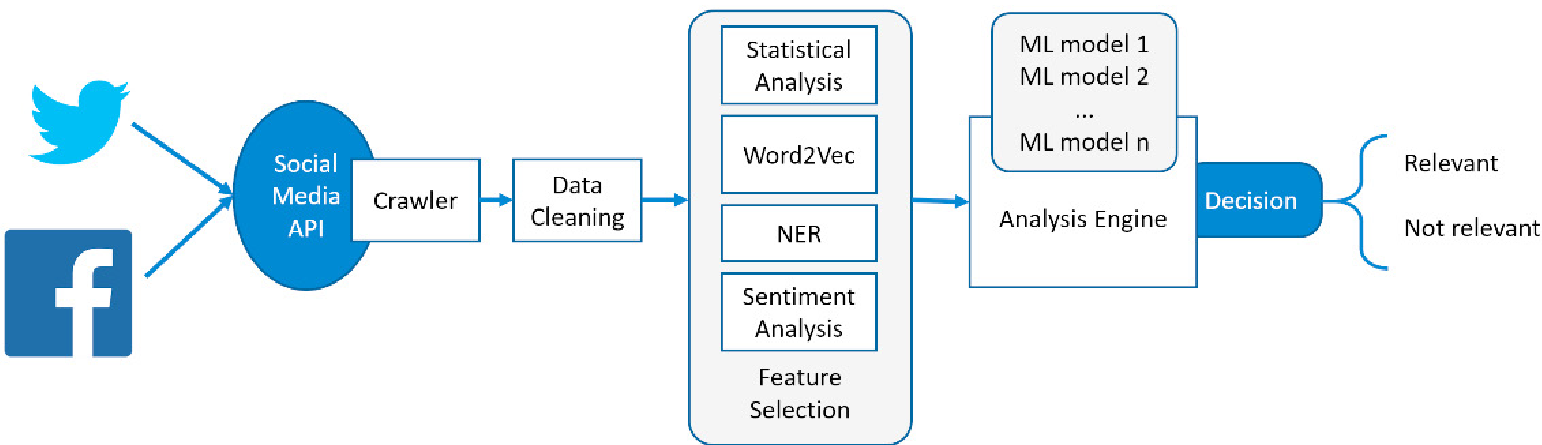 Figure 1: The logical pipeline from data collection to relevance decision.
The REMINDS Interface: Explainable AI for Journalists
A key contribution of this work is the REMINDS platform, which moves beyond "Black Box" predictions. It breaks down the results into actionable panels:
- Veracity Panel: Uses a specialized SVM trained on 40,000 unreliable/reliable sources (achieving 87% F1-score) to flag potential misinformation.
- Entities & Sentiment: Cross-references NLP results from IBM Watson and Google to provide high-confidence entity detection.
- Similar News: Scans RSS feeds to show the user if other reputable outlets are reporting similar facts, acting as a manual verification check.
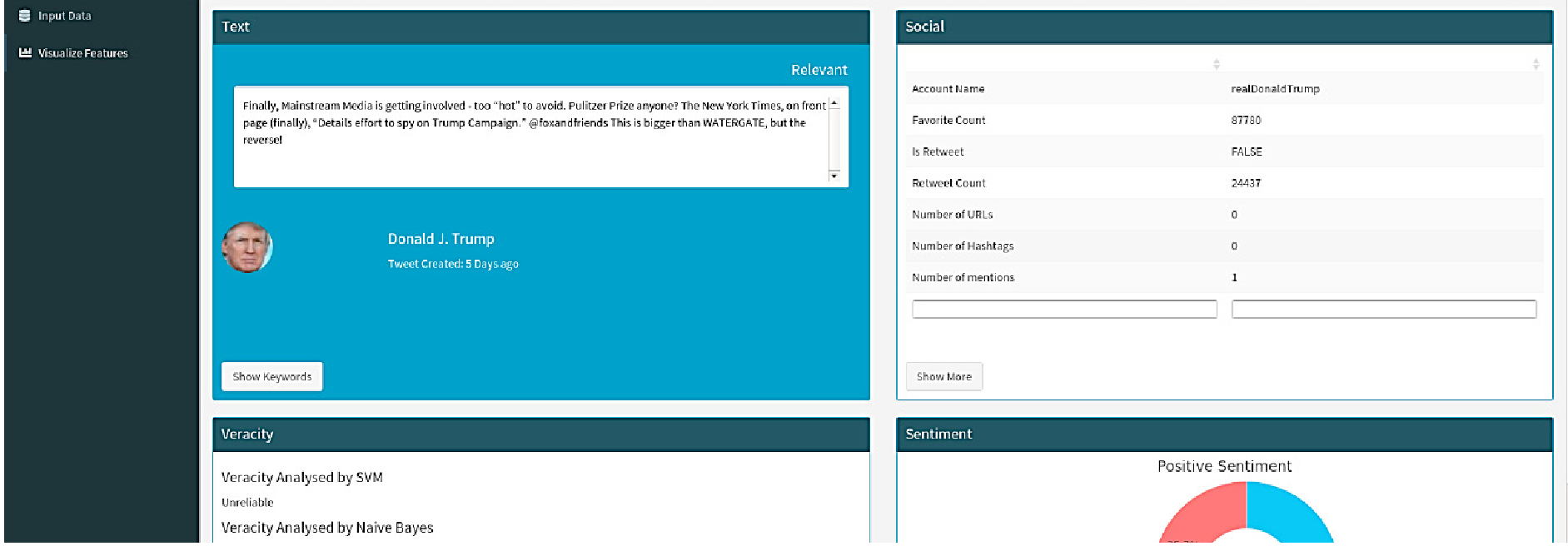 Figure 2: The visualization dashboard providing context on Twitter statistics and relevance.
Experiments & Results
The researchers tested their dynamic model against previous benchmarks and established datasets. Key takeaways from their experiments include:
- Performance Jump: The dynamic methodology resulted in a 6.1% increase in accuracy compared to static models.
- High Precision Veracity: Their trustworthiness classifier achieved an 89% Recall, ensuring that very few potentially "fake" news items were missed by the filter.
- Feature Importance: By reducing 120+ features down to the top 20 (using mRMR), they maintained high performance while reducing computational overhead.
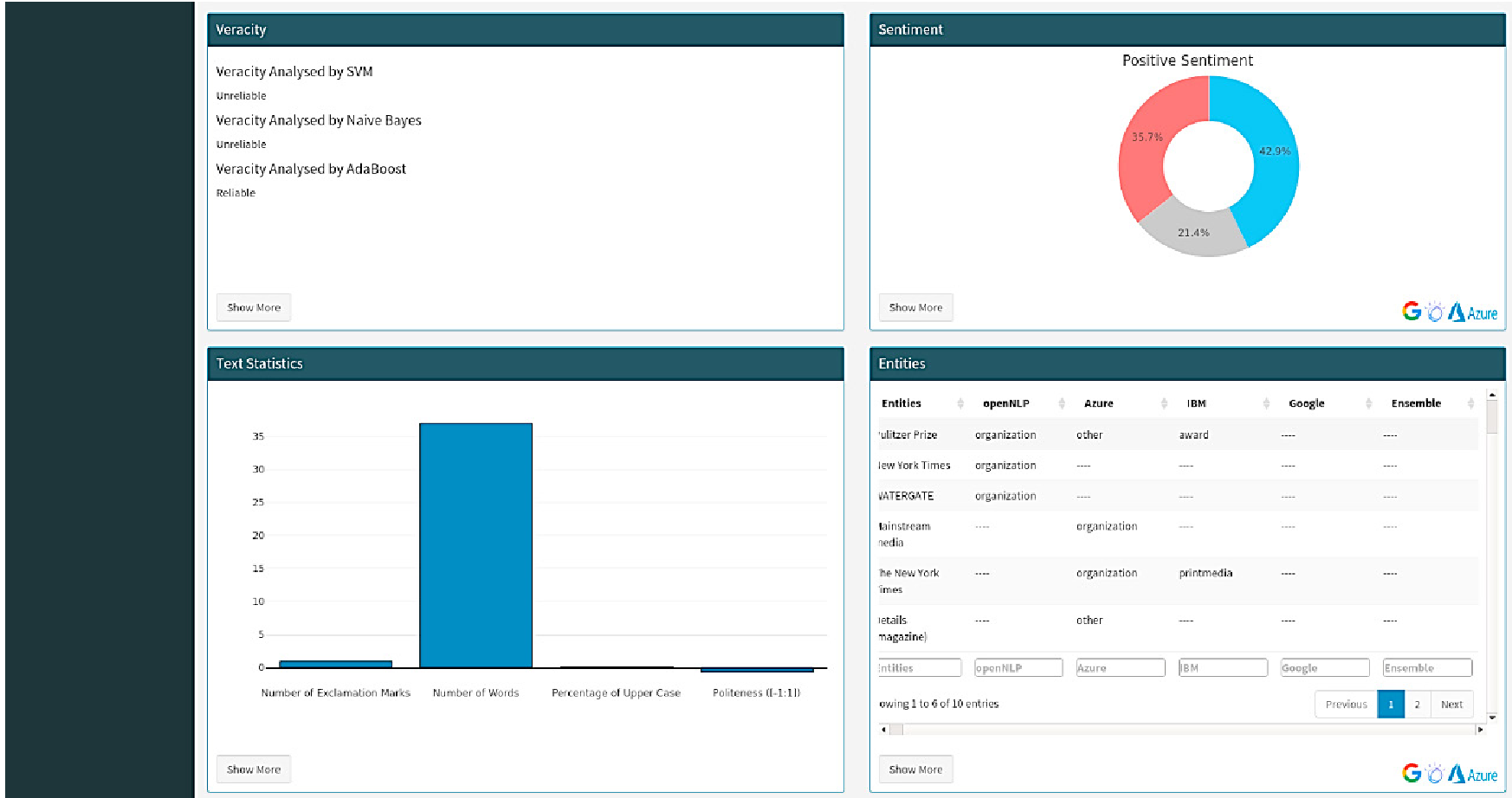 Figure 3: Detailed statistics panel showing sentiment and text metrics.
Critical Insight & Future Outlook
The core "Aha!" moment of this paper is the realization that relevance is subjective and context-dependent. By using an ensemble that shifts its weight based on feature thresholds, the authors effectively created a "mixture-of-experts" before it became a common term in large-scale transformer architectures.
Limitations: The system still relies heavily on Twitter and Facebook APIs (the latter being increasingly restricted). Furthermore, the authors admit that "relevance" decays over time—a post that is breaking news today is noise in two weeks.
Future Work: The team plans to implement a "Temporal Decay" factor where news older than 14 days is automatically reclassified as non-relevant, ensuring the system remains a "breaking news" tool rather than a historical archive.
Takeaway
For developers and data scientists, this work highlights the power of Dynamic Model Selection. When dealing with highly varied data like social media, the best model might not be the most complex one, but the one that was specifically "hired" for that particular type of input.