
Automatic Generation of Social Event Storyboards: Turning Click-Through Data into Narrative
Automatic Generation of Social Event Storyboard From Image Click-Through Data
This paper presents a novel system for the automatic generation of social event storyboards by mining image search click-through data. It utilizes a Smooth Nonnegative Matrix Factorization (SNMF) framework to detect events chronologically and selects representative photos by analyzing content features and search log patterns, achieving results comparable to handcrafted editorials.
TL;DR
Researchers have developed a system that automatically creates visual "storyboards" of celebrity events by mining millions of image search logs. By using a specialized algorithm called Smooth Nonnegative Matrix Factorization (SNMF), the system filters out the "noise" of general popularity to find specific, bursty events (like a pregnancy announcement or a car accident) and populates them with the most relevant images found through a clever anti-duplicate reranking strategy.
Background & Positioning
In the era of information overload, search engines usually provide static profiles of celebrities—birthdays, nationalities, and famous works. However, users often search for what is happening now. While sites like People.com provide timelines, they rely on human editors, which limits their scale. This paper positions itself as a bridge between raw user behavior (search logs) and structured journalistic storytelling, moving from a "What is this entity" view to a "What happened to this entity" view.
Problem & Motivation: The "Adele" Paradox
The core challenge identified by the authors is distinguishing Profile Topics from Social Events.
- Profile Topics: Persistent high-volume queries (e.g., "Adele Rolling in the Deep", "Adele lyrics").
- Social Events: Transient, bursty queries (e.g., "Adele pregnant").
Standard clustering treats the highest-volume queries as the most "important," which causes social events to be buried under the weight of a celebrity's general fame. Furthermore, search log data is notoriously sparse and noisy. A simple frequency spike isn't enough; you need to understand the semantic and temporal "shape" of the event.
Methodology: The Core Engine
The paper introduces a two-stage pipeline: Event Detection and Photo Selection.
1. SNMF Event Detection
The authors treat each day's search logs as a document and queries as words. They use Nonnegative Matrix Factorization (NMF) to decompose these "documents" into latent topics.
The "Smooth" part (SNMF) is the secret sauce: it adds a regularization term that prevents the topic weights from jumping erratically between days. This ensures that an event's development (occurrence, sustain, decay) follows a logical timeline.
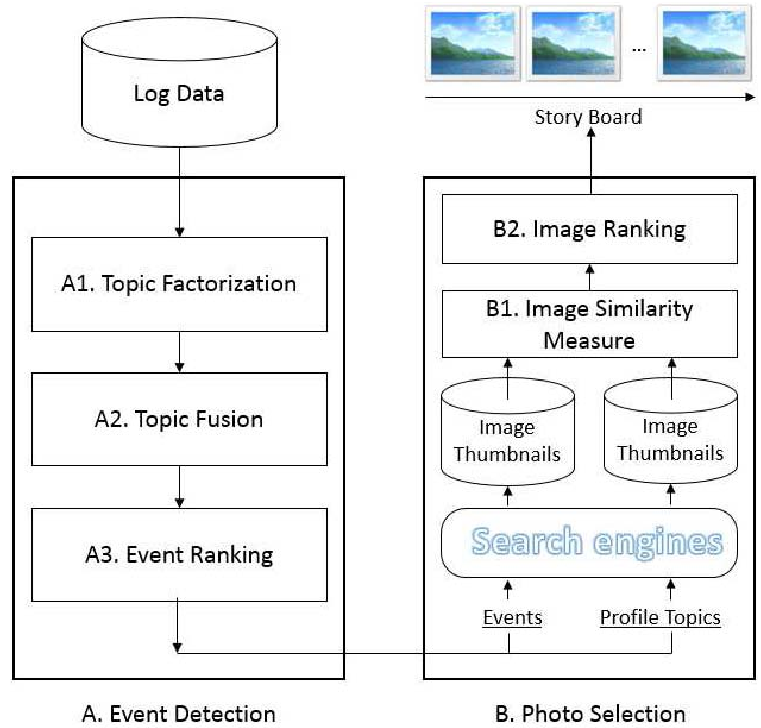 Figure 1: The framework overview consisting of Event Detection and Photo Selection.
2. Event Ranking via Gamma Distribution
To filter out general profiles, the authors fit the temporal curve of each topic to a Gamma Distribution. Events typically have a sharp rise and a slow decay. Topics that fit this "bursty" profile are ranked higher as social events.
3. Visual Storytelling: The Photo Reranking Logic
Directly searching for "Amanda Bynes car accident" often returns generic headshots because those headshots have high "authority" scores. The authors solve this with a duplicate-based logic:
- Promote: Images that appear multiple times across different queries related to the event.
- Penalize: Images that also show up in the celebrity's general "profile" search results.
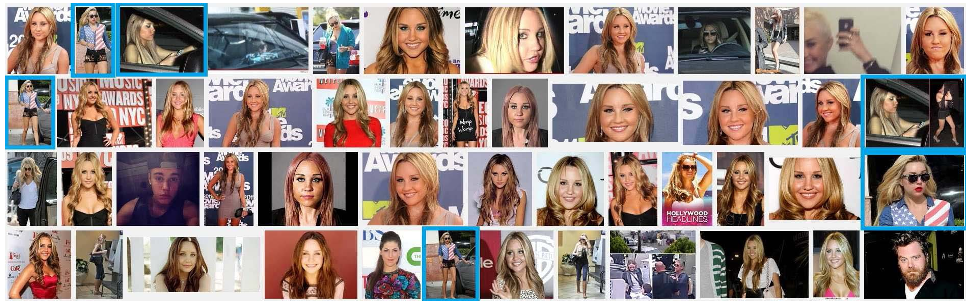 Figure 2: By comparing event-specific results with general results, the system isolates event-specific visuals.
Experiments & Results
The system was tested on 190 million log records for 200 celebrities.
- Superior Accuracy: The SNMF method outperformed the previous SOTA (using bipartite graphs) by providing more coherent event clusters.
- Visual Relevance: In blind tests, users found the SNMF-selected photos significantly more "Perfect" for the event than top results from commercial engines like Google or Bing, which often defaulted to generic portraits.
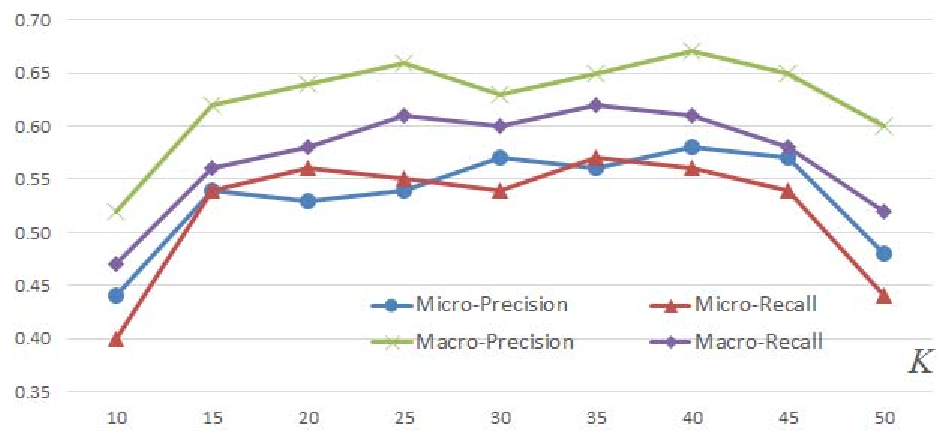 Figure 3: Quantitative comparison showing the spike in precision and recall when using SNMF over traditional methods.
Critical Insight: Beyond Celebrities
The takeaway here is that user intent, as captured by click-through data, is a powerful "sensor" for real-world events. While this paper focuses on celebrities, the logic of Temporal Smoothness + Entropy-based Ranking is highly applicable to brand monitoring, landmark tracking, or even detecting emerging technical trends in academic databases.
Limitations
The system relies on a "critical mass" of search data. For long-tail entities (less famous people), the data may be too sparse for SNMF to converge. Additionally, the photo selection relies on the assumption that "event" photos will have duplicates—a feature of news dissemination that might change as social media content becomes more fragmented and unique.
Conclusion
This work transforms the "cold" statistics of a search engine into a "warm" narrative experience. By leveraging the physical intuition that events have a distinct temporal "pulse," the authors prove that we don't always need human editors to tell a compelling story.