
Automated Quality Control: Teaching AI to Curate Cultural Heritage Metadata
Automatically evaluating the quality of textual descriptions in cultural heritage records
This paper introduces an automated approach for evaluating the accuracy of textual metadata in cultural heritage records using machine learning. By framing the problem as a binary classification task (High vs. Low Quality) and utilizing FastText word embeddings, the authors achieve an F1-score of ~0.85 across more than 100k Italian descriptions.
TL;DR
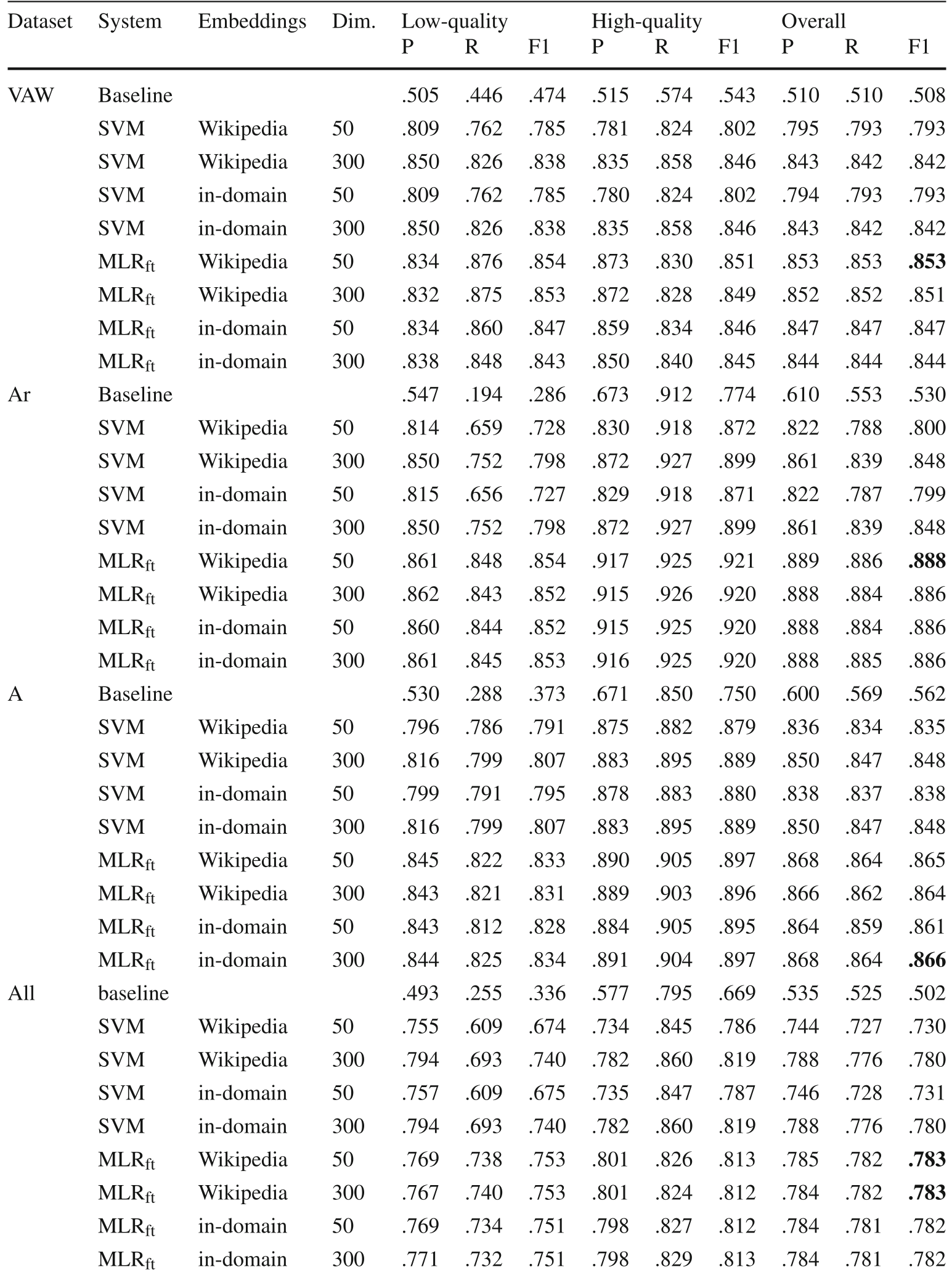
High-quality metadata is the backbone of digital libraries, yet manual curation is a bottleneck for growing collections. Researchers have developed a machine learning framework that automatically determines if a record's description is "accurate" based on professional guidelines. Using a dataset of 100,000+ records from Italy's Cultura Italia, the system achieves human-like performance (F1 ~0.85), proving that AI can significantly reduce the workload of heritage curators.
The "Accuracy" Paradox in Cultural Heritage
In metadata science, "Accuracy" is notoriously difficult to define. Is a description accurate if it is grammatically correct? Or if it contains specific technical keywords?
The authors argue that quality is fit for purpose. For the Italian National Institute for Cataloguing and Documentation (ICCD), a "High-Quality" description must strictly include:
- The Object: Typology, shape, and material.
- The Subject: Decorative settings and depicted characters (without irrelevant history).
Existing methods often used description length as a proxy for quality. However, as the authors demonstrate, a long text about a painter’s life (Low Quality) can be less "accurate" than a short, punchy description of a painting's physical attributes (High Quality).
Methodology: From Words to Vectors
The core of the approach is converting natural language into a format machines understand: Word Embeddings.
The Pipeline
- Preprocessing: Removing "stopwords" (articles/prepositions) and punctuation to focus on semantic content.
- Vectorization: Using FastText, which represents words as bags of character n-grams. This is particularly effective for Italian, as it handles complex suffixes and prefixes well.
- Classification: Comparing two heavy hitters:
- Support Vector Machines (SVM): Finding the optimal hyperplane to separate good from bad metadata.
- Multinomial Logistic Regression (FastText MLR): A high-speed linear classifier.
Deep Insights from the Experiments
1. Domain Matters
The study tested three domains: Visual Art, Archaeology, and Architecture. One of the most striking findings was that a model trained on Architecture data performs poorly when testing Visual Arts data.
- The Lesson: Quality standards are not universal. Archeologists describe "Oinochoe" (vases) differently than art historians describe "Tondos" (circular paintings).
2. The Law of Diminishing Returns
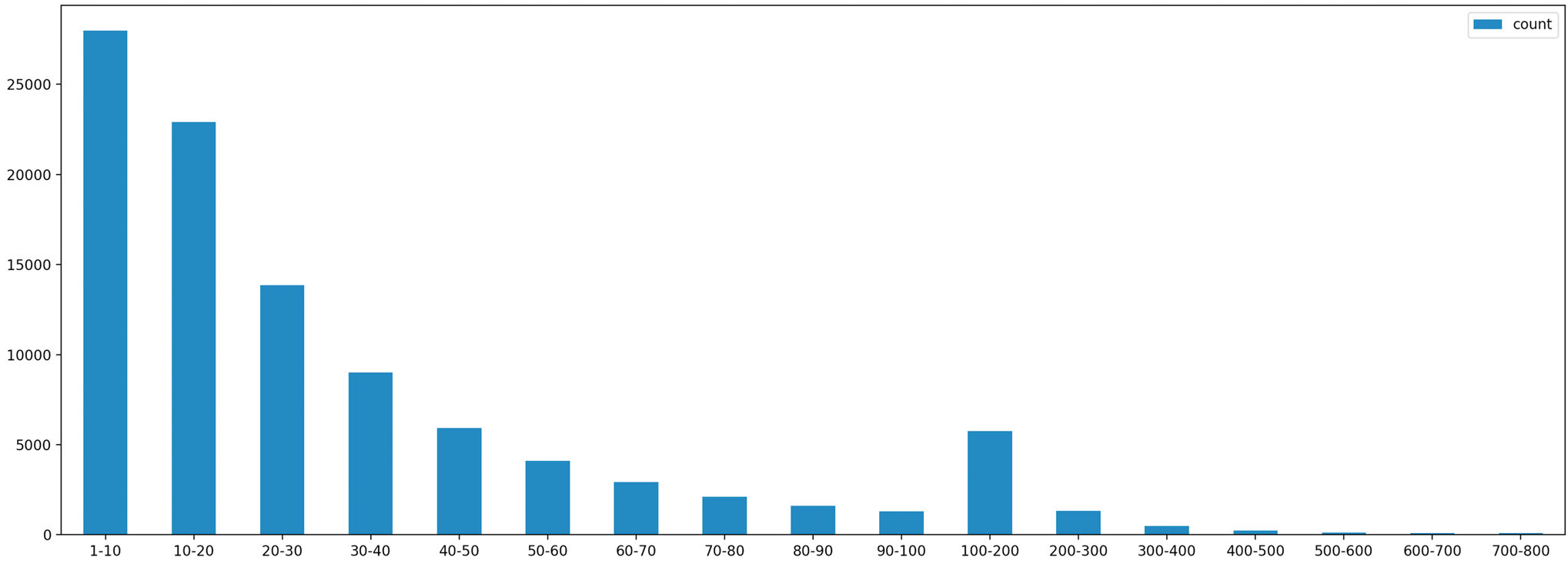
One of the most practical questions for any library is: How many records do we need to label by hand to train an AI? The authors plotted a Learning Curve, showing that while accuracy increases with more data, it starts to "flatten" after about 8,000 to 10,000 samples. Adding another 70,000 samples only yielded a marginal 5% improvement.
3. Why does the AI fail?
The authors identified "Error Type A" as descriptions containing Latin or Greek terms. Because these terms are rare, the word embeddings don't "know" them well enough to determine quality.
Critical Analysis & Future Outlook
While the system achieves an impressive F1-score of 0.85, it operates purely on text. The authors acknowledge a major limitation: it doesn't look at the picture. A description could perfectly follow the rules but describe a different object entirely.
The next frontier is Multimodal AI—systems that cross-reference the text with the actual image of the artifact to ensure the description isn't just "well-written," but actually "true."
Takeaway for Curators: Don't be afraid of AI. By labeling a modest 8,000 records, you can build a tool that handles the "low-hanging fruit," flagrantly bad descriptions, and structural errors, leaving the expert curators to focus on high-level validation.