
Autonomous Crowdsourcing: Training Humans via Machine Intelligence
Autonomous Crowdsourcing through Human-Machine Collaborative Learning
The paper introduces an iterative human-machine collaborative learning framework for autonomous crowdsourcing. It employs a classifier trained on distant supervision to select high-confidence "Silver Standard" examples to train crowd workers, who then annotate low-confidence data to progressively improve the classifier.
TL;DR
This research presents a paradigm shift in data labeling: instead of experts training humans, a machine trained on noisy data (Distant Supervision) identifies the best examples to educate the crowd. By using an iterative feedback loop, the system achieves near expert-level annotation quality in complex tasks like Relation Extraction and Arabic Question Answering without requiring a single pre-labeled "Gold Standard" example for training.
Background: The Price of Expertise
Modern AI is thirsty for high-quality annotated data. While crowdsourcing (e.g., Amazon Mechanical Turk) offers a cheap labor pool, it often fails at complex semantic tasks like Relation Extraction (RE). In RE, distinguishing whether a sentence expresses a specific relationship between entities requires nuance that casual workers lack.
The traditional solution is "Gated Instruction"—forcing workers to pass a tutorial based on Gold Standard data (expert-labeled). However, this creates a "chicken and egg" problem: you need expert data to get crowd data. This paper solves this by replacing the Expert with a Silver Standard—high-confidence labels generated by an automatic classifier.
Methodology: Silver Standard Mining
The core innovation is an iterative collaborative loop. The architecture splits the unlabeled dataset into three distinct tiers based on the classifier's confidence scores:
- Instruction Set (CSI): The "easiest" high-confidence examples used to show workers what correct labels look like.
- Interactive QA Set (CSQ): Mid-confidence examples where the machine challenges the worker. If the worker misses it, the machine provides feedback based on its own prediction.
- Annotation Set (CSA): The "hardest," lowest-confidence examples where the machine is genuinely unsure. This is where the human provides the most value.
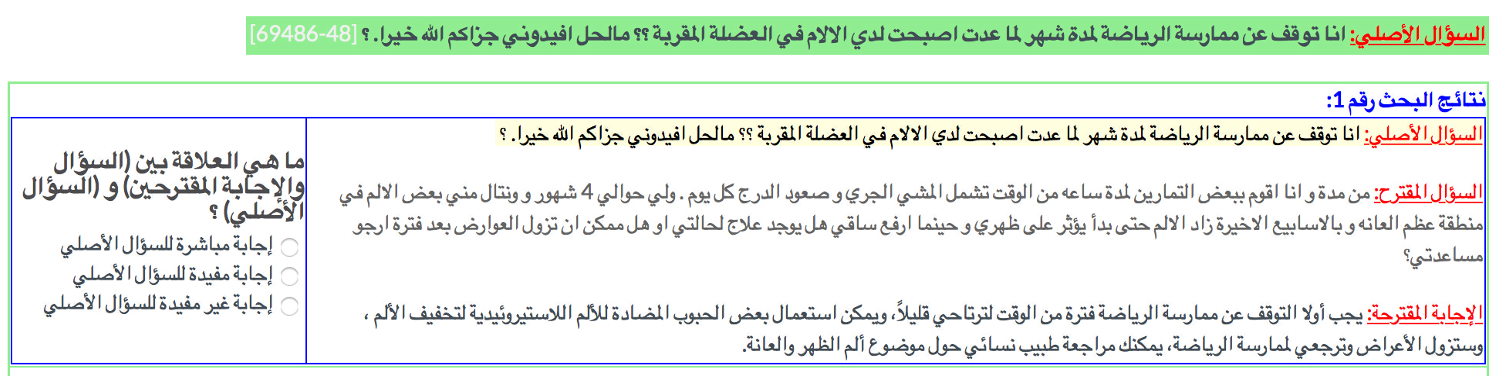 Figure 1: The user interface for training workers in Arabic QA tasks, demonstrating the framework's linguistic versatility.
Experiments and Results
The authors tested this across two very different domains: English Relation Extraction (RE) and Arabic Community Question Answering (CQA).
Relation Extraction Performance
The system was compared against Distant Supervision (DS) and SampleJS (a popular active learning baseline). The proposed method significantly closed the gap with the expensive "Gated Instruction" (GI) method.
| Model | Precision | Recall | F1 Score |
|---|---|---|---|
| DS-only | 0.43 | 0.52 | 0.47 |
| SampleJS | 0.46 | 0.51 | 0.48 |
| Our Method | 0.50 | 0.54 | 0.52 |
| Gated Instruction (Gold Standard) | 0.53 | 0.57 | 0.55 |
Efficiency Gains in CQA
In the Arabic CQA task, the results were even more striking. Typically, crowdsourcing relies on "Majority Voting" (asking 5+ people and taking the average) to ensure quality. This paper found that one worker trained by the machine performed as well as five untrained workers combined. This represents a 5x improvement in cost efficiency.
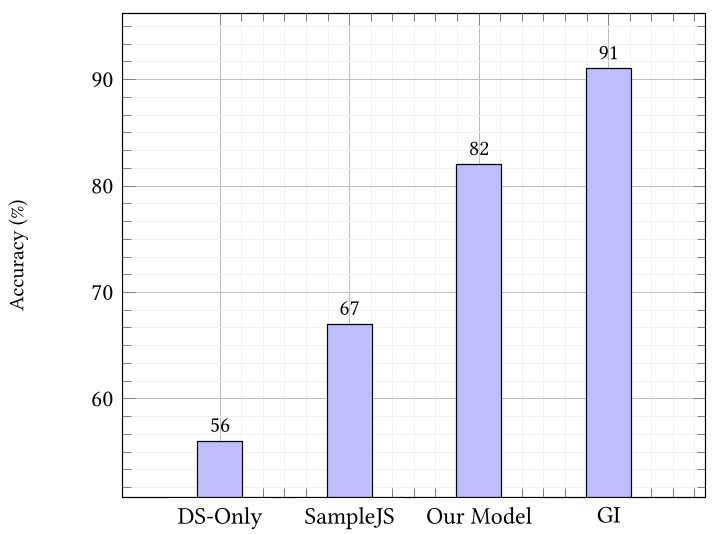 Figure 2: Accuracy of crowd workers under different training regimes. Our method tracks closely with expert-led instruction.
Critical Insight & Conclusion
The brilliance of this work lies in its Inductive Bias toward worker education. Instead of treating crowd workers as static "labeling functions," it treats them as students. By using the classifier's confidence as a curriculum, the framework facilitates "Gradual Educating"—starting with easy examples (Silver Standard) before moving to difficult ones.
Takeaway: This proves that we can bootstrap high-quality datasets starting from noisy, automated labels. The machine's ability to rank its own certainty is sufficient to lead a human to provide better data, which in turn fixes the machine's initial errors.
Future Outlook: While highly effective, the method still relies on the initial classifier having a baseline level of accuracy from Distant Supervision. Future work could explore how to start this loop in "cold-start" scenarios where no initial weak labels exist.