
Autonomous ML Modeling: Bridge the Gap with Task Ontologies
Autonomous Machine Learning Modeling using a Task Ontology
This paper introduces a task ontology-based framework for Autonomous Machine Learning (AutoML) that systematizes problem-solving steps into modular tasks. By combining MEX vocabulary and UML-based meta-models, the authors propose a method to automatically generate machine learning workflows and code, facilitating easier access for non-experts.
TL;DR
This research tackles the "expert-only" bottleneck in machine learning by proposing a standardized Task Ontology. Instead of manually writing boilerplate code, the framework uses a structured vocabulary and UML-based meta-models to represent ML processes. This allows the system to automatically generate executable code (like CNNs or YOLO models) based on a high-level conceptual graph, essentially turning "problem-solving logic" into "machine-executable workflows."
The "Non-Expert" Bottleneck
Despite the explosion of open-source frameworks like TensorFlow and Scikit-learn, building an end-to-end ML pipeline is still a daunting task for those without a computer science background. Current AutoML tools like Auto-Sklearn focus heavily on hyper-parameter tuning but often ignore the structural knowledge required to design a workflow. The authors argue that we need an "explicit protocol for conceptualization"—a way to formalize what a "Task" actually is in the context of ML.
Methodology: From Words to Workflows
The core innovation lies in the transition from unstructured knowledge to a formal UML meta-model. The process follows three distinct stages:
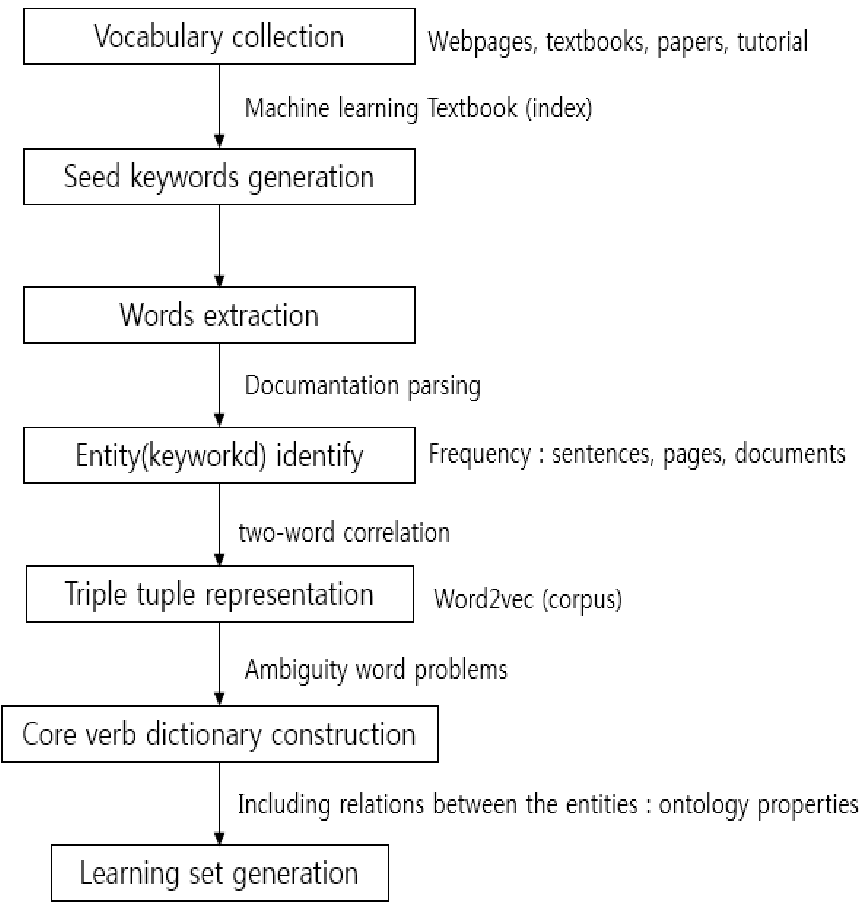
1. Vocabulary Acquisition
The system extracts keywords from textbooks, papers, and API tutorials. These terms are categorized into experimental info, data characteristics, algorithms, and hyper-parameters. This forms the "dictionary" of the machine learning domain (referencing the MEX vocabulary).
2. Conceptual Graph & Mapping
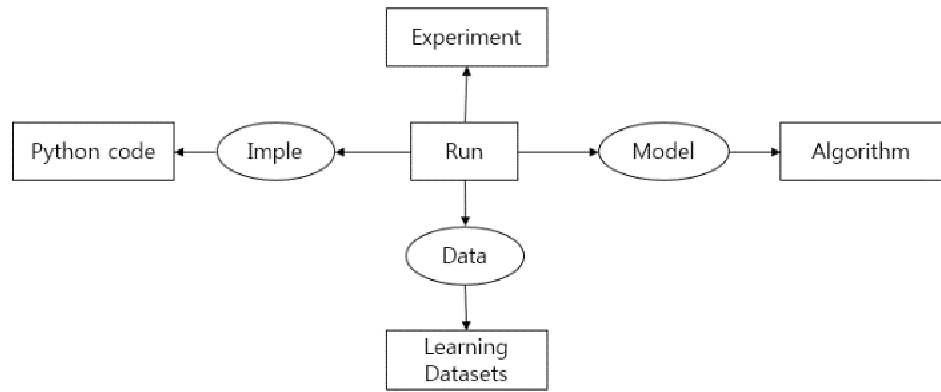
Knowledge is represented as a graph where square nodes represent concepts (e.g., "Dataset: MNIST") and ellipses represent relationships (e.g., "Implements"). This graph acts as a visual blueprint of the machine learning experiment.
3. UML Meta-Model and Implementation
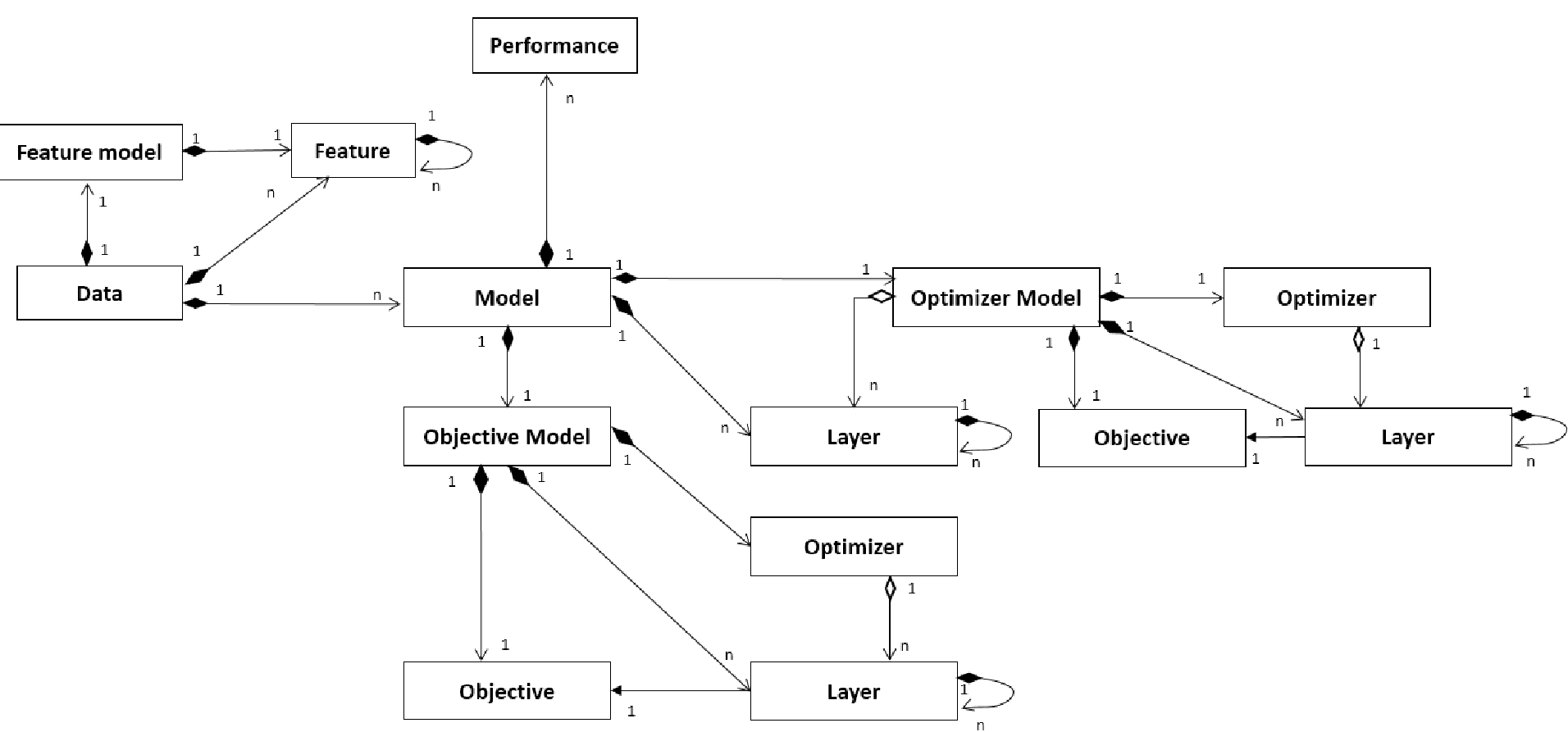
The final bridge is the transformation of the conceptual graph into a UML-based Meta-model. By defining modular components—such as Optimizers (Adam, SGD) and Layers (Convolution, Pooling)—the system can generate JSON files and, ultimately, Python code.
Deep Learning Case Study: Object Detection
The paper demonstrates the model's utility by decomposing a "YOLO" object detection task. The pipeline—including data import, schema selection, and performance measurement—is abstracted into a machine-readable format. This modular approach means a user can swap an "RMSProp" optimizer for an "Adam" optimizer by simply changing a node in the graph, rather than refactoring code.
Why This Matters
The shift towards Autonomous Machine Learning is not just about making algorithms faster; it's about making them more accessible and traceable.
- Traceability: Each step of the ML process is recorded in the ontology, allowing for better auditing of how a model was built.
- Reusability: Standardized "Task" units mean that a data preprocessing workflow developed for one project can be instantly repurposed for another.
- Automation: By designating levels of autonomy, the workflow can move from "user-guided" to "fully automatic" generation based on transformation rules.
Critical Insight & Limitations
While the task ontology provides a rigorous structure, the paper's reliance on manual or semi-automated keyword extraction from textbooks suggests a potential "cold-start" problem when new, cutting-edge architectures (like Transformers or Diffusion models) emerge. Future work should look into integrating Large Language Models (LLMs) to dynamically update the task ontology from the latest arXiv papers in real-time, ensuring the framework remains current with the rapid pace of ML research.
Conclusion
By formalizing the "art" of machine learning modeling into a structured "science" of ontologies, the authors provide a promising path toward democratizing AI. This framework turns the machine learning pipeline into a LEGO-like assembly process, where non-experts can build powerful models using the standardized blocks of the task ontology.