
ATS-Healthcare: Revolutionizing Emergency Response through DRL and Autonomous Fleets
Autonomous trAnsportAtion in EmErgEncy HEAltHcArE sErvicEs: FrAmEwork, cHAllEngEs, And FuturE work IntroductIon
This paper proposes an IoT-enabled Autonomous Transportation System (ATS) framework specifically for emergency healthcare, leveraging Deep Reinforcement Learning (DRL) and Autonomous Vehicles (AVs). The system aims to minimize emergency response times and provide contactless medical services, achieving SOTA-level efficiency in urban resource management and fuel consumption reduction.
TL;DR
In the wake of global health crises, traditional emergency transportation has proven insufficient and risky. This paper introduces an IoT-enabled Autonomous Transportation System (ATS) that uses Deep Reinforcement Learning (DRL) to automate ambulances and medical logistics. By removing the human driver, the system provides a contactless, high-efficiency framework that reduces response times, lowers infection risks, and optimizes urban traffic flow.
Problem & Motivation: The "Time is Muscle" Dilemma
In emergency healthcare, particularly cardiac events, every second counts. Traditional systems face three major roadblocks:
- Traffic Volatility: Fixed road infrastructure cannot adapt to peak-time congestion, delaying life-saving treatments.
- Contagion Risks: Pandemic scenarios like Covid-19 turn human-driven ambulances into potential infection vectors for both drivers and vulnerable patients.
- Human Limitations: Manual dispatch and driving are prone to fatigue and suboptimal routing in complex urban grids.
The authors' insight is that transportation shouldn't just be a "ride" to the hospital; it should be an intelligent, connected extension of the hospital itself.
Methodology: DRL-Powered Autonomy
The proposed framework relies on a synergy between IoT infrastructure and Deep Reinforcement Learning (DRL).
1. The Agent-Environment Loop
The ambulance is treated as a DRL agent. Unlike static GPS routing, the DRL agent learns from:
- States: Real-time traffic density, patient urgency, and fuel levels.
- Actions: Route selection, speed adjustments, and signal preemption.
- Rewards: Minimizing trip time and fuel consumption while maximizing patient safety.
2. Global Aggregator (GA) and Decision Making
A centralized Global Aggregator acts as the "brain," assigning tasks to the nearest AV based on global city traffic data, rather than localized heuristics.
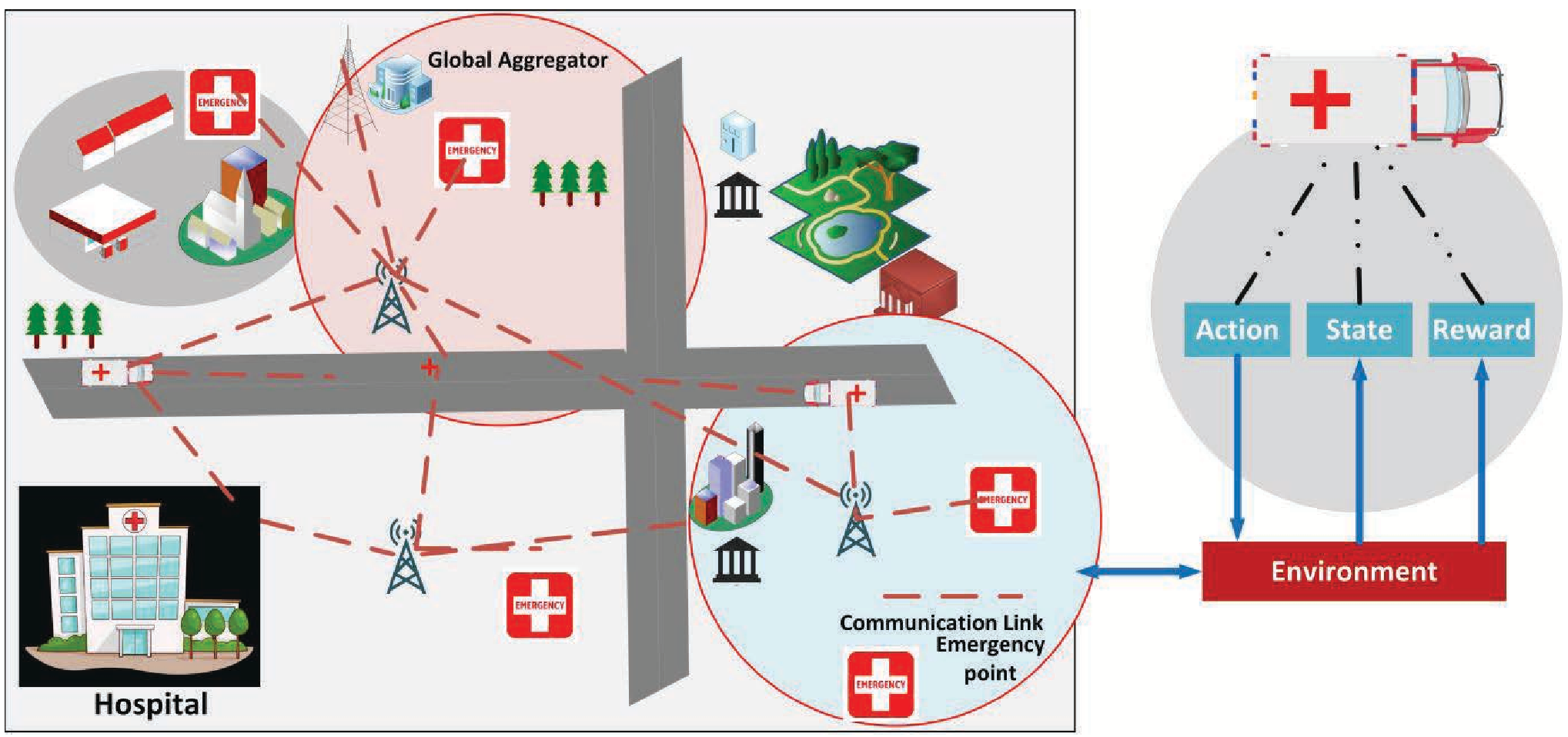 Figure 1: The proposed ATS framework highlighting the interaction between AVs, patients, and healthcare providers.
Key Features of Future ATS
The paper goes beyond simple driving to propose high-value healthcare applications:
- Diagnostic-Enabled AVs: Using smart cameras and sensors to monitor body temperature and heart rate en route, allowing doctors at the hospital to prepare treatments before the patient arrives.
- Self-Isolation Compartments: AVs designed with multiple isolated sections to transport different patients without cross-contamination.
- Automated Disinfection: AVs equipped with cleaning hardware to autonomously sanitize public areas, reducing the burden on human staff.
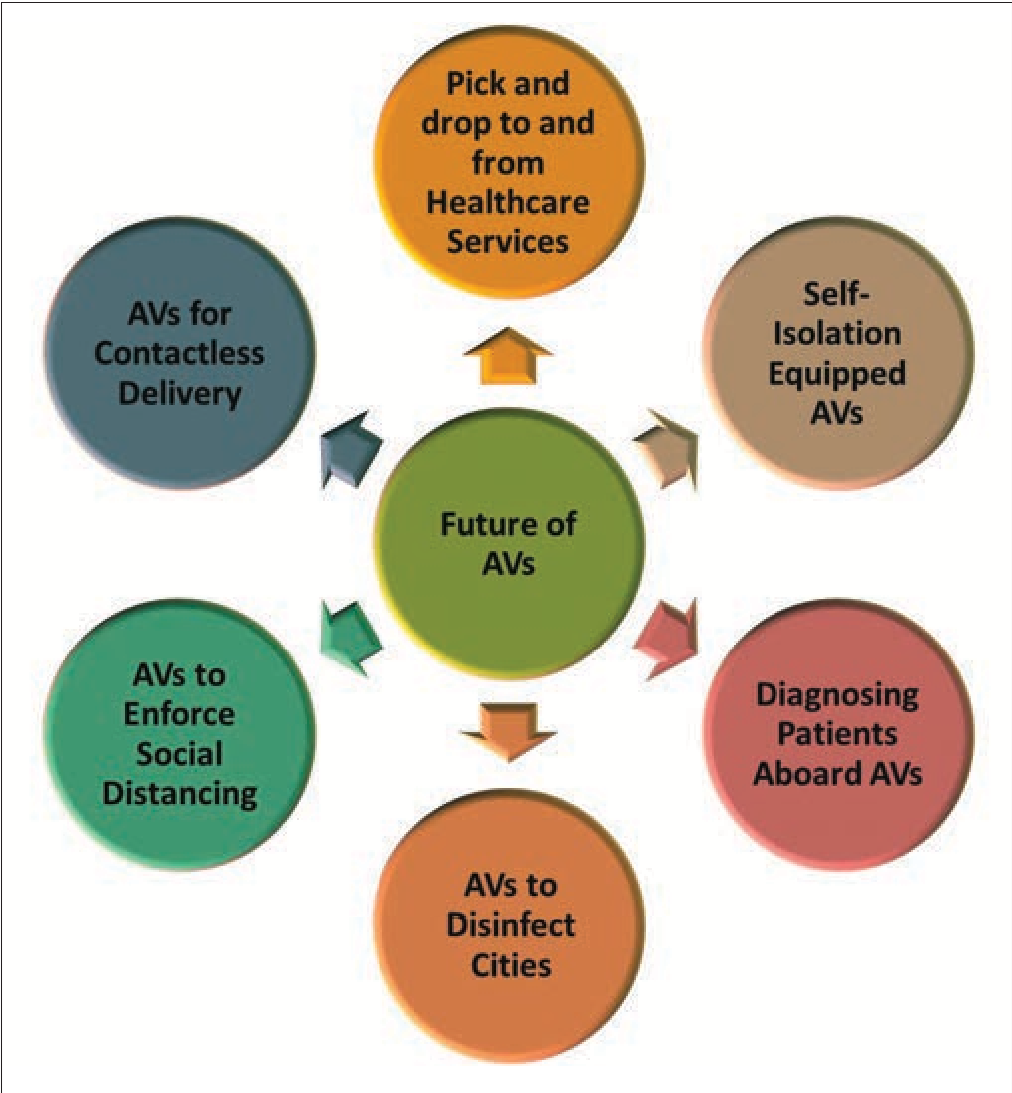 Figure 2: Future AVs featuring isolated compartments for safe pandemic-era transport.
Experiments & Results: Efficiency in Crisis
While the paper focuses on the framework architecture, it highlights critical impact metrics:
- Response Time: Optimized DRL routing significantly cuts down the response gap compared to traditional dispatch.
- Environmental Impact: By optimizing acceleration and routing, the system demonstrates notable reductions in fuel consumption and CO2 emissions.
- Scalability: The framework is designed to bridge the gap between rural and urban healthcare access, utilizing AVs to overcome the "distance burden" in remote areas.
Critical Analysis & Conclusion
Takeaway
The integration of DRL into ATS signifies a move toward Proactive Healthcare. This isn't just about faster cars; it’s about an ecosystem where the vehicle performs triage, protects the workforce, and manages urban resources.
Limitations
- Legal & Policy Gaps: Most countries currently lack the legislation (e.g., GDPR, liability laws) to allow fully autonomous ambulances.
- Connectivity: The system heavily relies on ultra-reliable 5G/6G. In "dead zones," the DRL agent's performance could degrade.
Future Work
The next step is moving from the "abstract-level autonomy" presented here to real-world edge-case testing, focusing on how these AVs interact with unpredictable human drivers during emergencies.