
Avoiding the South Side: How Geography and SES Create Inequality in Mobile Crowdsourcing
Avoiding the South Side and the Suburbs: The Geography of Mobile Crowdsourcing Markets
The paper investigates the "Geography of Mobile Crowdsourcing Markets" by conducting a controlled study with TaskRabbit workers in Chicago. It introduces quantitative models to analyze how task location, travel distance, and socioeconomic status (SES) influence worker willingness and task pricing, revealing significant geographic biases.
TL;DR
Mobile crowdsourcing markets like TaskRabbit promise efficiency, but they aren't geographically neutral. This study reveals a "geographic tax" on low-income and suburban areas: workers are significantly less likely to accept tasks in low-SES neighborhoods due to safety concerns and travel distances. When they do accept, they charge more. The result? Those who could benefit most from "buying back time" are the ones least able to afford it.
Background: The Physicality of the Gig Economy
Unlike Amazon Mechanical Turk (AMT), where a worker in Mumbai can label an image for a requester in New York, mobile crowdsourcing is inherently "situated." This creates a friction point known as Distance Decay. While we know rural areas have less data in systems like OpenStreetMap, this paper dives deeper: exactly how much more does a person in a "bad" neighborhood have to pay for a simple task?
The Core Friction: Why Workers Say "No"
The researchers identified two primary drivers of worker behavior:
- Socioeconomic Status (SES): Using median household income as a proxy.
- Distance (Travel Time): Calculated via the Google Distance API based on the worker's specific mode of transport (car vs. transit).
1. The Willingness Gap (RQ-Willingness)
The study found that workers are 2.38x more likely to accept a task if the area's income doubles (e.g., moving from a 60k one).
- The Gender Variable: Women were far more likely to decline tasks than men (78% vs 53%), citing safety and distance as primary blockers.
2. The Price of Distance (RQ-Price)
If a worker is willing to go, distance becomes the dominant pricing factor. Each hour of commuting adds roughly $10 to the task cost.
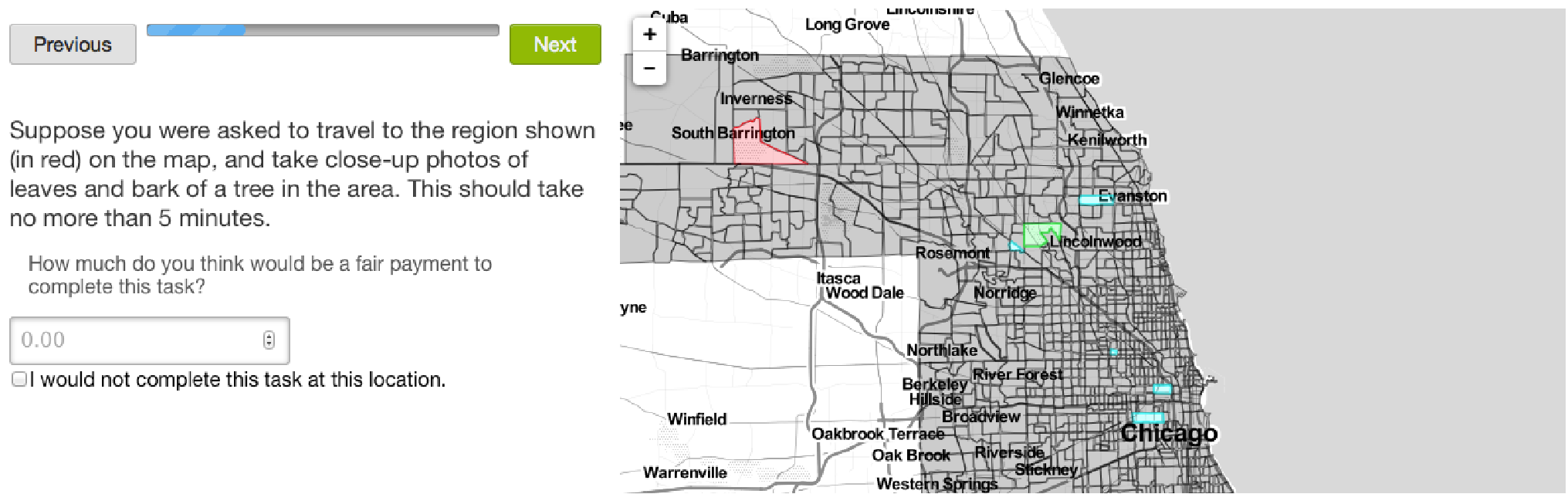 Figure 1: The survey utilized by the researchers to map worker home tracts (green) against potential task locations (red).
Methodology: Modeling the "Site" and "Situation"
The authors categorized findings into two geographic concepts:
- Site Attributes (Internal): Reputation, perceived crime, and poverty levels. In Chicago, the "South Side" carries a reputation for gang violence that causes even "Elite" workers to reflexively decline all tasks in that quadrant.
- Situation Attributes (External): Connectivity. "How much of a pain is it to get there?" If a task is not near the "L" train or a major highway, the overhead of the commute exceeds the value of a 5-minute task.
The "Big Sort" and its Economic Impact
A critical finding of the paper is the residential segregation of the workers themselves. As shown in the map below, TaskRabbit workers are clustered in the affluent North Side of Chicago.
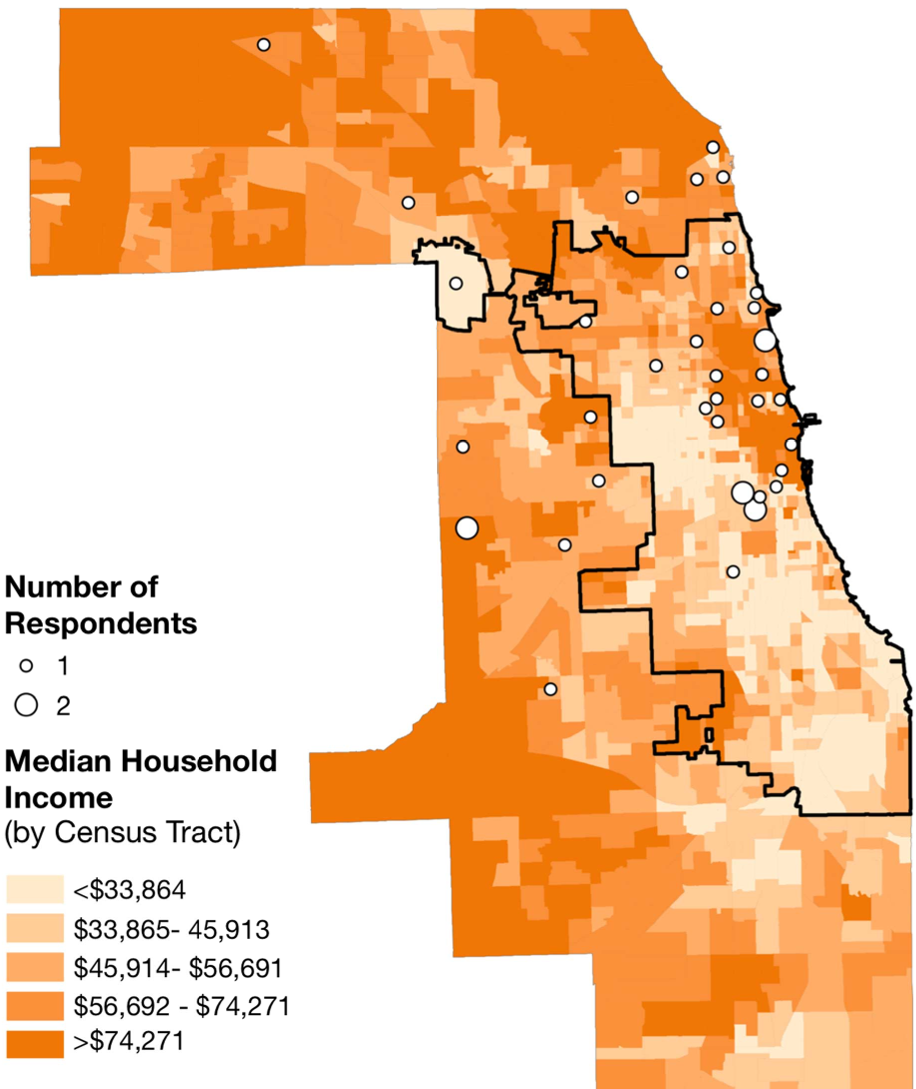 Figure 2: Workers live in high-income areas (yellow/white). The "Poorest" tracts (dark blue) have almost zero resident workers, creating a massive "Situation" disadvantage for those neighborhoods.
Qualitative Insights: The Fear Factor
Qualitative feedback highlighted that SES is often a proxy for perceived crime. Workers explicitly mentioned they "wouldn't feel safe as a female alone" or avoided "large swaths of the south side." Interestingly, this fear often ignores micro-local realities, where safe blocks within low-SES tracts are still blacklisted by the "crowd," leading to a form of algorithmic or market redlining.
Critical Insight: It’s Expensive to be Poor
The paper concludes with a sobering realization: mobile crowdsourcing reinforces existing inequalities.
- Productivity Loss: A wealthy person can outsource errands for $20/hr to focus on high-value work.
- The Barrier: A person in a low-SES area faces higher prices and lower supply, preventing them from leveraging the same time-saving efficiencies.
Future Outlook and Limitations
While the study is limited to Chicago (Cook County), its implications for "Sharing Economy" giants like Uber and Lyft are massive. If drivers avoid certain neighborhoods, wait times and "surge" prices become a permanent tax on the marginalized.
Takeaway for Platforms: To fix this, platforms shouldn't just hide neighborhood names; they must actively recruit and support workers within those underserved areas by removing barriers like smartphone requirements or bank account mandates.