
Securing the Social Fabric: A Cryptographic Protocol for Data Safety via the Backes Method
Development of a Protocol to Ensure the Safety of User Data in Social Networks, Based on the Backes Method
The paper introduces a cryptographic protocol designed to enhance user data security and anonymity in Online Social Networks (OSN) by extending the Backes method. It leverages Proof-Carrying Authorization (PCA) and Zero-Knowledge Proofs (ZKP) within a queuing network framework to facilitate secure access control and anonymous social interactions.
TL;DR
In an era where social network privacy is increasingly fragile, this paper proposes a protocol that enables users to interact—such as posting on a friend's wall—while remaining completely anonymous to both the system and the receiver. By blending the Backes method of formal logic with Zero-Knowledge Proofs (ZKP) and Queuing Theory, the authors provide a framework where "proving you are a friend" no longer requires "revealing who you are."
The Privacy Paradox in Social Networks
Modern Online Social Networks (OSNs) are central to human communication, yet they suffer from a fundamental security flaw: the lack of robust, anonymous access control. Most platforms tie every action to an identity, making users vulnerable to surveillance by employers or malicious actors.
The technical challenge lies in Proof-Carrying Authorization (PCA). Prior work established the logic of "A says F" (User A makes statement F), but translating this into a scalable, high-speed protocol that doesn't leak metadata has remained a bottleneck.
Methodology: The Core Logic
The authors build upon the Backes Method, a powerful cryptographic framework for privacy. At its heart is the "SAY" logic, which handles digital signatures and signature non-disclosure.
Architectural Breakdown
The protocol utilizes Bilinear Mappings and Groth-Sahai Proof Systems to satisfy the following requirements:
- Anonymity: Senders are represented by a "?" symbol in the logic, signifying that their identity is hidden from the receiver.
- Access Control: Implements
op := R|W|RW(Read/Write/Both) permissions. - Existential Quantification: Users can prove —essentially claiming "I am someone who has the right to be here" without saying "I am User 1234."
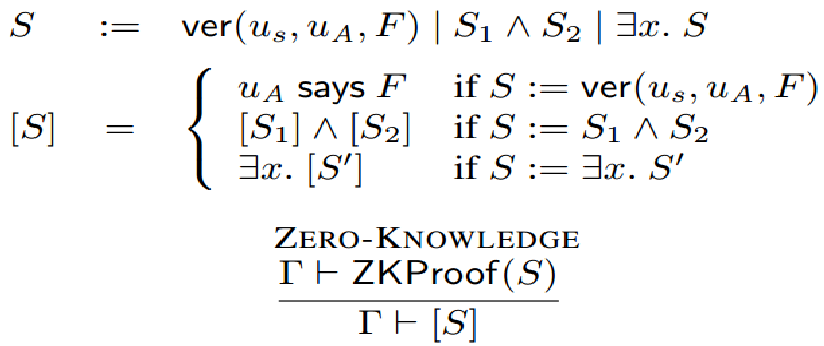 The formal logic used to generate Zero-Knowledge Proofs (ZKP).
Simulating the Flow: Queuing Networks
A unique contribution of this paper is modeling the authentication process as a Queuing Network. Instead of just looking at the math, the authors analyze the physical limits of the system using M/M/1 and IS (Infinite Server) discipline nodes.
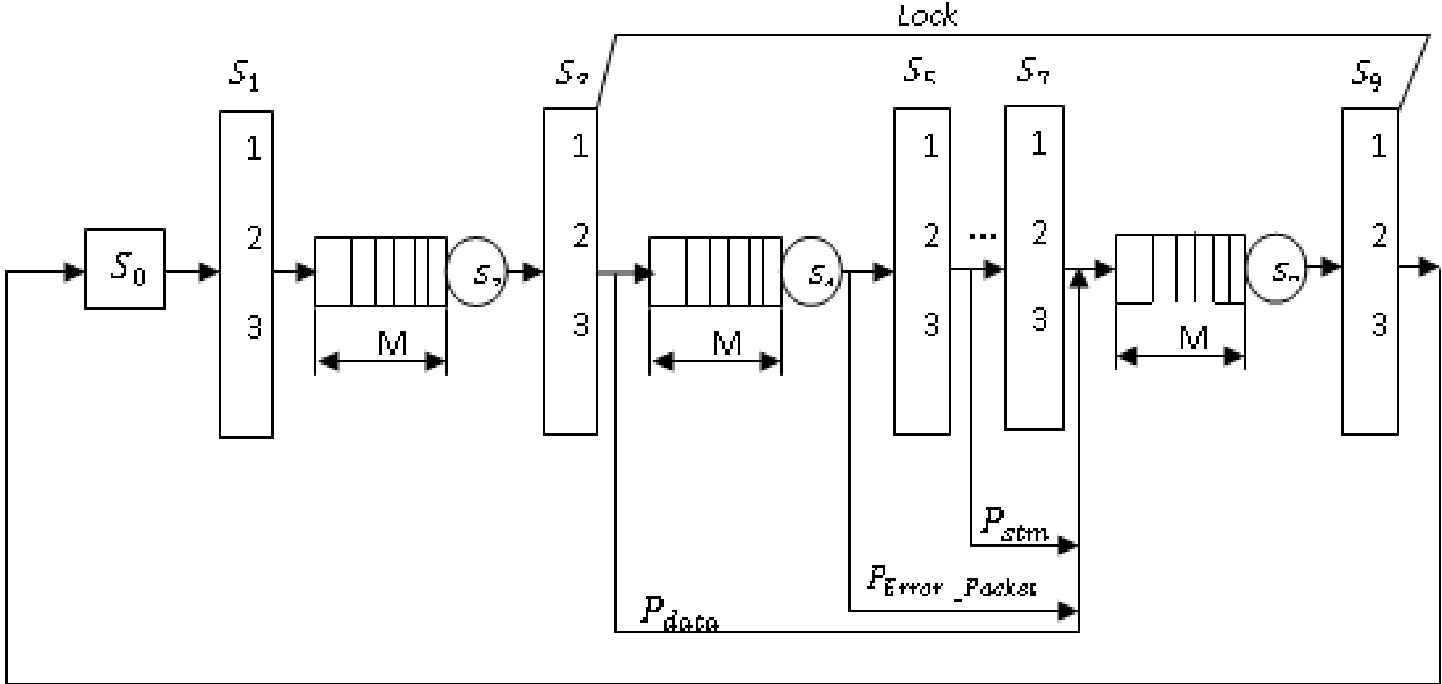 Fig. 7: The workflow from the initial TCP handshake to the final assertion of authentication.
Each "center" in the diagram represents a stage:
- TCP Establishment: Handling the 3-way handshake.
- Extraction Center: Generating the evidence used in the friendship proof.
- Assertion Center: Validating the claims without disclosing identities.
Experimental Insights
Through a C#-based simulation, the authors tested the protocol under realistic network conditions. With a maximum of 200 server threads and a queue size of 80, the system maintained stability.
Key Metrics:
- Authentication Duration: 1.2s (Theoretical overhead for high-security ZKP).
- Service Extraction: 0.12s.
- Response Generation: ~0.4s.
While a 1.2-second authentication time might seem high for a simple "like" button, it is a necessary trade-off for the mathematical certainty of non-disclosure and user anonymity.
Critical Analysis & Conclusion
The merit of this work lies in its hybrid approach. By using the formal "Backes Method" for security and "Queuing Theory" for performance modeling, the researchers bridge the gap between abstract cryptography and practical system engineering.
Takeaway: The protocol proves that anonymity does not have to come at the cost of authority. You can have a "Friends Only" policy without the server ever knowing who your friends actually are.
Limitations: The 1.2s latency might pose challenges for high-frequency social interactions. Future work should focus on Batch Groth-Sahai proofs to reduce the computational overhead per message, potentially bringing latency down to the millisecond range required for mainstream social apps.