
Deciphering the Heavy Burden: How School Backpacks Reshape Pediatric Kinematics
Backpack Influence on Kinematic Parameters related to Timed Up and Go (TUG) Test in School Children
This study investigates the impact of school backpacks on gait through the Timed Up and Go (TUG) test in children aged 10-12. Using a wearable inertial device (G-WALK) and Random Forest classification, the research demonstrates significant alterations in 23 out of 30 motion parameters, achieving a 95.9% accuracy in distinguishing between free and weighted walking.
TL;DR
Researchers from the University of Naples Federico II have utilized wearable inertial sensors and Machine Learning to prove that school backpacks—specifically those weighted to a standard 9.3kg—dramatically alter children's gait. By analyzing the Timed Up and Go (TUG) test, the study found that load-carrying significantly slows motor performance and alters acceleration patterns, with a Random Forest algorithm distinguishing "weighted" gait from "free" walk with a staggering 95.9% accuracy.
Problem & Motivation: The Invisible Strain
Low back pain, once considered an adult ailment, is increasingly prevalent among schoolchildren. While many attribute this to sedentary lifestyles, the daily "physical labor" of carrying heavy backpacks is a prime suspect. Existing literature has established that backpacks modify spatiotemporal parameters, but this study dives deeper into kinematics—the geometry of motion.
The authors' insight was to move beyond simple straight-line walking and use the TUG test. This protocol (rising, walking, turning, sitting) better simulates the functional transitions a student performs dozens of times a day, providing a window into how the body manages biomechanical overload during dynamic shifts.
Methodology: High-Tech Gait Analysis
The study monitored 98 students (ages 10-12) using the G-WALK system by BTS Bioengineering.
1. Sensor Integration
A single G-Sensor was placed above the iliac wings. This device uses Sensor Fusion technology, combining triaxial accelerometers, gyroscopes, and magnetometers to capture 30 distinct motion parameters in real-time.
2. Experimental Design
- Free Walk vs. Backpack Walk: Subjects carried a 9.3kg load, a weight established by prior ergonomic research as a common daily burden for students.
- Machine Learning Integration: Beyond p-values, the authors treated the problem as a classification task. If an algorithm can identify a "backpack walk" with high accuracy, it proves the kinematic change is not just statistically significant, but a fundamental shift in the subject's baseline movement.
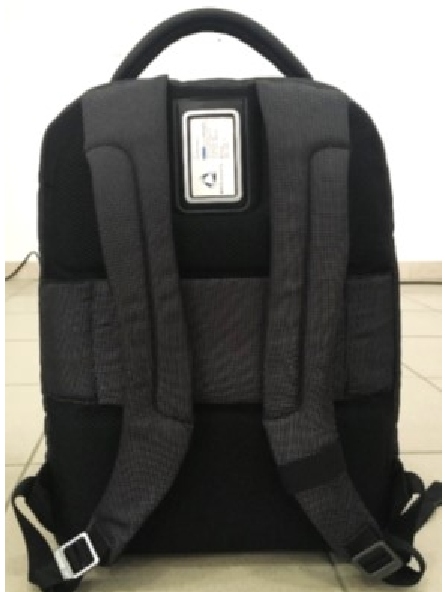 Fig 1: The G-WALK inertial sensor used for high-precision gait acquisition outside of laboratory settings.
Key Results: A General Motor Slowdown
The results paint a clear picture of motor inhibition.
Kinematic Suppression
The introduction of the backpack led to a "deceleration" across almost all phases.
- Angular Velocity: During rotations, peak velocity dropped sharply (e.g., from ~220 deg/s to ~165 deg/s in halfway rotations).
- Acceleration: Both vertical and antero-posterior accelerations decreased. This suggests children move more "cautiously" and with less explosive force when weighted, likely to maintain balance and minimize the lever arm of the load.
Fluidity Loss
Range of motion in extension and bending decreased, making movements less fluid. Interestingly, the "return path" duration sometimes increased because tired children attempted to speed up to finish the test, despite the overall slowing of specific phases like the "Rise" or "Final Rotation."
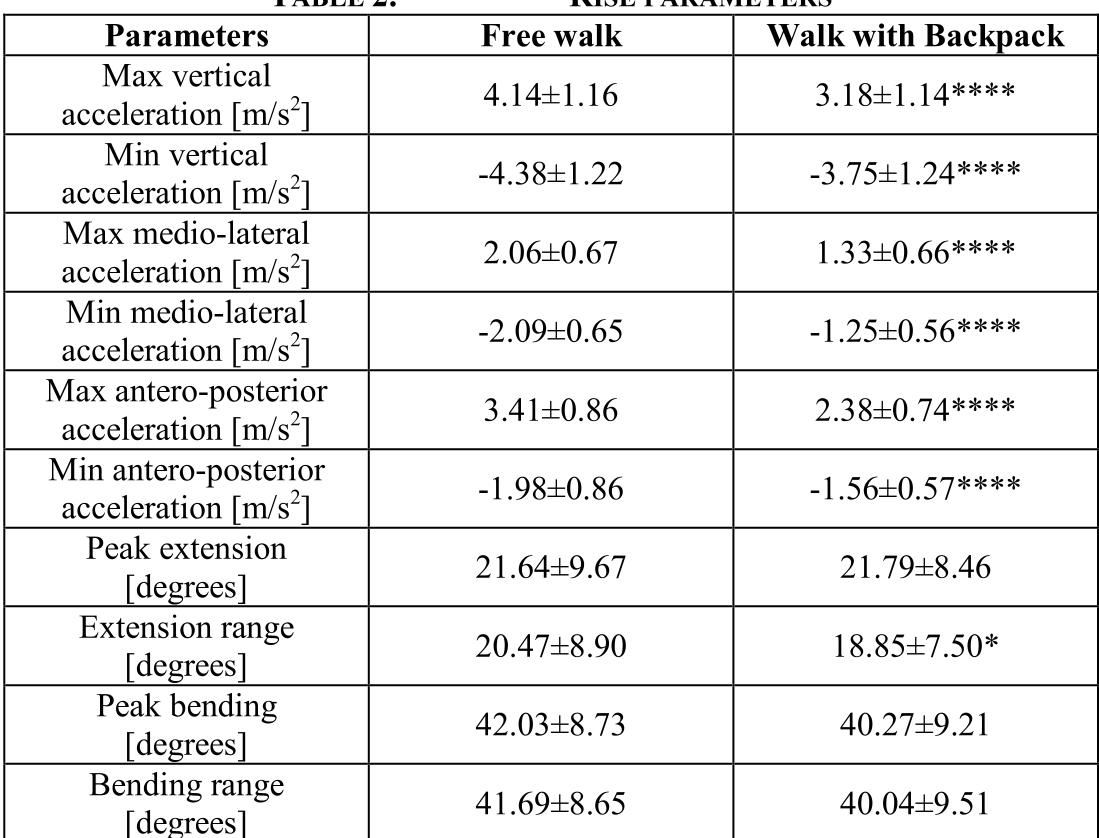 Table 1: Comparison of kinematic parameters showing significant drops in acceleration and range of motion.
Critical Analysis & Conclusion: Safeguarding the Future
The study's use of Random Forest achieved an accuracy of 95.9% (Table 6), offering objective proof that the backpack's influence is comprehensive.
Why It Matters
- Developmental Risk: Children are in a critical growth phase. Prolonged exposure to these altered kinematics can lead to permanent changes in spinal alignment and muscle development.
- Wearable Innovation: By using wearable sensors instead of traditional optical gait labs, the researchers were able to conduct the study directly in a school environment, increasing ecological validity.
Limitations & Future Work
The study used a fixed weight (9.3kg) rather than a percentage of body weight for all children, which might affect lighter students more severely. Future iterations could integrate real-time data mining to provide parents and teachers with "backpack health scores," or help designers create backpacks that shift the barycenter more effectively.
In conclusion, the backpack isn't just a container—it's a biomechanical disruptor that fundamentally changes how children move, demanding immediate attention from ergonomic experts and educational policymakers.