
Exploiting Local Dependencies: DCNNs as the New Frontier for Financial Telemarketing Prediction
Predicting the success of bank telemarketing using deep convolutional neural network
This paper presents a Deep Convolutional Neural Network (DCNN) architecture tailored for bank telemarketing success prediction. By treating correlated 1D financial attributes as local structures, the model achieves a SOTA accuracy of 76.70% on the Portuguese bank marketing dataset, outperforming traditional classifiers like SVM and Random Forest.
TL;DR
This paper challenges the traditional dominance of Logistic Regression and SVMs in Fintech by introducing a Deep Convolutional Neural Network (DCNN) specifically tuned for bank telemarketing. By identifying that financial attributes exhibit "local correlation" (where neighboring features like age and income provide hierarchical context), the authors achieved a benchmark-setting 76.70% accuracy, proving that the spatial feature extraction power of CNNs translates surprisingly well to tabular financial data.
Problem & Motivation: The "Flat" Limitation of Traditional ML
In the world of Fintech, predicting whether a customer will subscribe to a term deposit is often treated as a standard classification problem. However, the authors point out two critical flaws in existing approaches:
- Ignoring Hierarchical Meaning: Traditional models often ignore that certain groups of features (e.g., Job, Education, and Balance) are semantically linked.
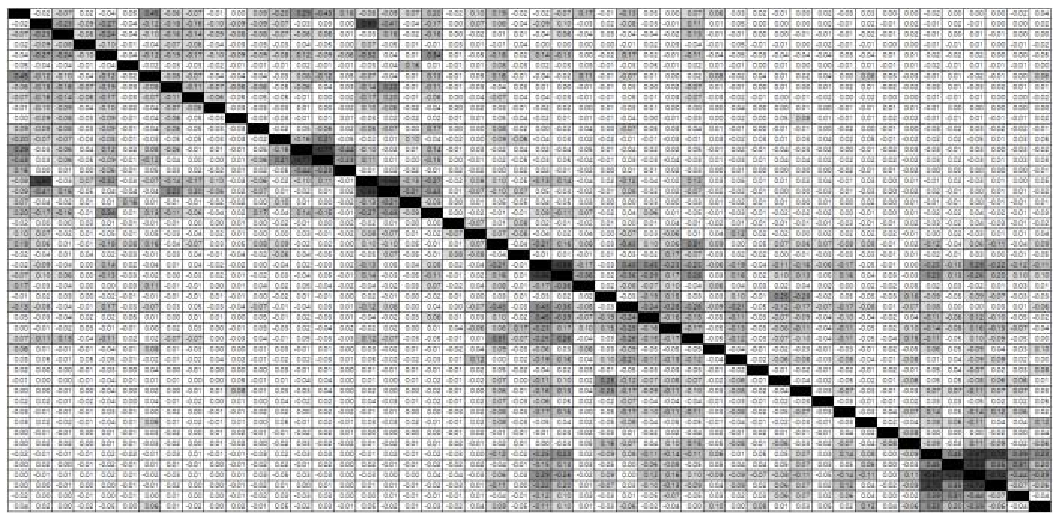
- The Sparsity of Correlation: As shown in the paper's correlation heatmap, most financial attributes have extremely low global correlation (between -0.05 and 0.05). This makes it hard for linear models to find a robust decision boundary.
The authors' key Insight is that correlation in financial data is local. By organizing data so that related attributes are adjacent, they enable a Convolutional filter to "perceive" these relationships as high-level features, much like a CNN identifies edges to recognize an object in an image.
Methodology: Reimagining CNNs for 1D Financial Streams
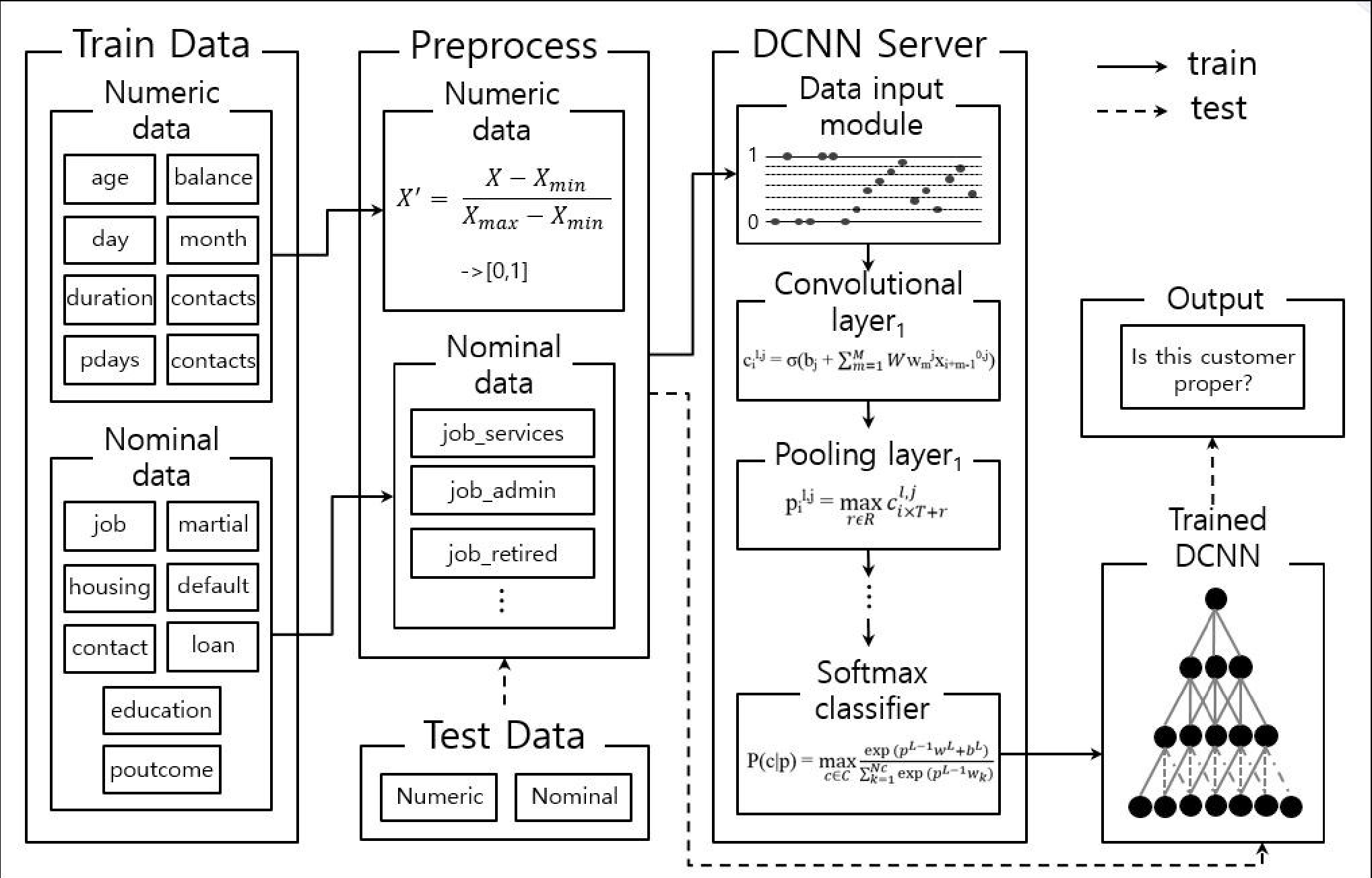
The proposed system treats 16 customer attributes (8 numeric, 8 nominal) as a 1D input vector.
The Architecture
The architecture consists of:
- Preprocessing: Min-max scaling for numeric data and binary mapping for nominal data to ensure all inputs are in the [0, 1] range.
- Conv-Pooling Pairs: Stacks of convolutional layers extract local patterns, while max-pooling layers reduce dimensionality and provide translation invariance.
- Softmax Output: A final fully connected layer that outputs the probability of subscription.
The Correlation Insight
The "Local Relationship" is the secret sauce here. In the heatmap below, the authors demonstrate that while the overall matrix is sparse, "near attributes" show higher correlation coefficients, justifying the use of a localized sliding window (convolutional kernel).
Experiments & SOTA Results
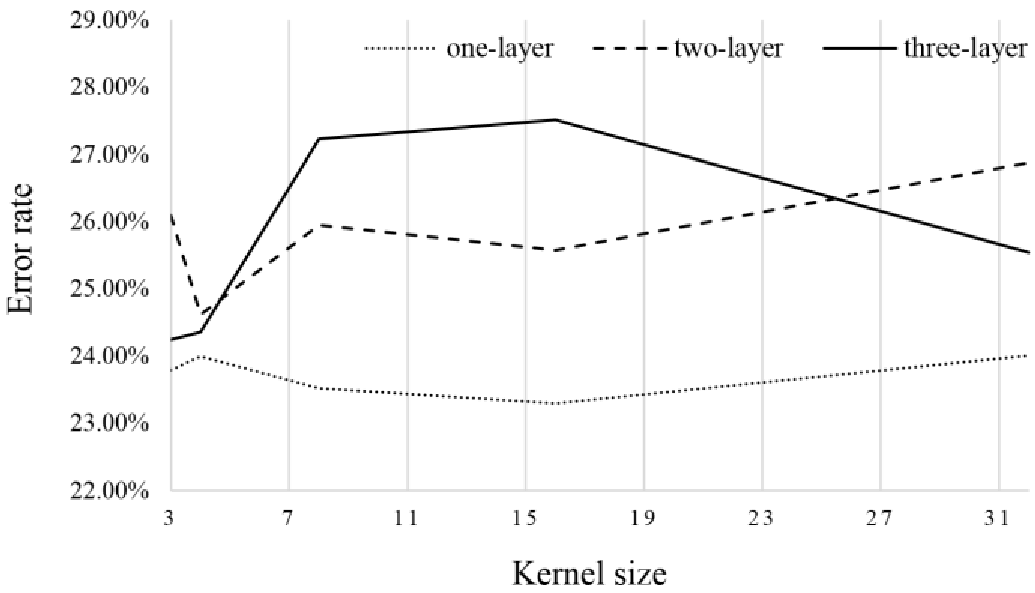
The team tested their model on 45,211 instances from a Portuguese bank. A significant portion of the paper focuses on Hyperparameter Tuning, which is crucial because "blindly increasing the number of layers" actually degraded performance due to overfitting on this specific dataset.
Key Findings:
- Optimal Depth: A single convolution-pooling layer performed better than 2 or 3 layers.
- The Sweet Spot: The best error rate was achieved with an Output Channel size of 80 and a Kernel Size of 16.
- Performance vs. Baselines: The DCNN reached 76.70%, beating Logistic Regression (75.19%) and notably crushing Decision Trees (67.02%), which suffered from severe overfitting.
Deep Insight & Conclusion
The real value of this work is the validation of Inductive Bias in financial modeling. By using a CNN, the authors implicitly forced the model to look for "local patterns" rather than trying to find complex global interactions that might be mere noise.
Limitations
- Feature Ordering: The model's success likely depends heavily on the sequence of attributes in the input vector. If highly correlated features are placed far apart, the CNN kernel will miss them.
- Depth Constraints: The fact that performance dropped with more layers suggests the current dataset size or feature complexity doesn't yet justify "Deep" learning in the sense of ResNet-style depth.
Takeaway for Practitioners
If you are working with tabular data where domain knowledge suggests local groups of features (e.g., a group of "credit history" features followed by a group of "demographic" features), a 1D-CNN might be a more efficient and accurate feature extractor than a standard MLP or Random Forest.