
CSCP: Securing the Future of Banking Chatbots through Hybrid AI Governance
A Banking Chatbot Security Control Procedure for Protecting User Data Security and Privacy
This paper introduces the Chatbot Security Control Procedure (CSCP), a specialized governance framework designed for banking chatbots within the FinTech ecosystem. It integrates Electronic Commerce (EC) security strategies with AI security principles to safeguard user data and ensure privacy during automated financial interactions.
TL;DR
As financial institutions pivot toward AI-driven customer service, the "convenience vs. security" trade-off becomes critical. This paper proposes the Chatbot Security Control Procedure (CSCP): a robust framework that bridges traditional E-Commerce security with modern AI ethics. By imposing strict limits on machine learning and search behaviors, CSCP ensures that banking bots remain helpful without becoming liabilities.
Context: The AI Trust Gap in FinTech
Banking chatbots represent a massive shift in FinTech, offering unlimited service capacity compared to human professionals. However, as noted in the research, customers often remain hesitant to use these services due to privacy concerns. Traditional security focuses on data at rest or in transit, but AI introduces a third risk: data in "thought." An AI that learns too aggressively might accidentally cross-reference private data in ways that violate regulations.
The Core Challenge: Why Traditional Security Isn't Enough
The authors identify that banking chatbots are not just web apps; they are autonomous agents with:
- Knowledge Bases that grow and can absorb sensitive intel.
- Machine Learning capabilities that might bypass hard-coded rules.
- Information Search functions that might over-reach into private user contexts.
Methodology: The CSCP Framework
The paper introduces a two-layer defense mechanism. Layer one handles standard EC Security (Access, Usage, Transfer), while Layer two addresses AI-Specific Limitations.
The Four-Stage Lifecycle
The CSCP operates on a continuous loop to ensure the chatbot never deviates from its security baseline:
- Specifications Confirmation: Aligning bot design with EC and AI principles.
- Specifications Implementation: Verifying the technical build matches the security specs.
- Inspection Activities: Real-time monitoring of the bot’s working process via "Transparency Monitors."
- Improvement Manners: Documenting defects and patching vulnerabilities systematically.
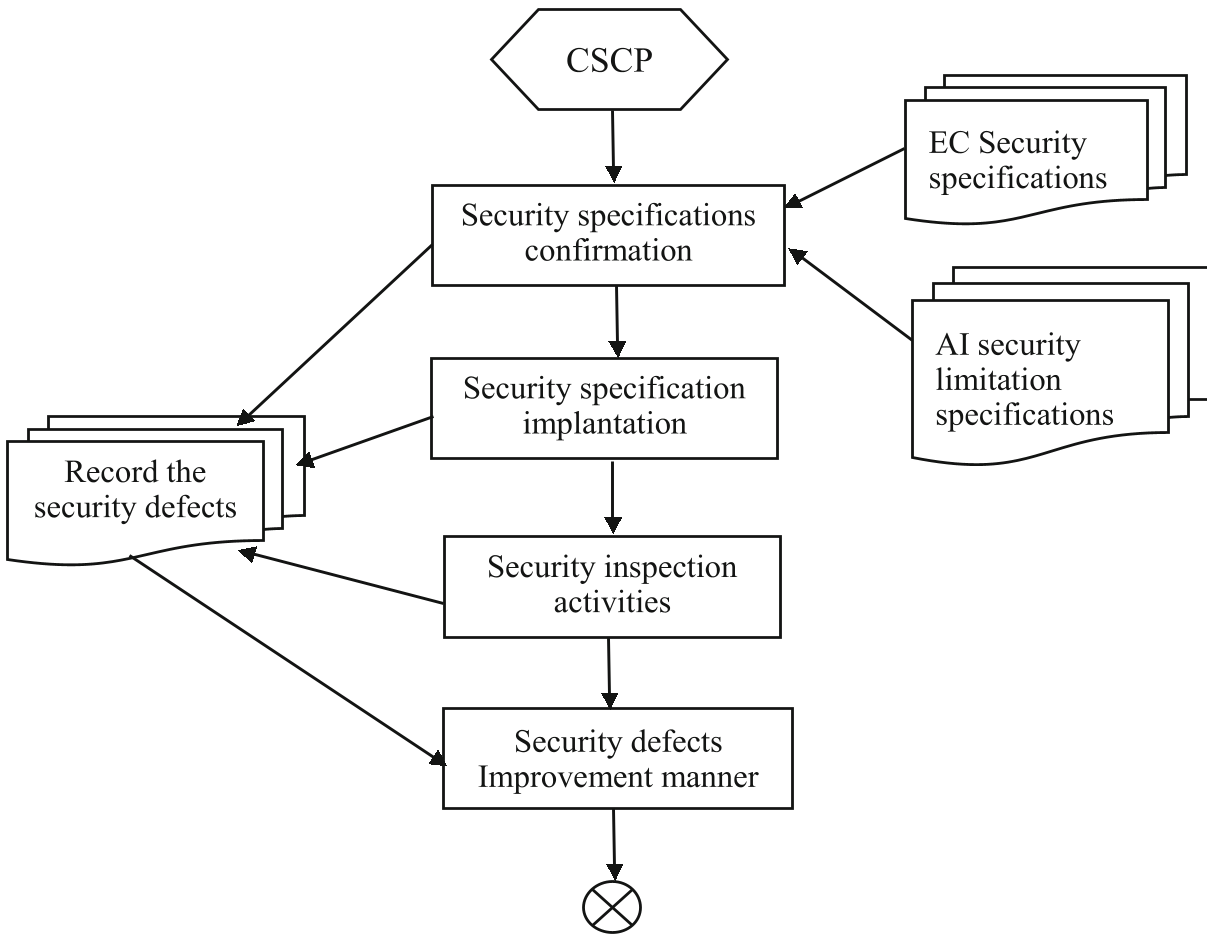 Figure 1: The four-stage cyclical operation of the Chatbot Security Control Procedure.
Key Constraints: Controlling the "AI Mind"
The most innovative part of the CSCP is the Three Security Limitations:
- Knowledge Base Limitation: Restricts what the AI can "know" to prevent it from inferring too much about a user.
- Machine Learning Limitation: Constrains the scope of autonomous learning so the bot doesn't "evolve" out of its security profile.
- Information Search Limitation: Prevents the bot from scavenging user data under the guise of "business expansion."
Results & Empirical Evidence
The research contrasts chatbots with and without CSCP across five critical metrics. While traditional bots may handle EC strategies, they lack the Transparent Inspection and AI Principle Integration necessary for high-stakes banking.
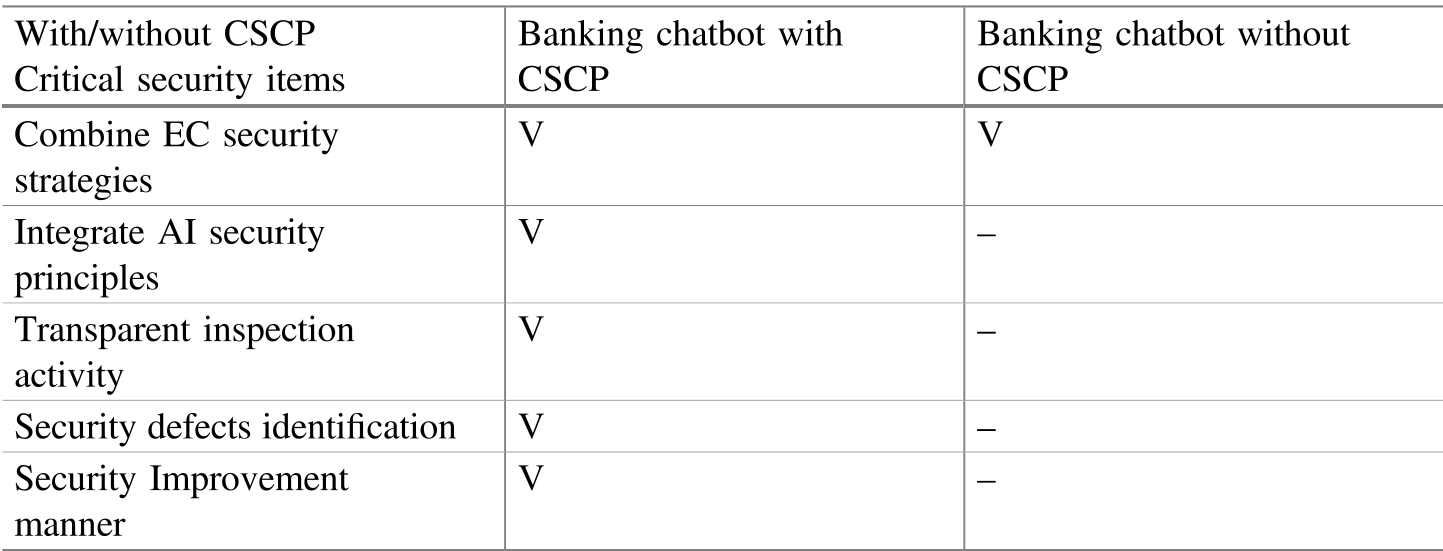 Table 1: Competitive advantage of CSCP in ensuring security and defect identification.
The study concludes that applying CSCP allows banks to leverage the low training costs and unlimited service hours of AI (as shown in Table 2 of the paper) while maintaining the "High Reliability" typically associated only with human professionals.
Critical Insight & Future Outlook
The CSCP framework is a significant step toward Regulated AI. By requiring a "Log mechanism" for every AI decision, the authors advocate for AI Transparency.
Limitations: The paper reflects a pre-LLM (Large Language Model) era. Modern bots based on GPT-4 or similar architectures face even more complex "prompt injection" attacks that this procedure would need to address by adding a "prompt filtering" stage to the Specifications Implementation phase.
Future Work: The industry must now look at how to automate the "Inspection Activity" phase using AI specifically designed to police other AI, creating a "checks and balances" system for digital banking.
Conclusion
The banking industry cannot afford an AI scandal. CSCP provides the blueprint for "Intelligent Privacy," ensuring that as we move toward a world of 25% automated customer service, we don't trade our privacy for a faster response.