
The Duality of e-Participation: Why Your Tweets Don’t Change Modern Laws
Barriers and Desired Affordances of Social Media Based e-Participation: Politicians' Perspectives
This paper investigates the "Duality of e-Participation" by exploring why social media, despite its high adoption, remains underutilized for formal policy-making. Through interviews with 10 European politicians and decision-makers, the authors identify systemic barriers and propose a set of "desired affordances" for next-generation e-participation technologies.
TL;DR
Despite the ubiquity of social media, politicians rarely use it for actual policy-making. This paper investigates the "Duality of e-Participation"—the gap between government-led digital forums and citizen-led social discussions. By interviewing high-level decision-makers, the researchers uncover that anonymity, information overload, and rigid legislative structures are the primary reasons your online voice remains unheard, and they outline the technical affordances needed to bridge this gap.
Background: The Ghost Town vs. The Town Square
Traditional e-participation platforms (government-run websites) suffer from low engagement. Conversely, social media platforms like X (formerly Twitter) or Facebook are teeming with political debate. However, these two spheres exist in a state of dualism—they are separate and uncoordinated.
The authors argue for duality: a state where these two channels complement each other. To find out why this isn't happening, they interviewed 10 senior political actors across Ireland, the Netherlands, and France.
Problem & Motivation: The Politician's Bottleneck
Decision-makers are not necessarily "tech-phobic." Instead, they face structural and qualitative barriers:
- Fixed Policy Models: Most political parties operate top-down. There is no "hook" in the current system to catch a bottom-up idea from a viral post.
- The Identity Crisis: A politician needs to know if a commenter is a constituent or a bot. The lack of verified demographics on social media makes the data legally and practically "useless" for formal deliberation.
- Signal vs. Noise: The sheer volume of "hate speech" and "empty discussions" creates an entropy that makes manual monitoring impossible.
Methodology: Mapping the Political Mind
The study utilizes the Integrated Model for e-Participation (IMeP). This model looks at how social systems are reproduced (Structuration) and how organizations adapt to change (Dynamic Capabilities).
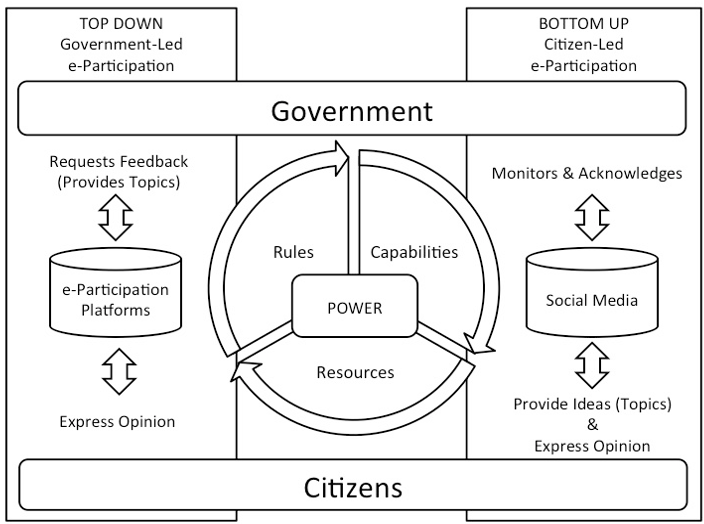
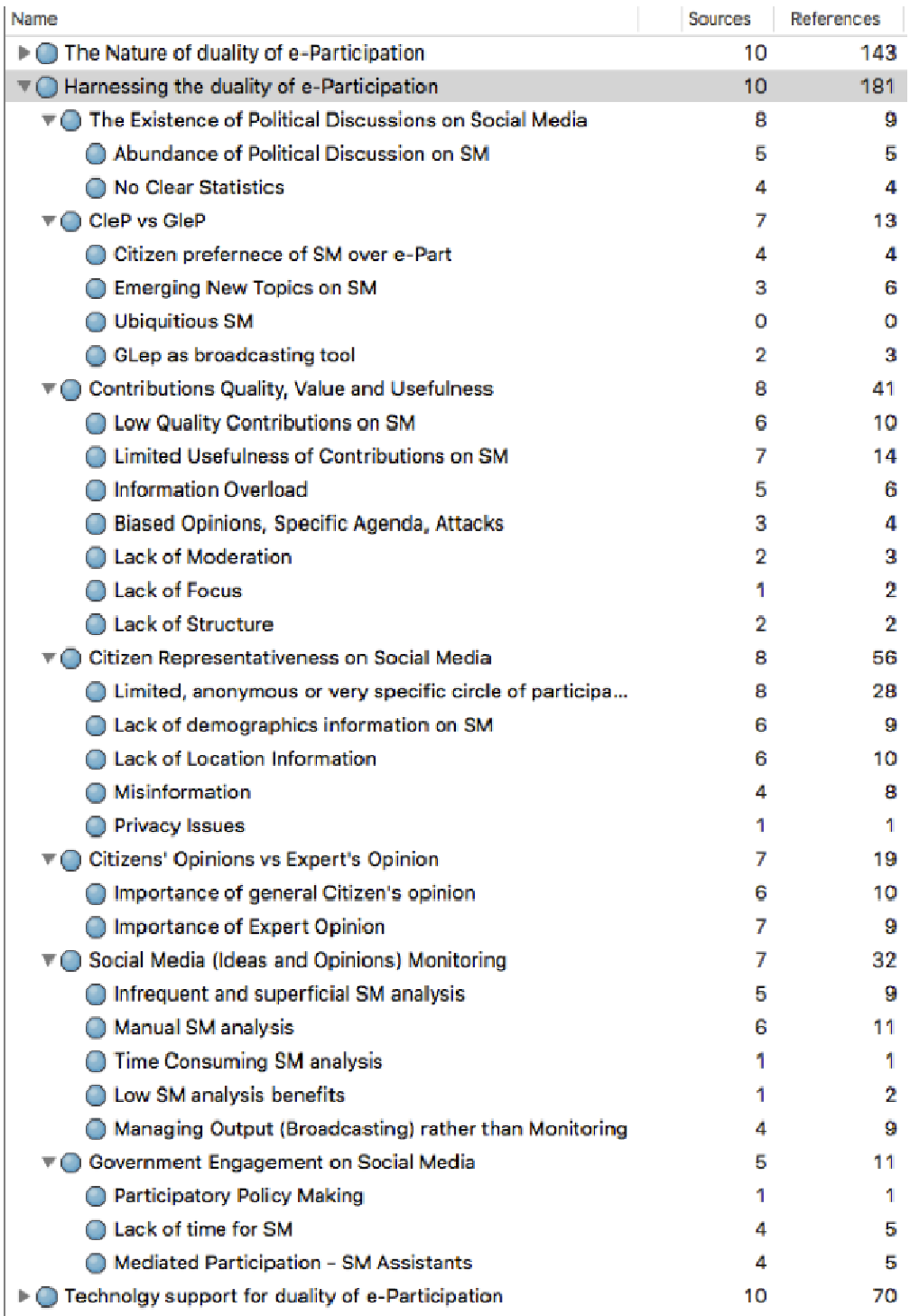
The researchers used a qualitative coding approach via NVivo, mapping interview transcripts to specific concepts like "Adaptive Capabilities" (how laws change) and "Absorptive Capabilities" (how governments process information).
Results: What Do Politicians Actually Want?
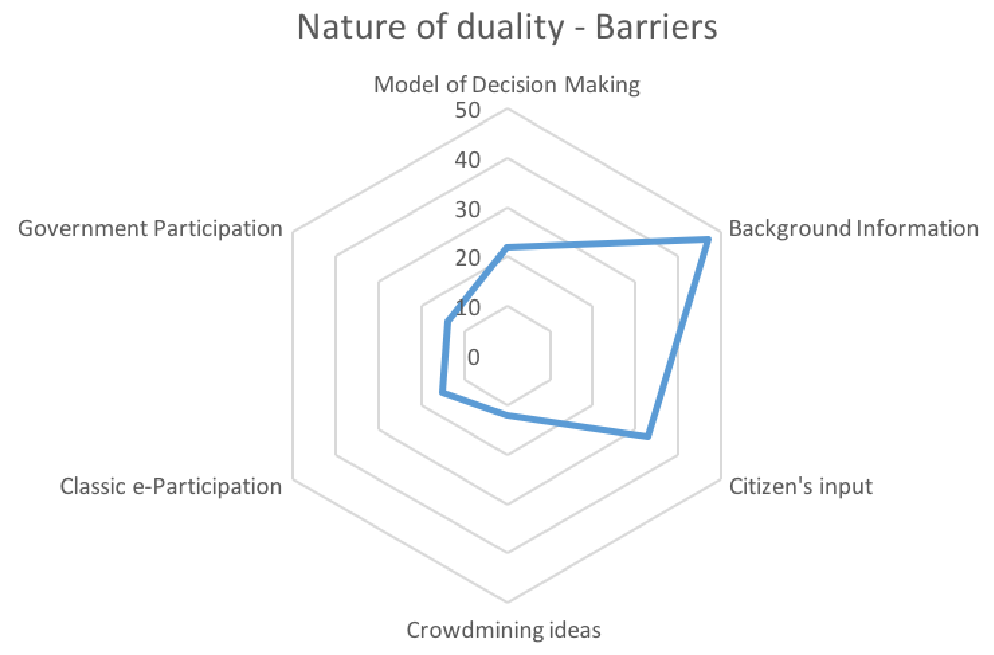
The results from the NVivo analysis show a clear hierarchy of concerns. Representativeness is the king of barriers.
The Tech Wishlist (Desired Affordances)
When asked what technology would help, politicians pointed toward:
- Automated Summarization: Tools that can distill 10,000 comments into 5 key policy concerns.
- Sentiment and Mood Statistics: Understanding the "vibe" of a constituency in real-time.
- Contextual Identity: Knowing the location, affiliation, and expertise of the participant without violating privacy excessively.
Detailed Insights: Why "Classic" Platforms are Failing
The participants noted that classic platforms have "Weak Dissemination" and "Low Impact." Many politicians still prefer face-to-face meetings or closed-ended surveys because they act as a "filter" or "censorship" mechanism—allowing them to manage the scope of the debate.
Summary & Future Outlook
The "Duality of e-Participation" will remain a dualism until we build bridge technologies. The paper concludes that we don't necessarily need more social media; we need better filters for government.
Key Takeaways for Future Tech:
- AI Integration: Semi-automatic data analysis is seen as the "pivotal" next step.
- Verification: Building reputation and influence metrics into participation platforms to reward high-quality contributors.
- Visual Dashboards: Moving away from text scrolls to visually rich interfaces (network graphs, sentiment charts) for decision-makers.
Final Thought
The paper effectively shifts the blame from "uninterested citizens" to "unsupported decision-makers." If we want a digital democracy, we have to build the tools that make listening as easy for a politician as shouting is for a citizen.