
Scaling Trust in Decentralized Social Networks: The Power of Batch Authentication
A Batch Authenticated and Key Agreement Framework for P2P-based Online Social Networks
This paper introduces a batch-authenticated and key agreement framework specifically designed for P2P-based Online Social Networks (OSNs). It presents three distinct protocols—Hash-based, Proxy-based (ElGamal), and Certificate-based—to enable a requester to simultaneously authenticate multiple peers through a trusted mutual friend, significantly improving scalability and security in decentralized social environments.
TL;DR
Social networks are moving toward P2P architectures to enhance privacy, but traditional security models cannot keep up. This paper proposes a breakthrough framework that allows a single user to verify a whole group of "friends-of-friends" in one go. By using clever math like the Chinese Remainder Theorem and Proxy Encryption, the authors cut communication overhead by over 60% compared to industry standards like Kerberos while supporting everything from cheap flip phones to powerful laptops.
The Scalability Wall in P2P OSNs
In a centralized world (Facebook/Twitter), a single server says "I know you." In a Peer-to-Peer (P2P) Online Social Network (OSN), trust is fragmented. Most current systems require Out-of-Band (OOB) authentication—manually checking a friend's ID or scanning a QR code face-to-face.
If you want to add 10 friends of a trusted contact, doing 10 manual checks is a UX nightmare. Existing protocols like Kerberos are too "chatty," requiring 6 separate messages () for every new connection. The research intuition here is simple: Why not let a trusted mutual friend "vouch" for an entire group at once in a mathematically verifiable way?
Methodology: One Size Does Not Fit All
The core of the framework is its multi-tier approach to cryptography. High-security environments need non-repudiation, while a sensor or an old mobile phone only has enough CPU for basic hashing.
1. The Strategy Tiers
- Hash-Based: Uses lightweight one-way hash chains. Maximum efficiency for resource-constrained devices.
- Proxy-Based: Leverages ElGamal Proxy Encryption. A trusted friend (the Proxy) transforms encrypted data for the requester without ever seeing the raw secret keys.
- Certificate-Based: Uses signatures for sensitive transactions where you need legal proof (non-repudiation) of who sent what.
2. The Logic of Aggregation
How do you pack instructions for 10 different people into one message? The authors employ the Chinese Remainder Theorem (CRT). By assigning each user a unique prime-related ID (), the framework solves a system of congruences to create a single value . When user receives the message, they simply calculate to retrieve their specific secret parameters.
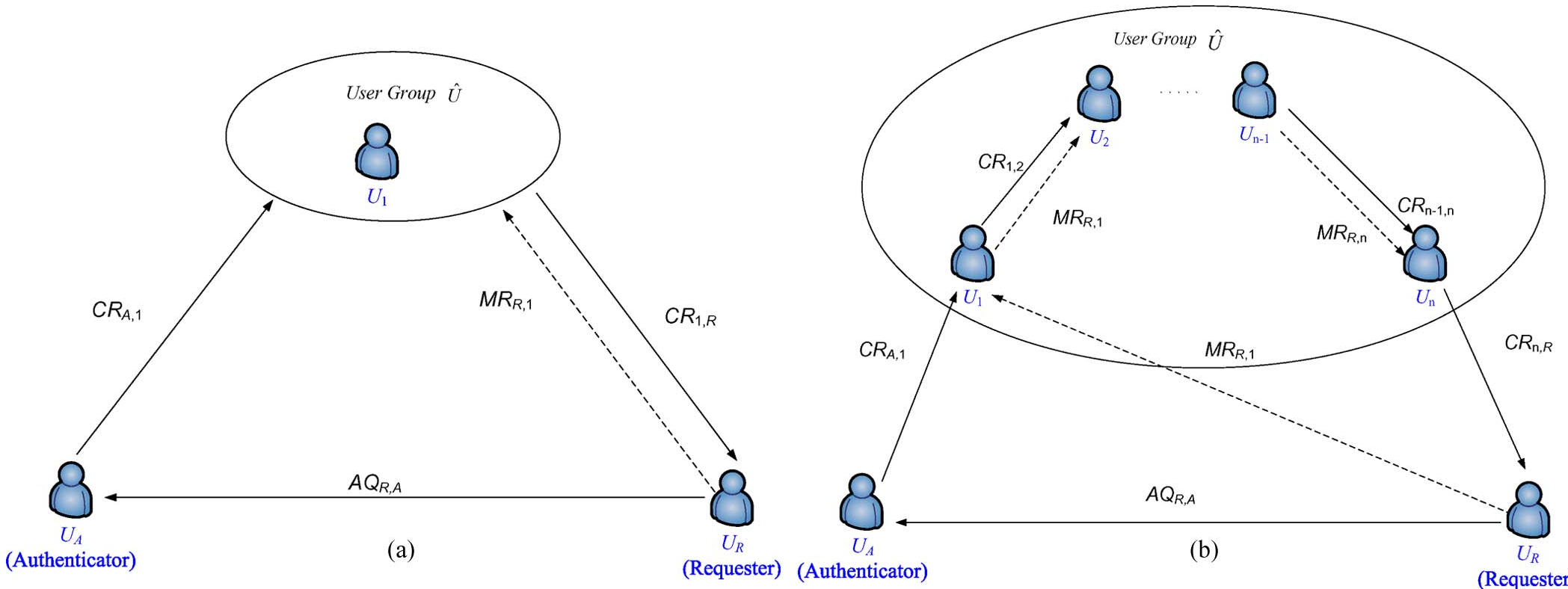 Fig 1: The transition from one-to-one (a) to the efficient one-to-many batch flow (b).
Deep Dive: Proxy-Based Protocol
The Proxy-based protocol is the "Goldilocks" solution—secure yet flexible. It allows for Reputation Management by embedding "trust levels" into the encryption process.
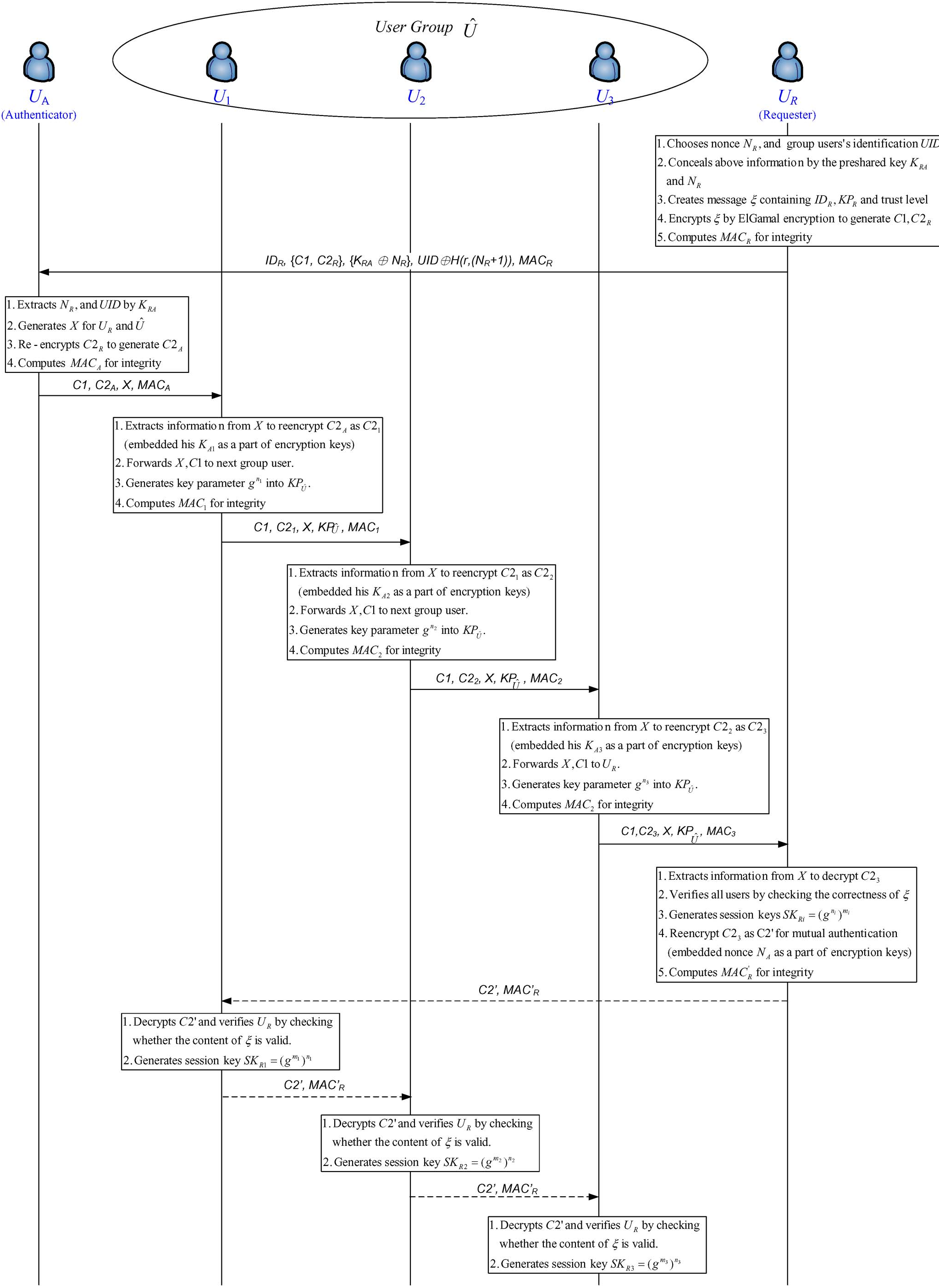 Fig 2: The Proxy-based protocol uses a chain-reply () mechanism where each user adds their "contribution" to the cryptographic puzzle.
Why this is brilliant: Instead of the Requester () talking to 5 people individually, the message travels in a "chain." Each user adds their "slice" of the key. By the time the message returns to , it contains a cumulative secret that only a legitimate group of friends could have built.
Experimental Battlecards: Kerberos vs. Batch
The researchers compared their framework against the gold standard (Kerberos) and standard asymmetric models.
- Messaging Efficiency: To authenticate 10 users, Kerberos needs 60 messages. This batch framework needs only 22 (Hash/Proxy) or 13 (Certificate).
- Security Integrity: The paper provides formal proofs (Random Oracle Model and DDH Assumption) that an attacker cannot "inject" themselves into the chain or guess the session keys even if they record all traffic.
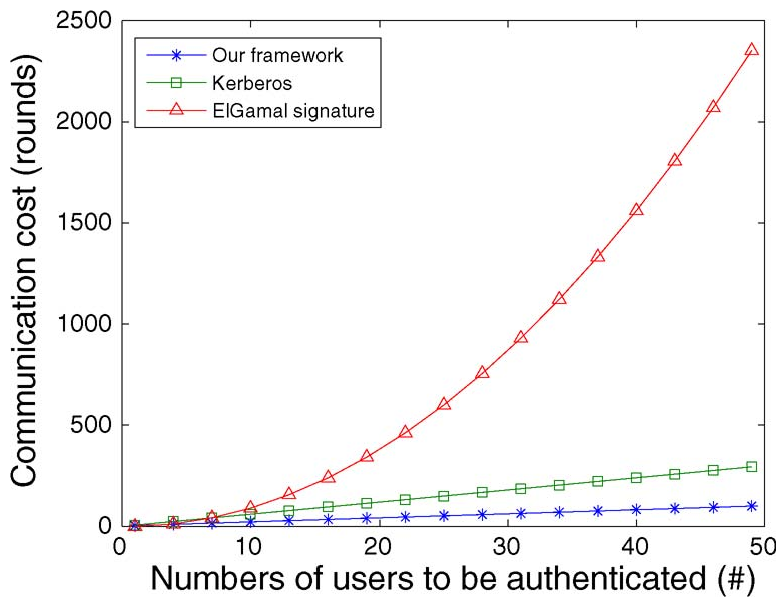 Fig 3: Evidence of the "Efficiency Gap" widening as more users join the network.
Final Insight
The real value of this work isn't just the math—it's the Inductive Bias toward social trust. By modeling the protocol after how humans actually introduce friends (vouching for a group at a party), the authors have created a security layer that mirrors human behavior while maintaining rigorous mathematical "Forward Secrecy."
Limitations: The chain-reply mechanism assumes all users in the group are online or reachable in a sequence. If one person in the "chain" drops off, the batch verification potentially fails, suggesting that future work should focus on "Fault-tolerant Batching."