
BGNN: Bridging Bayesian Uncertainty and Graph Topology for EEG Emotion Recognition
Bayesian Graph Neural Networks for EEG-Based Emotion Recognition
This paper introduces a Bayesian Graph Neural Network (BGNN) framework paired with a Sparse Graph Variational Auto-encoder (SGVAE) for EEG-based emotion recognition. The method effectively captures latent brain region structures and provides uncertainty estimation for emotion classification on the SEED dataset.
TL;DR
Deep learning for EEG signals often suffers from over-fitting and "black-box" overconfidence. This paper presents a Bayesian Graph Neural Network (BGNN) framework that uses a Sparse Graph Variational Auto-encoder (SGVAE) to uncover hidden brain communities. By incorporating uncertainty estimation, the model achieves a staggering 96.37% accuracy on high-confidence predictions, proving that knowing "when you don't know" is as important as the prediction itself.
Problem & Motivation: The "Blind Spots" of EEG Deep Learning
In the realm of affective computing, Electroencephalography (EEG) is a gold standard due to its high temporal resolution. However, two major hurdles remain:
- Invisible Topology: EEG sensors are placed on a 3D scalp, but traditional CNNs treat them as grids, and standard GNNs often rely on fixed, noisy adjacency matrices.
- Overconfident Predictions: Standard neural networks produce a point estimate. In clinical or high-stakes BCI (Brain-Computer Interface) scenarios, an overconfident wrong prediction can be catastrophic.
The authors' intuition was to treat the brain's functional connectivity as a latent structure that should be learned stochastically, rather than fixed, and to use Bayesian inference to quantify the reliability of every emotion labels (Positive, Neutral, Negative).
Methodology: The Bayesian-Graph Synergy
1. SGVAE: Discovering Latent Brain Communities
Instead of using a simple distance-based graph, the authors use SGVAE. This model uses the Indian Buffet Process (IBP)—a non-parametric Bayesian prior—which allows the model to automatically determine the number of "latent communities" (clusters of brain regions) without human intervention.
2. BGNN: Uncertainty via Concrete Dropout
The core classification is handled by a Bayesian GNN. Since true Bayesian posterior inference is computationally expensive, they adopt Concrete Dropout. This allows the model to sample multiple "possible" network weights during inference (Monte Carlo sampling), generating a distribution of outputs.
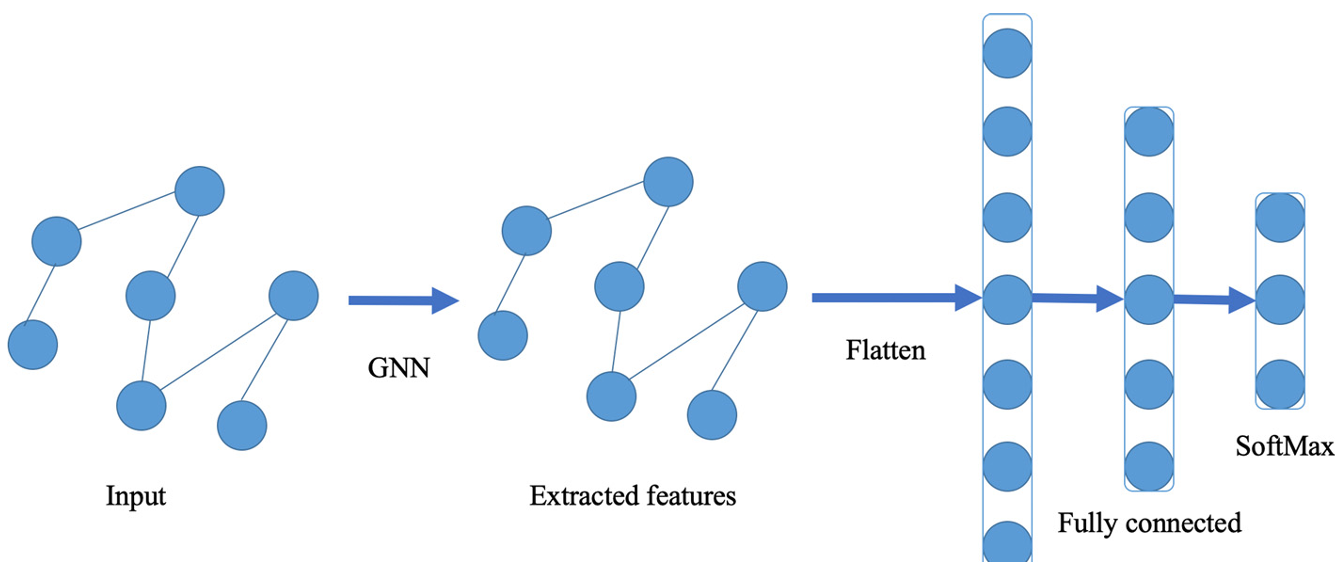 Figure 1: The BGNN framework showing the integration of raw EEG features and the latent graph structure generated by SGVAE.
3. Predictive Entropy
The model calculates Predictive Entropy. If the entropy is high, the model is "confused." By focusing only on low-entropy (high-confidence) data, the system becomes significantly more robust.
Experiments & Results: Quality Over Quantity
The researchers tested their framework on the SEED dataset, a benchmark for EEG emotion recognition.
| Model | Subject-Dependent (All) | Subject-Dependent (High Conf) |
|---|---|---|
| RGNN (Previous SOTA) | 94.24% | - |
| BGNN (Ours) | 89.15% | 96.37% |
While the raw BGNN accuracy is slightly lower than current SOTA like RGNN (due to the conservative nature of Bayesian priors), its performance on CONF (Confidence) data—the data it is sure about—surpasses all previous methods by a wide margin.
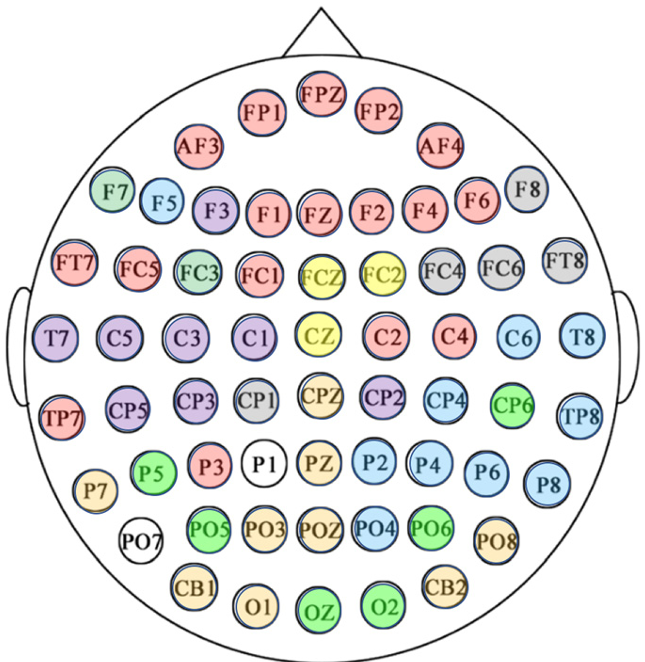 Figure 2: Visualization of detected latent communities. Channels of the same color represent functional clusters discovered automatically by the SGVAE.
Critical Analysis & Conclusion
The Takeaway
This work demonstrates that Model Uncertainty is a powerful tool for EEG. By filtering out "noisy" samples where the model is uncertain, we can achieve near-perfect classification for real-world BCI applications. Furthermore, the SGVAE successfully visualizes functional connectivity, making the "Black Box" of deep learning slightly more transparent.
Limitations & Future Work
- Computational Overhead: Multiple Monte Carlo passes are required for inference, which might increase latency in real-time BCI.
- Thresholding: The current method relies on a median split for confidence; a more dynamic, task-specific thresholding strategy is needed.
- Future Direction: Applying this to cross-session and cross-subject transfer learning where domain shift typically increases uncertainty.
In summary, the BGNN doesn't just predict emotions; it understands the limits of its own knowledge, closing the gap between high-performance deep learning and reliable clinical diagnostics.