
Bayesian Networks for Social Modeling: Bridging Expert Insight and Empirical Rigor
Bayesian Networks for Social Modeling
This paper presents a comprehensive framework for using Bayesian Networks (BN) to model complex social and organizational behaviors, such as political radicalization and nuclear non-proliferation. The authors introduce a "cradle-to-grave" lifecycle covering model construction via expert elicitation, empirical validation using conjoint analysis, and a nuanced evidence-assessment tool called BACH (Bayesian Analysis of Competing Hypotheses).
TL;DR
Predicting human and organizational behavior is notoriously difficult due to data scarcity and the inherent complexity of social dynamics. This paper details a five-year body of work from Pacific Northwest National Laboratory (PNNL) that utilizes Bayesian Networks (BN) as a "cradle-to-grave" modeling solution. By combining expert elicitation through conjoint analysis with a rigorous evidence-assessment framework, the authors demonstrate how to turn qualitative social science literature into a predictive, validated computational engine.
Problem & Motivation: The Data-Expert Gap
In the realm of Computational Modeling of Human Behavior (CMHB), researchers face a dual challenge:
- Data Scarcity: Unlike physics or finance, social phenomena like radicalization or nuclear proliferation often lack historical datasets required for traditional regression.
- Expert Fragility: While domain experts possess deep intuition, asking them to provide raw conditional probabilities (e.g., "What is the 0.0-1.0 probability of event X given Y?") leads to cognitive biases and inconsistent models.
The authors argue that BNs are the ideal middle ground. They provide a transparent, causal structure that can be built from literature before any data is collected, yet can be refined the moment empirical evidence becomes available.
Methodology: The BN Lifecycle
The paper’s core contribution is its systematic approach to the model lifecycle:
1. Construction: From Literature to Nodes
The process begins by extracting key concepts and relationships from social science literature. For instance, modeling radicalization involves mapping the interplay between group membership, isolation, and perceived threats.
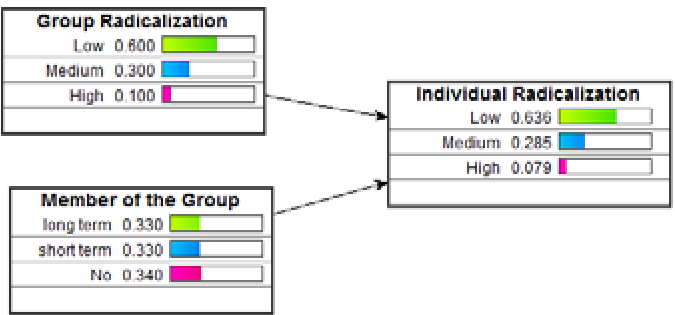 Figure 1: A model fragment showing the relationship between individual/group radicalization and group membership.
2. Calibration: The Conjoint Analysis Innovation
To bypass the "statistical esotericism" of raw probability elicitation, the authors employ Conjoint Analysis. Experts are presented with pair-wise scenario comparisons (e.g., "Scenario A is more likely than Scenario B") via a web interface. This method captures expert insight through relative judgments—a much more natural cognitive task—which are then mathematically mapped back to BN parameters.
3. Validation: Visualizing Hidden Dependencies
Once calibrated, the model's structural assumptions (conditional independencies) are tested against data. The authors use a unique graphical diagnostic—back-to-back bar charts. If the model assumes two variables are independent given a parent, the resulting distributions in the data should be symmetric.
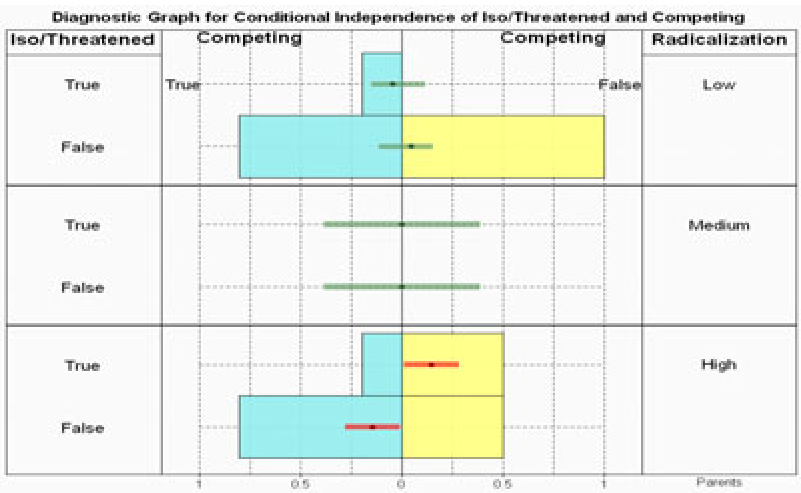 Figure 3: Graphical diagnostics for checking conditional independence in the MAROB dataset.
Application: The BACH Tool and Nuclear Proliferation
The ultimate realization of this research is BACH (Bayesian Analysis of Competing Hypotheses). This Java-based tool allows analysts to:
- Construct complex BN models.
- Manage evidence while accounting for Veracity (truthfulness), Observational Sensitivity, and Objectivity (bias).
- Compute "Outcome Change Ratios" to see how new reports (e.g., a news article about a state's nuclear capability) shift the probability of the central hypothesis.
In a case study for Nuclear Non-proliferation in Africa, the tool was used to rank six countries. South Africa and Nigeria emerged at the top of the "Proliferation Propensity" scale.
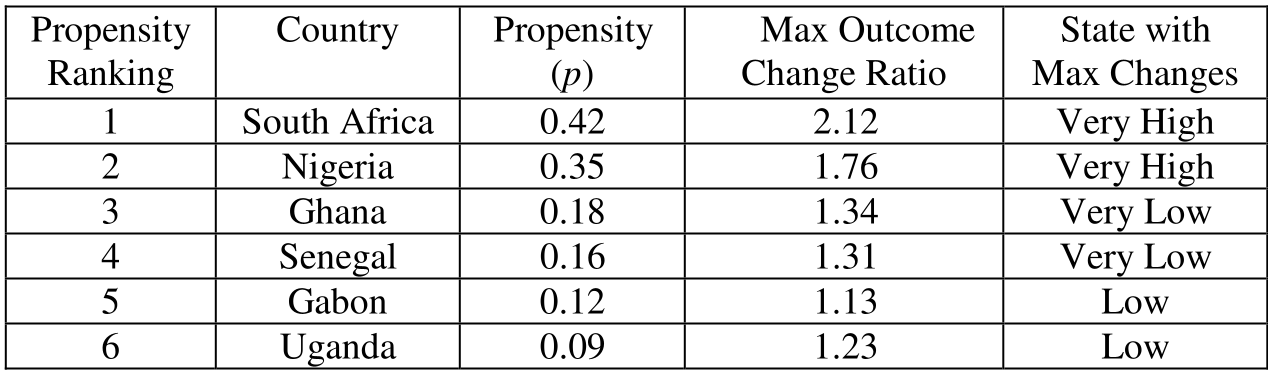 Table 1: Country proliferation propensity rankings and the impact of evidence.
Critical Analysis & Conclusion
Takeaway
The PNNL framework demonstrates that Bayesian Networks are more than just a statistical tool; they are a communication bridge. By formalizing expert knowledge into a causal graph, and then "stress-testing" that graph against empirical data, practitioners can build models that are both theoretically grounded and empirically defensible.
Limitations & Future Work
- Semi-Static Nature: The paper acknowledges that BNs are best for static or "time-slice" modeling. Integrating them with Agent-Based Modeling (ABM) for truly dynamic, time-evolving social simulations remains a significant frontier.
- Evidence Evaluation: While the framework accounts for witness bias and veracity, the initial assessment of evidence quality still relies heavily on the analyst's subjective judgment.
In conclusion, as social modeling moves toward high-stakes policy analysis, the need for models that can "show their work" is paramount. This Bayesian approach provides the necessary transparency and mathematical rigor to meet that need.