
ERuDIte: Architecting a Scalable Knowledge Graph for Data Science Education
BD2K Training Coordinating Center's ERuDIte: The Educational Resource Discovery Index for Data Science
This paper introduces ERuDIte, the Educational Resource Discovery Index for Data Science, developed by the BD2K Training Coordinating Center. It utilizes a sophisticated system of web scraping, machine learning-based classification, and a custom hierarchical ontology to aggregate and organize over 11,000 heterogeneous biomedical data science learning resources into a unified, searchable portal.
TL;DR
The BD2K Training Coordinating Center has launched ERuDIte, an intelligent indexer that transforms the "Wild West" of online data science tutorials into a structured, searchable educational ecosystem. By combining a custom-built Data Science Education Ontology (DSEO) with machine learning classifiers, they have indexed over 11,000 resources, providing a unified entry point for biomedical researchers to master Big Data.
The "Curriculum Chaos" in Biomedical Big Data
The National Institutes of Health (NIH) recognized a paradox: while we are drowning in biomedical data, we are starving for the expertise to analyze it. The barrier isn't a lack of material—there are hundreds of thousands of videos and courses—but the heterogeneity of those materials. A "Data Science" search on YouTube returns 200,000+ results, ranging from world-class Stanford lectures to low-quality, outdated snippets. Without a map, the learner is lost.
Methodology: Building the Indexer
The authors treated the creation of ERuDIte as a classic Data Science problem, executing a four-stage pipeline:
1. Unified Metadata Architecture
To ensure the system wasn't just another "silo," the team aligned their schema with Schema.org and Bioschemas. By exposing metadata via JSON-LD (Linked Data), every resource in the index becomes machine-readable, allowing for global cross-referencing and better SEO for educational content.
2. The Data Science Education Ontology (DSEO)
Instead of flat tags, the authors developed a 126-concept hierarchy across six dimensions:
- Data Science Process: e.g., Data Acquisition, Visualization.
- Field: e.g., Bioinformatics, Machine Learning.
- Datatype: e.g., fMRI, Genomic sequences.
- Programming Tool: Python, R, etc.
- Format & Depth: Identifying if a resource is an introductory video or an advanced textbook.
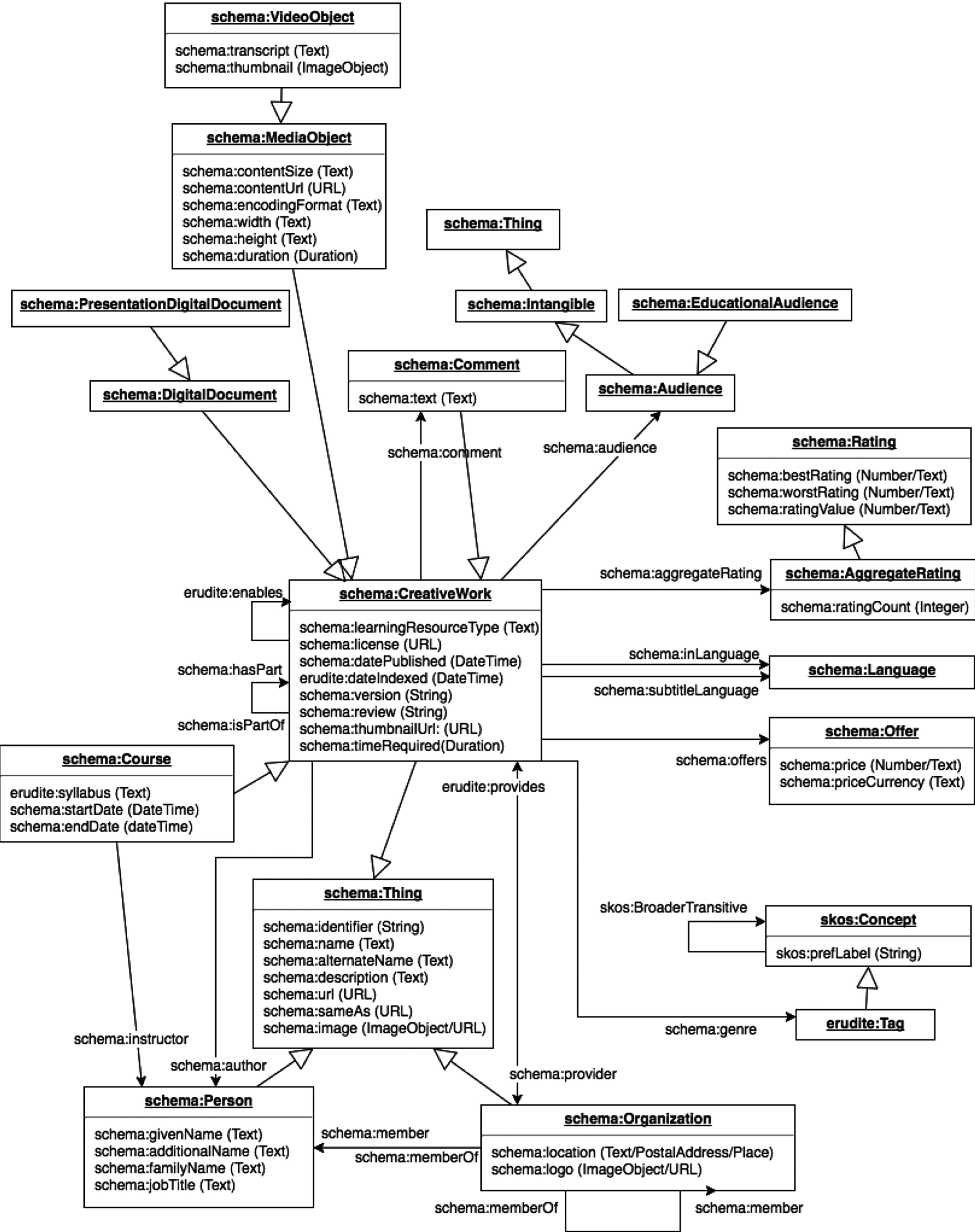 Figure 1: The integration of CreativeWork, Person, and Organization classes into a cohesive schema.
3. Automated Tagging and Curation
Manual curation of 11,000+ resources is impossible. The team trained One-versus-all Logistic Regression and Random Forest models to predict DSEO tags based on resource text (transcripts, descriptions, titles). This "human-in-the-loop" system allows curators to simply verify AI-suggested tags, creating a virtuous cycle where every verification improves the model.
Experimental Results: High-Precision Discovery
The performance of the automated systems was robust:
- YouTube Quality Control: Their classifier filtered through 122,557 unique videos, identifying high-quality educational content with an F1 score of 0.82.
- Tagging Accuracy: The "Field" dimension (the most complex) achieved a 0.80 F1 score, while "Resource Format" reached a perfect 1.00, indicating that the TF-IDF representation of metadata is highly effective for categorization.
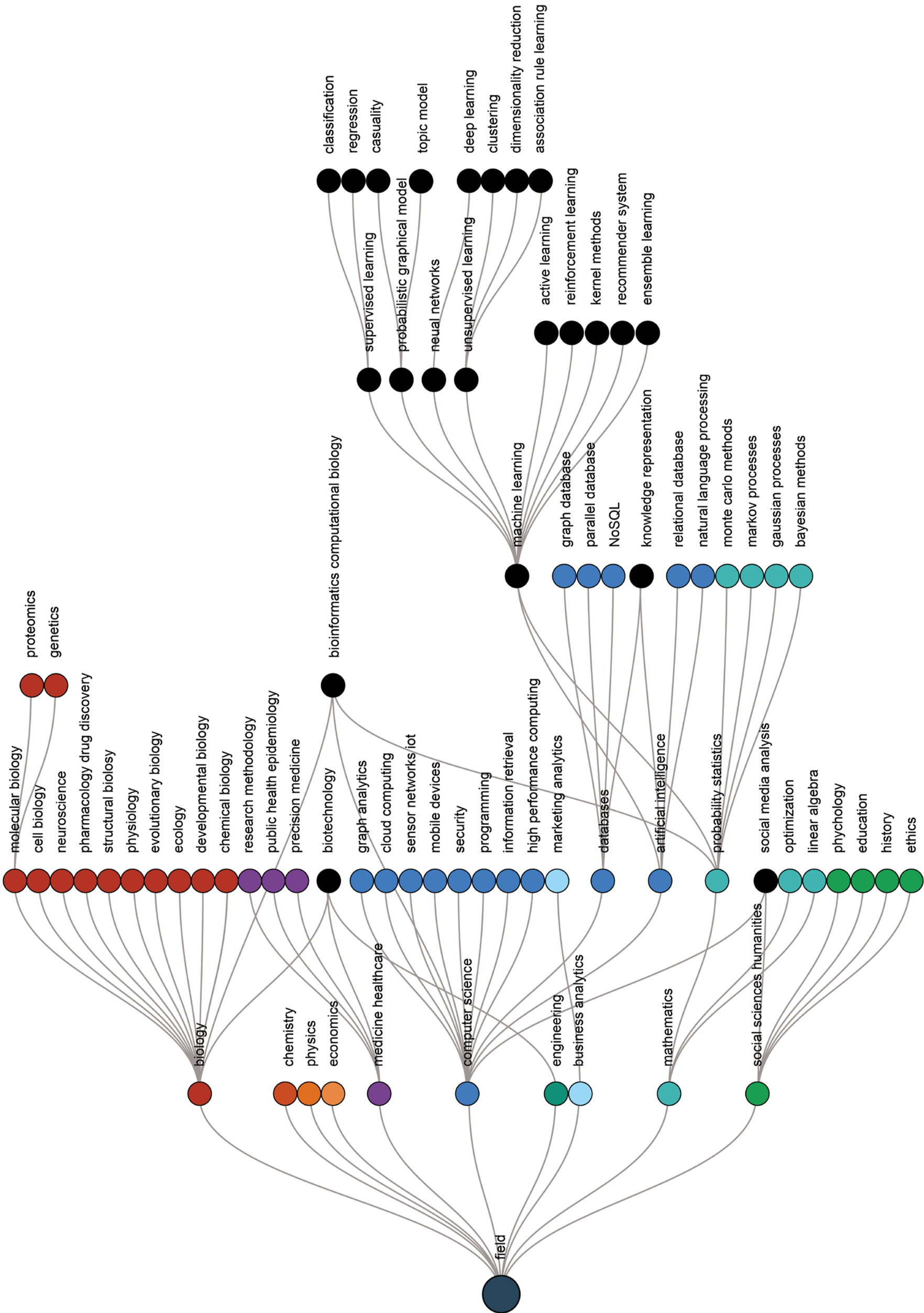 Figure 2: The multi-dimensional DSEO serves as the backbone for the BigDataU.org exploration interface.
Infrastructure and Visualization
The researchers used t-SNE to project the high-dimensional LDA (Latent Dirichlet Allocation) topic models of their resources into a 2D map. This allows users to "fly through" the landscape of data science, seeing clusters of similar resources (e.g., a cluster for "Genomics" near "Bioinformatics") visually.
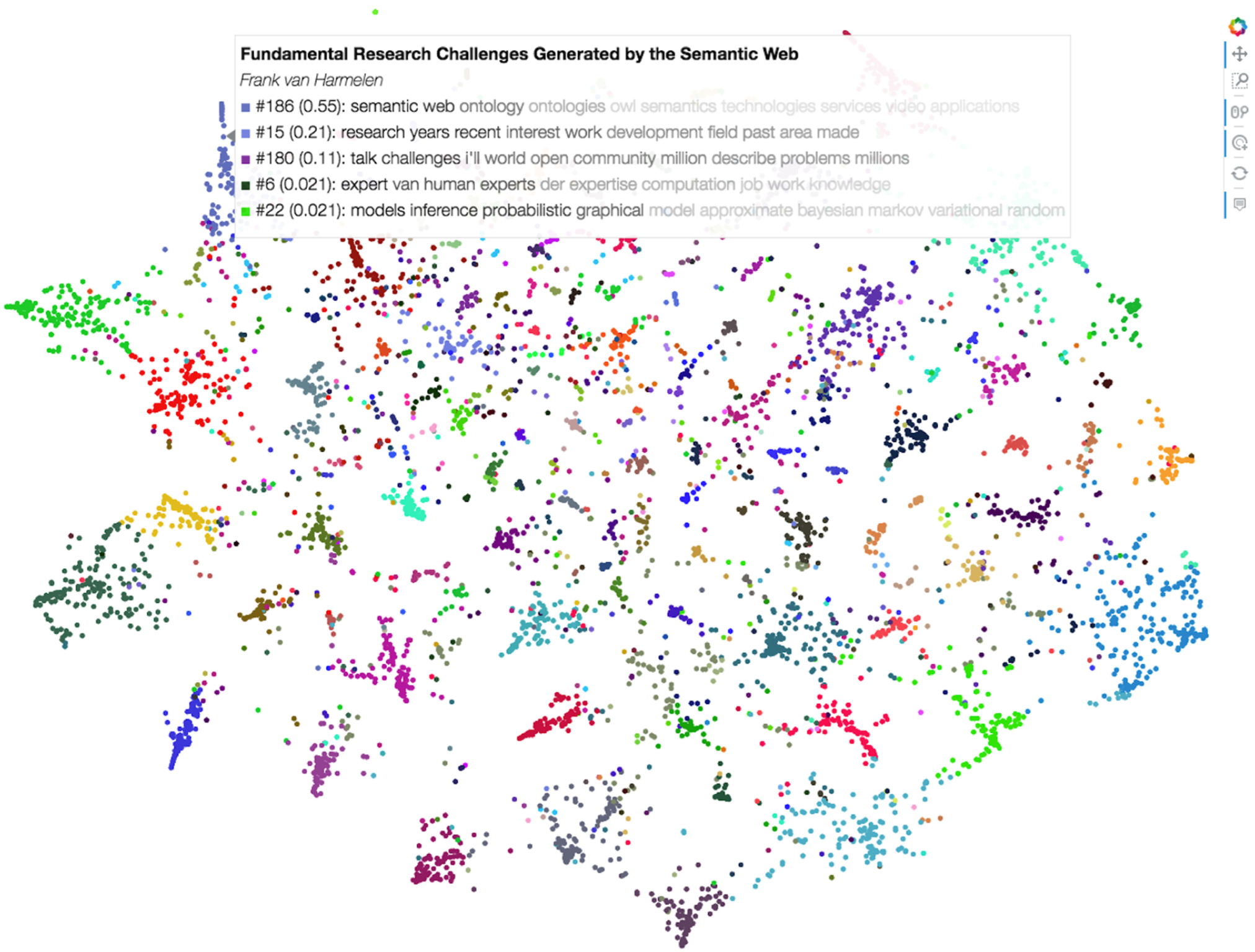 Figure 3: Interactive documentation clustering using LDA and t-SNE allows for intuitive discovery.
Future Horizon: The "Prerequisite" Engine
The most ambitious part of this ongoing work is the automatic inference of prerequisites. By analyzing Wikipedia clickstreams (e.g., users moving from "Deep Learning" to "Neural Networks"), ERuDIte aims to build a personalized learning path that knows exactly what you need to study before you dive into a complex topic.
Critical Insight
ERuDIte's true value isn't just in the list of links; it's in the standardization. By mapping independent resources to a shared ontology, it provides the "connective tissue" required for self-directed learning. Its limitation remains the reliance on textual metadata—future iterations might leverage computer vision to analyze the on-screen content of videos where descriptions are sparse. However, as it stands, ERuDIte is a masterclass in applying data science to solve the challenges of data science education.