
Behavioral Analysis: Decoding Spammers in Multiplex Social Networks
Behavioral Analysis of Users for Spammer Detection in a Multiplex Social Network
The paper proposes a novel spammer detection framework for multiplex social networks (e.g., Tagged.com) by extracting four sets of light-weight features: behavioral, bursty, sequence-based, and profile-based. It leverages an unsupervised Laplacian Score (LS) for feature selection and achieves over 88% accuracy using Gradient-Boosted Decision Trees while significantly reducing computational overhead compared to graph-based baselines.
TL;DR
Researchers have developed a highly efficient way to catch social media spammers by looking at how they interact across different platforms (pokes, winks, messages) rather than what they say. By using light-weight behavioral markers and "burstiness" metrics—and applying a gene-sequence inspired analysis—they achieved 88% accuracy while cutting processing time by more than half.
The "Chameleon" Problem in Modern Social Networks
Modern social platforms are Multiplex Networks: users don't just "friend" each other; they "like," "mention," "wink," and "tag." Spammers exploit this complexity. If a security system blocks them for sending too many messages, they switch to "poking" or "following" to stay under the radar.
Existing solutions often fail because:
- Content can be masked: Spammers use AI to generate human-like text.
- Graph algorithms are slow: Calculating global properties like PageRank on billions of edges takes too much time and memory.
- Multiplexity is ignored: Most models treat all interactions as the same type, losing the "cross-layer" signal of malicious intent.
Methodology: The Four Pillars of Precision
The authors suggest that while a spammer can change their name or their message, they cannot easily hide their neighborhood footprint. They propose four feature categories:
1. Light-weight Behavioral Features
Instead of complex graph metrics, they use ratios that are easy to compute in a standard SQL database:
- Spamicity & Reputation: Ratios comparing followers to followings.
- Bidirectional Link Ratio: Healthy users usually have mutual connections; spammers often have one-way "blasts."
2. Bursty Features (The "Pulses" of Spam)
Human behavior has a natural rhythm. Spammers, often automated, exhibit "burstiness"—sending thousands of interactions in minutes followed by silence. The authors use the B-measure to quantify this irregularity.
3. Sequence-Based Features (The Genomic Signature)
This is the most innovative part of the paper. Inspired by gene sequence analysis, the authors calculate:
- Relative Abundance: Checks if the sequence of different interaction types (e.g., Wink -> Message -> Link) is stochastic or highly biased (robotic).
- Distinct Neighbours Ratio: Measures if a user is repeatedly hitting the same small group or "shotgunning" unique victims.
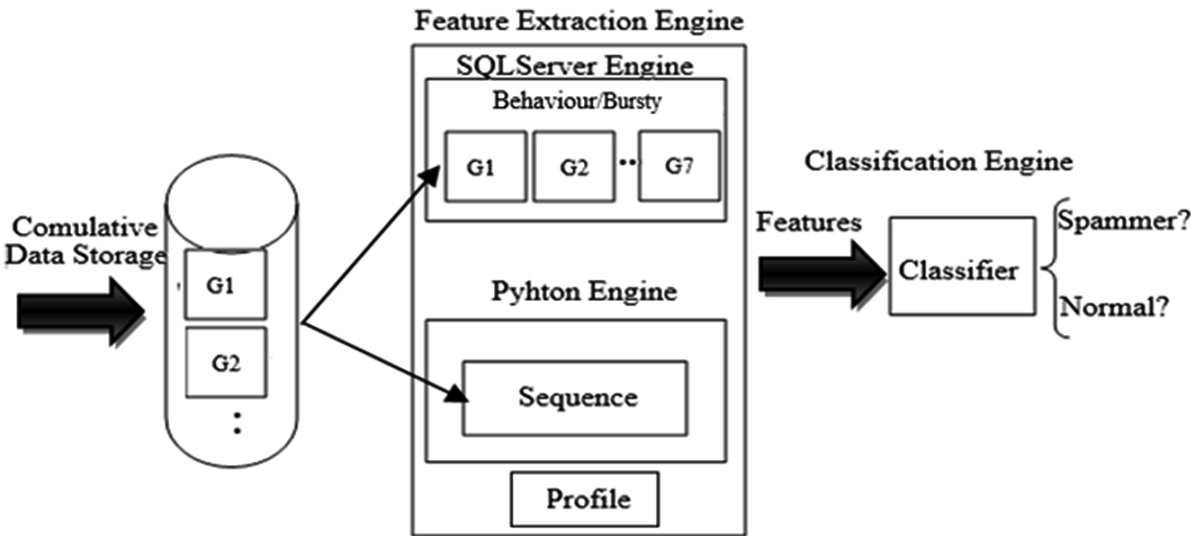 Figure 1: The proposed framework pipelines data from relational storage to parallel feature extraction.
4. Unsupervised Feature Selection (Laplacian Score)
To manage the "curse of dimensionality," the team used Laplacian Scores. This method evaluates features based on their ability to preserve local data structures. Crucially, it doesn't need labeled data to rank which features are the most "telling."
Experimental Results
The study used a massive dataset from Tagged.com (858 million relations).
- Speed: The SQL-based approach took 2.25 hours, compared to 5.27 hours for the graph-based baseline—a 57% improvement in "productivity."
- Accuracy: Using Gradient-Boosted Decision Trees, they outperformed previous SOTA models across AUPR (Area Under Precision-Recall) and Accuracy.
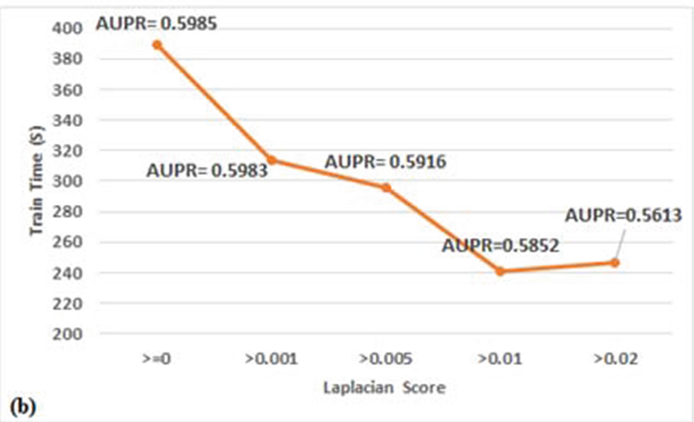 Figure 2: Importance of different features. Sequence-based and Bursty features provided the highest predictive power.
Critical Insight & Conclusion
The true value of this work lies in its industrial pragmatism. By proving that "light-weight" features extracted from standard relational databases (SQL Server/Oracle) can outperform complex graph databases, the authors provide a blueprint for real-time production systems.
Takeaway: If you want to catch a bot, don't look at the text; look at the "beat" of its heart (Burstiness) and the "DNA" of its actions (Sequence Abundance).
Limitations: The study notes that the dataset was partially obfuscated for privacy, which might hide some nuances of collusion. Future work involving Relational Learning (GNNs) might push these boundaries even further.