
Beyond Basic Keywords: Building a Behaviorally-Aware Similarity Engine for E-Recruitment
Behaviorally-Based Textual Similarity Engine for Matching Job-Seekers with Jobs
2018-01-01
Summary
Problem
Method
Results
Takeaways
Abstract
This paper presents an intelligent textual similarity engine designed for e-recruitment, utilizing a hybrid approach that combines behavioral data with content-based analysis. By integrating the BM25 and adjusted TF-IDF ranking models, the framework enhances the precision of matching job-seekers with relevant job postings based on profile text and user activities.
## Executive Summary
**TL;DR**: This paper addresses the persistent "relevancy gap" in e-recruitment platforms. By proposing a hybrid textual similarity engine, the authors move beyond simple keyword matching. They combine **Behavioral-based data** (what users do) with **Content-based data** (who users are) and apply sophisticated ranking functions like BM25 to ensure the most qualified candidates find the right jobs.
**Background**: Positioned at the intersection of Information Retrieval (IR) and Recommender Systems (RS), this work provides a blueprint for engineering a production-grade search ranking pipeline specifically tailored for the complexities of professional resumes and job descriptions.
## The Problem: The "Senior Engineer" Who Gets "Project Coordinator" Ads
The authors highlight a common frustration on platforms like LinkedIn and Glassdoor: receiving recommendations that feel "off." This happens because systems often over-rely on a user's recent clicks (behavior) while ignoring the semantic weight of their actual skills (content).
The challenges are two-fold:
1. **Unstructured Data**: Resumes and descriptions are "bags of words" without strict schemas.
2. **Semantic Noise**: Common words (e.g., "UK", "Company") can drown out critical skill tokens (e.g., "Java", "Accounting").
## Methodology: The Hybrid Matching Engine
### 1. Augmenting the Query with Behavior
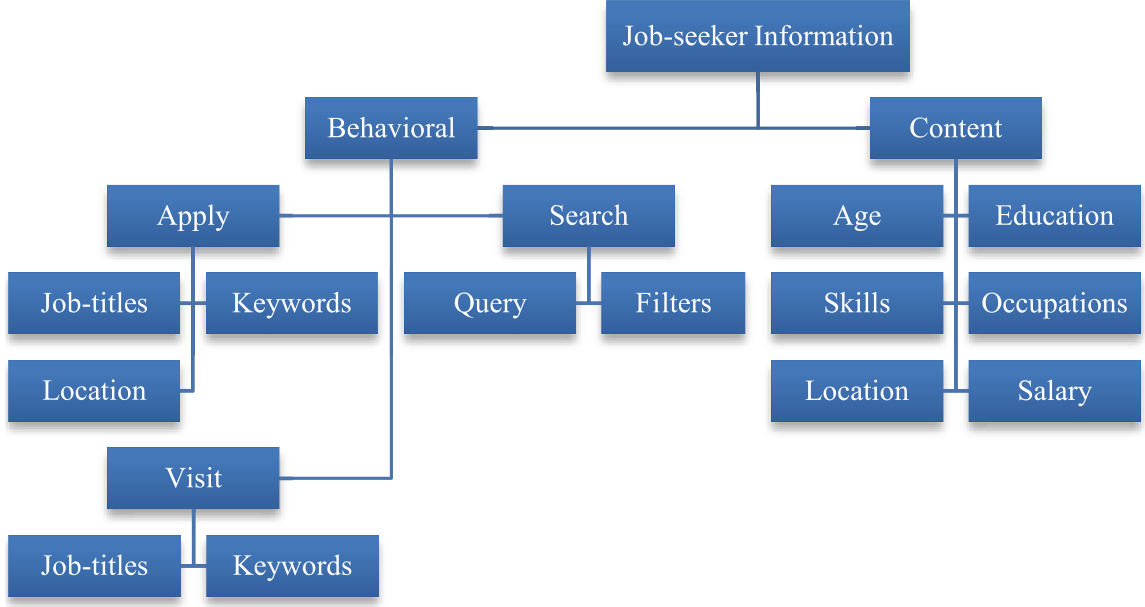
The engine doesn't just look at your profile. It collects:
* **Frequent Job Titles** from your past applications.
* **Search Queries** you have periodically run.
* **Dwell Time** on specific job types.
This collected text is injected into the matching layer, creating a "Probabilistic Persona" of what the user is currently seeking.
### 2. The NLP Pipeline
To clean the "messy" text of the job market, the authors implement a multi-layer processing strategy:
* **Fuzzy Matching**: Using the Damerau–Levenshtein distance to handle typos (e.g., "Jave" -> "Java").
* **Proximity Scoring**: Recognizing that "Software Engineer" is a stronger match than "Software and Hardware Engineer."
* **Custom Tokenization**: Handling technical quirks like "C#.Net" or "PHP5" which standard tokenizers often break.
## Relevancy Ranking: TF-IDF vs. BM25
The core of the "Intelligence" lies in how the engine scores a match. The paper compares two heavy hitters:
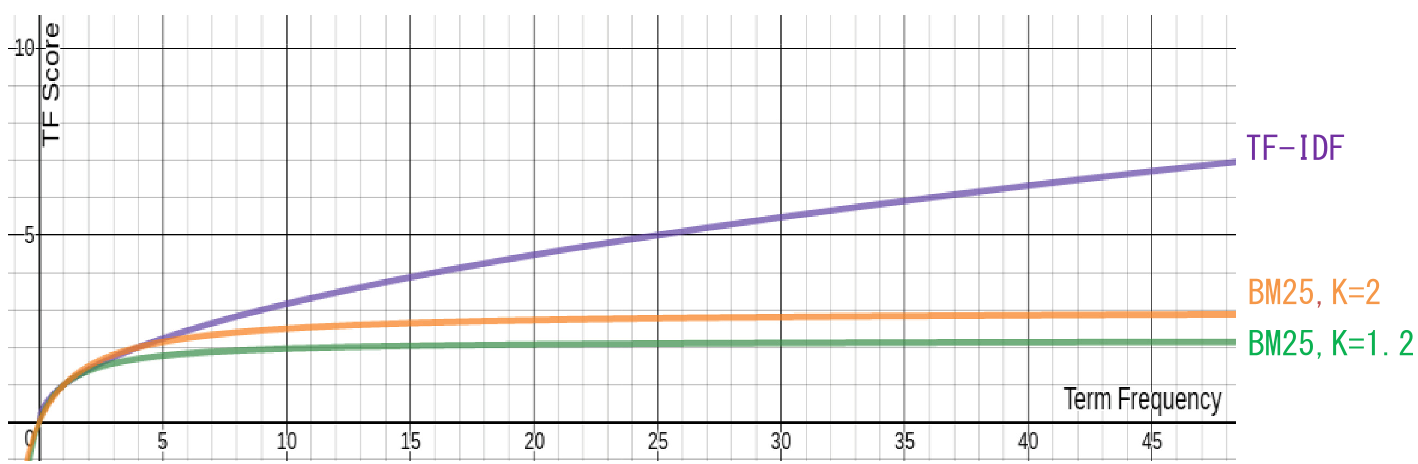
* **Adjusted TF-IDF**: Uses "Inverse Document Frequency" to ensure rare skills (like "Solr") are weighted more heavily than common words.
* **Okapi BM25**: A more modern approach that introduces **Term Frequency Saturation**.
**The Insight**: In TF-IDF, the more a word appears, the higher the score—indefinitely. BM25 recognizes that if "Java" appears 20 times vs. 10 times in a job description, the relevance doesn't necessarily double. It reaches a "saturation point," preventing profile-stuffing from gaming the system.
## Experimental Insights
Using data from a robust e-recruitment platform (150k users, 650k applications), the authors deduced several "Golden Rules" for job matching:
1. **Field Weighting is King**: A match in the *Job Title* field must be weighted higher than a match in the *Job Description*.
2. **Short is Sweet**: Length normalization ensures that a 200-word job post focused entirely on "DevOps" ranks higher than a 2,000-word "kitchen sink" post that mentions DevOps only once.
3. **Behavior Corrects Content**: By tracking what users actually click on, the engine can "pivot" its recommendations even if the user's resume is slightly outdated.
## Critical Analysis & Future Outlook
**Takeaway**: This work demonstrates that while Vector Space Models are effective, the "secret sauce" of modern recruitment is the normalization of data and the tuning of saturation parameters (the $k$ variable in BM25).
**Limitations**: The paper emphasizes Arabic normalization, which is excellent for regional applications, but the "Polysemy" problem (words with multiple meanings, like "fair") remains a challenge that simple keyword engines—even behavioral ones—struggle to solve without moving toward Deep Learning or Transformer-based embeddings (like BERT).
**Future Perspective**: The next logical step for this engine would be moving from **Lexical Matching** (exact words) to **Semantic Matching** (intent), using the behavioral data collected here to fine-tune a specialized job-domain LLM.