
Beyond Scoring Systems: Benchmarking the Power of Deep Learning in Critical Care
Benchmarking deep learning models on large healthcare datasets
This paper presents a comprehensive benchmarking study of deep learning models against traditional machine learning ensembles (Super Learner) and clinical scoring systems (SAPS II, SOFA) for healthcare prediction tasks. Using the MIMIC-III dataset, the authors demonstrate that their Multi-modal Deep Learning (MMDL) architecture consistently achieves SOTA results in mortality, length of stay, and ICD-9 code group prediction.
Executive Summary
TL;DR: This research provides an exhaustive "stress test" for deep learning in the ICU. By comparing Multi-modal Deep Learning (MMDL) with traditional severity scores (SAPS-II, SOFA) and advanced machine learning ensembles (Super Learner), the study proves that deep models thrive on "raw" clinical data, significantly outperforming human-engineered scores in predicting mortality and discharge timelines.
Academic Positioning: This work serves as a foundational benchmarking paper that shifts the paradigm from manual "feature engineering" (Feature Set A) to "representation learning" (Feature Set C), establishing a clear performance hierarchy in the clinical domain.
The "Linguistic" Complexity of ICU Data
The clinical environment is a data-rich but noisy ecosystem. Traditional prognostic scores like SAPS-II or SOFA translate this complexity into a few hand-picked variables, assuming that health outcomes are a simple additive function of a patient’s vital signs. However, these models ignore the temporal nuances—how a heart rate trend over 48 hours is more informative than a single snapshot.
The authors argue that the industry has been stuck in a bottleneck of rule-based preprocessing, which often discards the very "signal" needed for high-fidelity prediction.
Methodology: The Multi-modal Deep Learning (MMDL) Architecture
The core innovation is the MMDL framework, designed to handle the heterogeneous nature of Electronic Health Records (EHR).
- The Temporal Branch: Utilizes Gated Recurrent Units (GRU) to process hourly clinical time-series (e.g., heart rate, lab results) from various MIMIC-III tables.
- The Non-Temporal Branch: A Feedforward Neural Network (FFN) processes static traits such as age, gender, and admission type.
- Latent Integration: Both branches are fused into a shared latent representation layer before reaching the final classification or regression output.
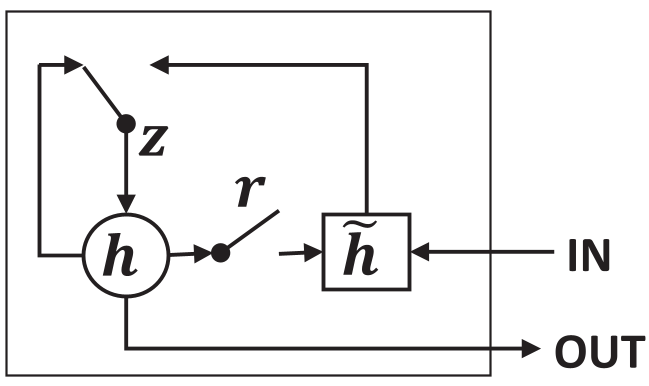 Figure 1: Illustration of the Multi-modal Deep Learning framework integrating GRU and FFN components.
Experimental Battleground: Feature Sets A, B, and C
To prove that deep learning doesn't need "human help," the authors tested models across:
- Feature Set A: 17 highly processed, hand-picked SAPS-II features.
- Feature Set B: 20 raw versions of those same features.
- Feature Set C: 136 raw features selected solely based on data availability (low missing rates).
Key Results
The transition from Feature Set A to C reveals the "Deep Learning Dividend." While traditional models struggled or plateaued with more features, MMDL’s performance soared.
- Mortality Prediction: In-hospital mortality AUPRC jumped nearly 50% when moving from the ensemble Super Learner to MMDL on raw data.
- Length of Stay (LOS): Accurate LOS prediction is notoriously difficult. MMDL achieved a dramatic reduction in error, outperforming the best machine learning baselines by a wide margin.
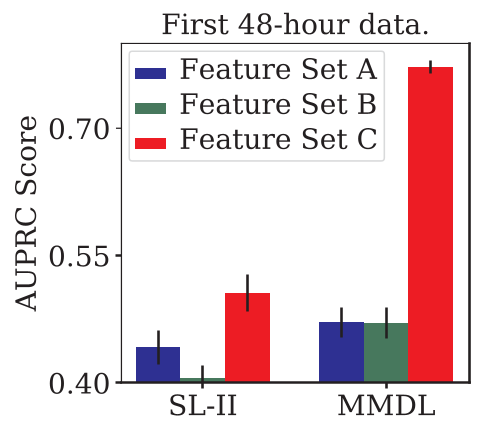 Figure 2: Performance gains of MMDL across different feature sets for in-hospital mortality prediction.
Statistical Significance and Computation
Unlike many papers that claim SOTA based on minor decimal improvements, this study utilized Friedman’s tests and Bonferroni-Dunn procedures. The MMDL achieved a mean rank of 1.15, statistically validating its dominance over the Super Learner (rank 4.32) across 20 distinct disease classification tasks (ICD-9).
From a practical standpoint, the Python implementation of Super Learner took 30 minutes for mortality tasks, while the MMDL took roughly the same (30 min - 1 hour) on a GPU-enabled system, proving that the superior accuracy does not come at a prohibitive computational cost.
Critical Insight & Conclusion
The takeaway is clear: Representation Learning > Feature Engineering. In critical care, where Every Minute/Every Bit of data counts, deep learning's ability to synthesize "raw" time-series data provides a level of insight that manual scoring systems simply cannot match.
Limitations:
- The missing data rate remains high (some features >90% missing), which was handled via mean imputation—a potential area for improvement using more advanced generative imputation (like GANs or Diffusion models).
- The results are centralized on the MIMIC-III database; cross-institutional validation (e.g., eICU database) would further solidify these findings.
Future Outlook: We are moving toward a "Black-box to Glass-box" transition. While this paper proves accuracy, the next frontier will be integrating Interpretability (like SHAP or Attention maps) so clinicians can understand why the MMDL predicts high mortality for a specific patient.