
BEATCORP: Turning Digital Footprints into Dynamic Competency Profiles
A benchmarking platform for analyzing corpora of traces
This paper introduces BEATCORP, a benchmarking platform for analyzing corpora of interaction traces to identify user competencies. Built on the PROXYMA approach, it enables the sharing and analysis of heterogeneous data from collaborative environments to dynamically enrich user profiles.
TL;DR
In the modern digital workplace, what we actually do is often a better indicator of our skills than what we claim on our resumes. This paper presents BEATCORP, a benchmarking platform that analyzes "interaction traces" (logs from forums, collaborative tools, etc.) to automatically identify core competencies. By bridging the gap between raw data and semantic understanding, it provides a way to verify expertise through actual involvement.
The Problem: The "Self-Proclamation" Bias
Most professional networks like LinkedIn rely on static profiles. Users manually enter their skills, which are rarely updated and often susceptible to "self-proclamation" as an expert. Meanwhile, the actual evidence of their skill—how they solve problems in a team forum or contribute to a project—sits trapped in various software databases (Moodle, Slack, GitHub) in incompatible formats.
Prior tools for monitoring these activities were usually "siloed." A tool designed for Moodle couldn't understand data from a different platform without a loss of semantic nuance.
Methodology: The PROXYMA Approach
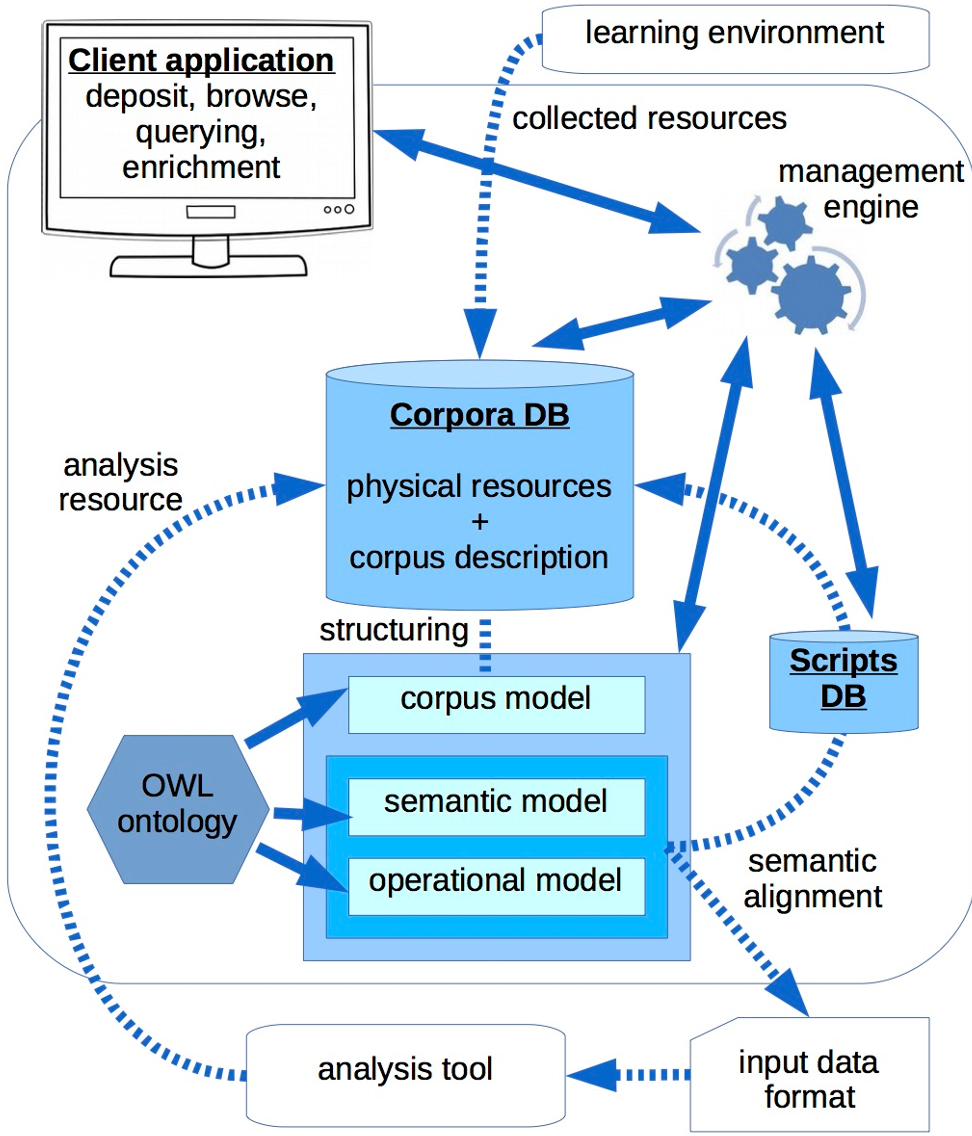
The authors solve the interoperability problem through the PROXYMA approach. Instead of forcing all data into a single "master format" (which leads to data loss), they keep the data in its original form and use an intermediary layer called a PROXY.
The BEATCORP Architecture
The platform consists of five pillars:
- Corpus Database: Stores shared interaction data.
- OWL Ontology: The "brain" that defines concepts (Semantic), data structures (Corpus), and transformation rules (Operational).
- Script Database: Contains XQuery and CQP scripts to filter and extract data.
- Management Engine: The core processor that executes queries.
- Client Application: A user-friendly interface for non-technical "Observers."
Experiment: Identifying Java Experts
To test the system, the authors analyzed a Java programming course. By examining forum interactions, they aimed to distinguish between those asking questions (learners) and those providing high-value explanations (experts).
Visualizing the Network
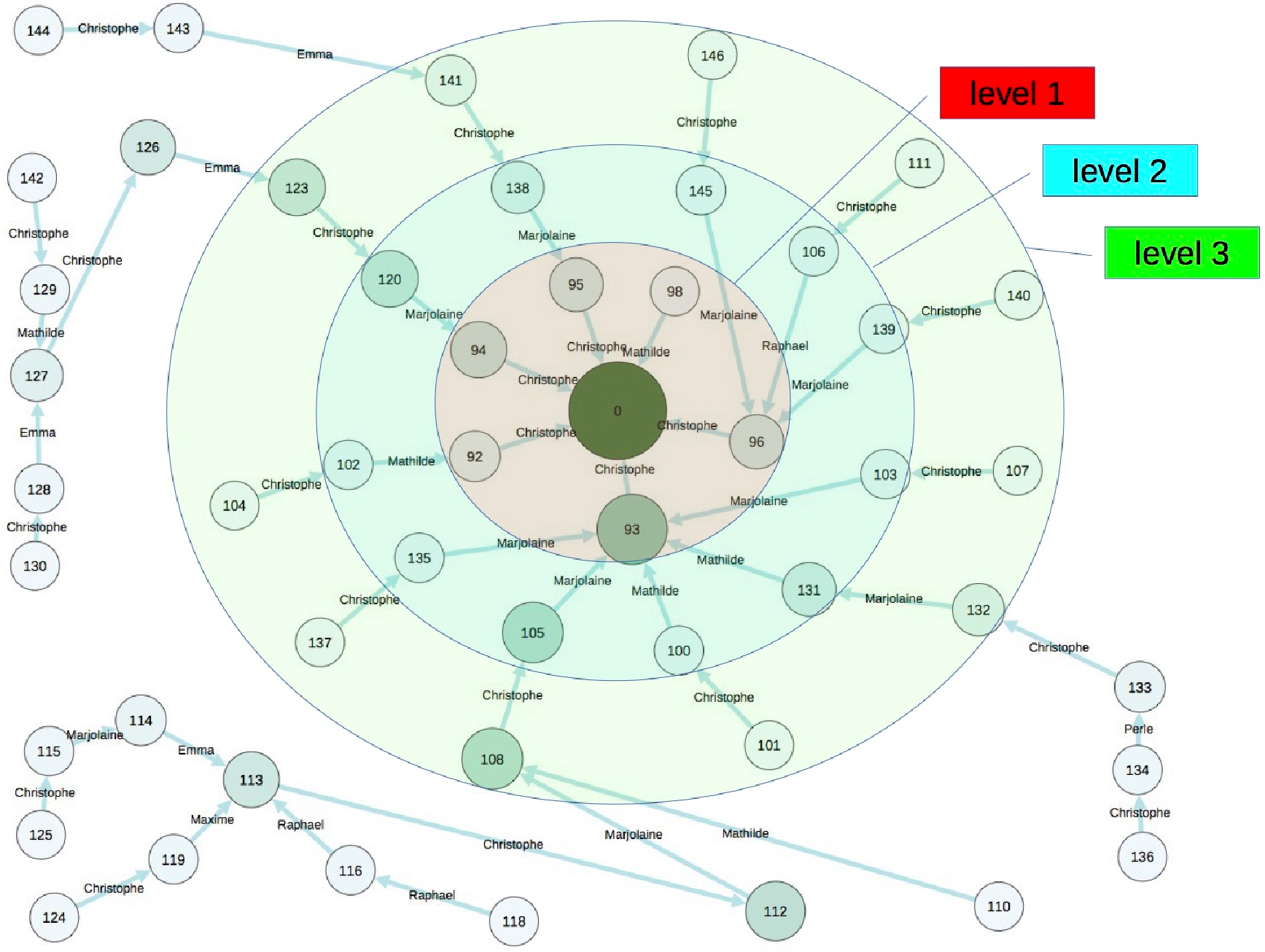
Using Gephi, the researchers visualized the forum structure. They discovered that simple metrics like "post length" weren't enough to identify expertise—some questions were long, and some answers were short. Instead, they needed to look at the structure of the exchange.
Advanced Textual Analysis
The researchers used TXM (a textometry tool) to run complex queries. By identifying the "interrogative form" (e.g., using keywords like comment, pourquoi, est-ce que followed by a question mark), they separated questions from contributions.
The query logic looked like this:
[frlemma="how"] []{1,40} [frlemma="\?"]
(Translation: Find the word "how," followed by up to 40 words, ending with a question mark.)
Experimental Results
The findings were revealing:
- Accuracy: The system identified questions with 86% accuracy.
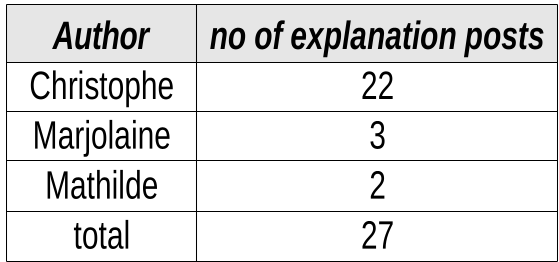
- Expert Identification: It successfully isolated 27 core "explanation" posts.
- Behavioral Insight: It revealed that most students were using the forum for "vertical" communication (asking the teacher) rather than "horizontal" peer-to-peer assistance, despite the collaborative software being available.
Deep Insight & Conclusion
The true value of BEATCORP lies in its Semantic Model. By mapping raw logs to a shared ontology, it transforms "noise" into "competency indicators."
Limitations: The system still struggles with "rhetorical questions" (where a question mark is used by an expert to encourage participation). However, it proves that interaction traces are a goldmine for understanding human involvement.
Future Outlook: This framework could lead to recommendation engines that don't just suggest people based on keywords, but based on their proven "reactiveness" and "helpfulness" in real-world scenarios. It moves us toward a "Proof of Competency" era in digital work.